

Jezmynn Koh-Turner joins Fujitsu’s APAC leadership team

The marketing and communications leader is re-joining Fujitsu as Head of Marketing for Asia Pacific and will support Fujitsu’s growth in the region.
SMEs in South Korea more likely to hire temporary employees

Compared to large organisations, about four in 10 employees working for organisations with less than 300 staff are non-regular workers.
UOB enhances employee experience with one unified HR platform

Since August 2022, the Workday HCM has been deployed across 14 markets, with plans to introduce it in five ASEAN markets in 2023.
Improving the hybrid work experience by redesigning offices

Organisations in APAC are looking to create an office work environment that will appeal to employees who prefer to work remotely.
Looking ahead: What are the priorities for CHROs in 2023?

Organised by HRM Asia, CHRO Series Malaysia will address how CHROs can navigate their organisations through the challenges in a post-pandemic era.
Increase in remote work drives businesses to move out of Tokyo

In addition to achieving increased productivity, relocation also ensures business continuity in the event of a major disaster occurring in the city centre.
Employers in Hong Kong prioritising employee retention in 2023

Introducing hybrid work policies and increasing investment in the upskilling of employees are some of the key strategies to retain talent in the new year.
Career trends that will shape the workplace in 2023

Among the career trends that are expected to gain traction next year are flexible work arrangements, and four-day work weeks.
WFH policy in the Philippines spurs demand for office spaces

More businesses in the Philippines are expanding to provincial locations and establishing offices outside Metro Manila.
Wages prove that paper qualification matters in Singapore

The average starting salary of a university graduate is now almost twice that of an ITE graduate, and this gap persists over their lifetimes.
Gender equity for women in Australia requires more action

Health, meaningful employment, a decent income, and an adequate level of wealth are factors to enable individuals to participate and contribute to society.
UK rolls out new initiative for flexible work

In a new government initiative to make flexible working the default, employees in the UK will have more control over when, where, and how they work.
Why CHROS are focusing on human capital management in 2023

Attracting, managing, and retaining talent was a key discussion point at HRM Asia’s CHRO Series Singapore 2022, which took place on December 1.
Workplace harassment continues to impact employees in Australia

Employers must do more to eradicate workplace harassment in their organisations, said the Australian Human Rights Commission.
Low-income workers hardest hit by drop in global wages

Driven by raising inflation, the decline in wages marks the first instance of negative growth this century, said the ILO.
Keep your best talent by building an inclusive culture

Underperformance on DEI could have an adverse impact on organisations when it comes to recruitment and retention.
Is the UK ready to embrace the four-day workweek?

After a successful trial, 100 companies in the UK have decided to adopt the four-day workweek on a permanent basis.
Employment in Singapore rose for second consecutive year
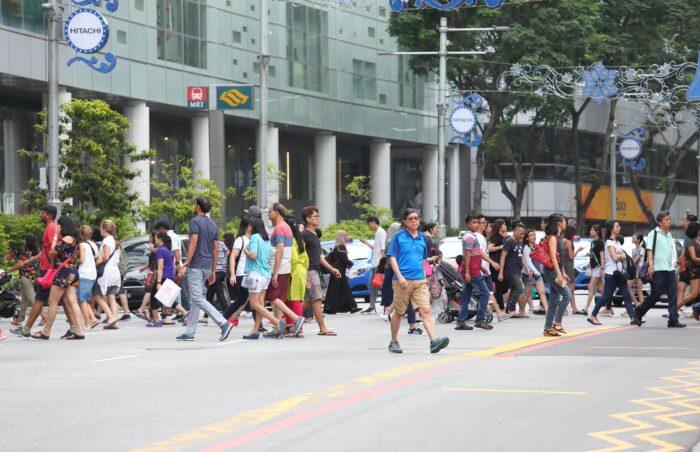
While real median income increased from 2021, growth was tempered by the continuing impact of high inflation.
Digital platform provides growth opportunities for Indonesia’s MSMEs

The government is aiming to bring at least 30 million MSMEs onboard the digital ecosystem by 2024 and to nurture more digital talents.
Most Australians want a four-day workweek

Employees in the country are convinced about the benefits of a shortened workweek and employers are ready to oblige.
Earning power peaks at age 42 in South Korea

On average, employees in South Korea start to earn more than they spend at age 27, before this turns into a deficit at age 61.
Snapchat wants employees back in office

By the end of February 2023, Snapchat employees will be required to physically return to the office for at least four days a week.
Eliminating discrimination against female employees in the Philippines

A new bill strengthens the anti-discrimination provisions under the Labour Code of the Philippines to safeguard female employees.
Tight jobs market in Japan keeps upward pressure on wages

The government is also continuing to introduce measures to encourage employers to increase wages for their employees.
Australia set to pass bill supporting multi-employer bargaining

When introduced, the new legislation will allow employees from across different workplaces to collectively negotiate pay rises.
Jobs creation should be prioritised over wage hikes in the Philippines

The Employers’ Confederation of the Philippines has called on the government to provide more inclusive measures to manage economic problems.
What CHROs can do to shape the world of work in 2023

Taking place on December 1, the CHRO Series Singapore will discuss topics such as building a talent management strategy that embraces innovation.
More companies in Australia adopting flexible work arrangements

Offering flexibility at work is helping drive gender equality in Australia’s workplaces, says the Workplace Gender Equality Agency.
Uber Eats delivery staff in Tokyo granted worker status

Uber Eats is challenging the decision, maintaining that delivery staff are not part of the labour force but are customers using the platform’s service.
APAC job markets post modest recovery in 2022

While Asia-Pacific labour markets recorded a partial rebound from the pandemic, 2023 is expected to present challenges hindering a full recovery.