
From decision to direction: Where good strategies lose their way
- Josephine Tan
- Topics: Compliance, Features, Home Page - Features, Talent Management
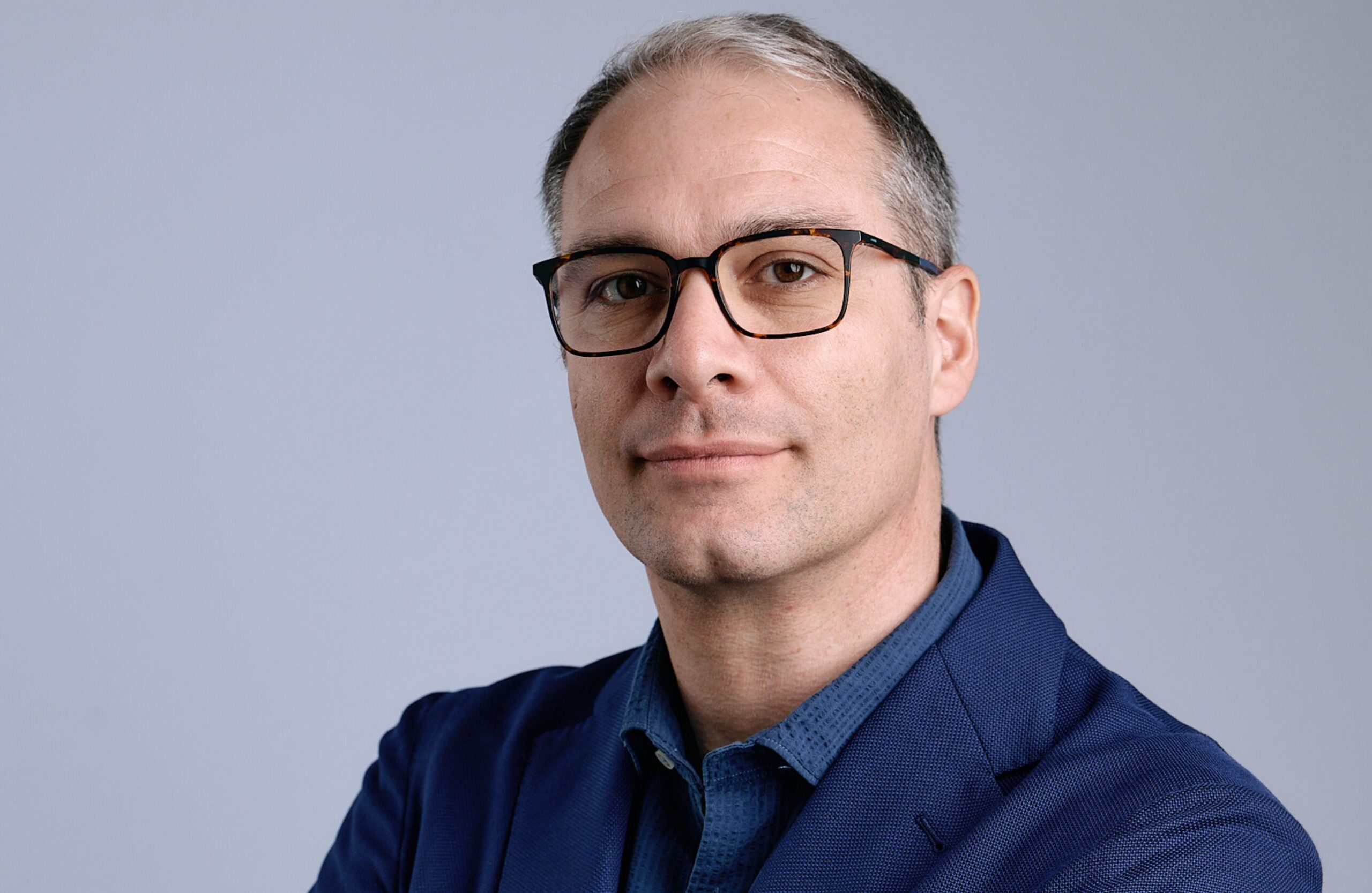
The papers are tabled, the discussion is thorough, and the resolution passes without objection. Everyone says they are fully aligned. But for Anthony Cheng, Partner of Aquaseason Professionals, that is exactly when to start asking what alignment means.
A board can make a perfectly good decision and management can hold a sensible strategy, he said, but somewhere between the meeting and what people do on Monday morning, things begin to shift. Departments read the same decision differently, and nobody is quite sure who is meant to make the next call.
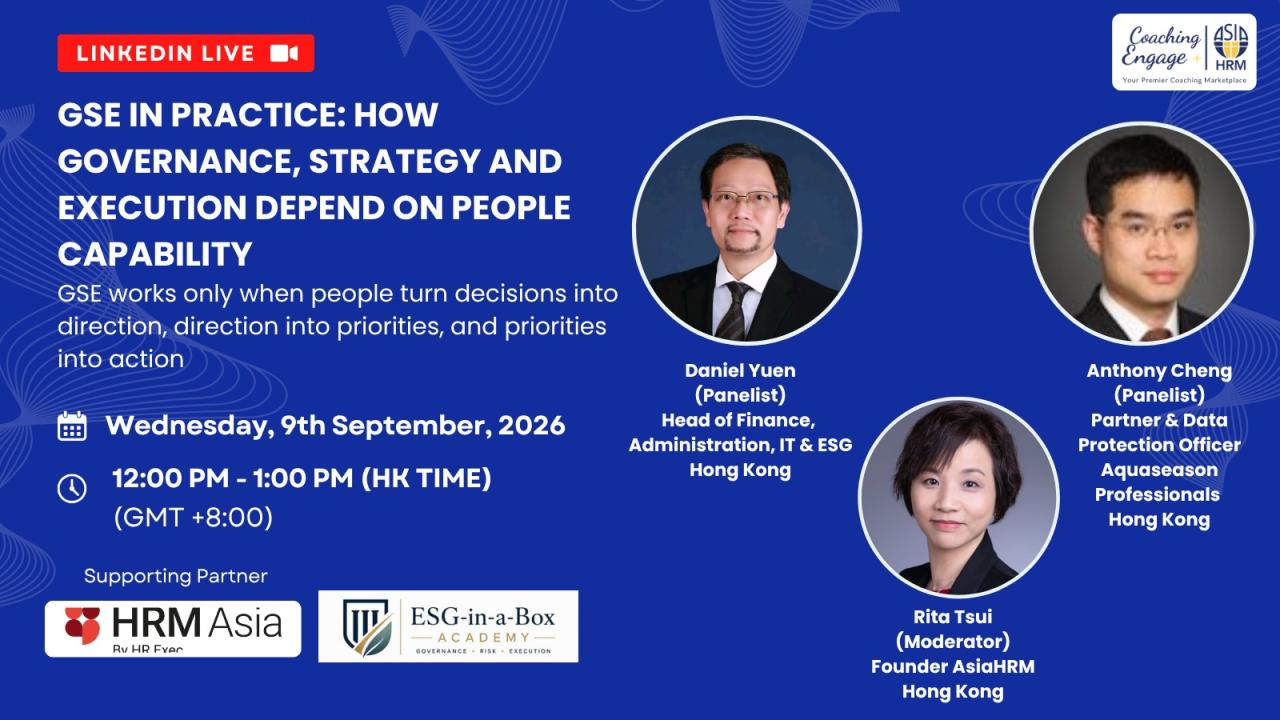
Cheng was speaking at GSE in Practice: How Governance, Strategy and Execution Depend on People Capability, a LinkedIn Live session in AsiaHRM’s Governance Series, supported by HRM Asia and ESG-in-a-Box Academy. Moderated by AsiaHRM’s Founder Rita Tsui, it also featured Daniel Yuen, Head of Finance and IT at Swire Motors.
Yuen noted that organisations with similar technologies can produce very different results, because governance, strategy and execution are delivered by people, not by processes and systems alone. A governance framework can be flawless on paper and still become a box-ticking exercise if leaders and employees lack the capability or mindset to apply it. For it to hold, he said, people need the integrity to make ethical decisions, the knowledge to understand risk and compliance, the courage to challenge inappropriate actions and the accountability to take ownership.
Many organisations, in his view, fail through poor execution, not poor strategy, and technology can enable execution without driving it.
Capable people, difficult systems
Yuen pointed to Wells Fargo. The US bank had policies, audit committees and compliance functions in place, yet between 2002 and 2016 its employees opened millions of unauthorised customer accounts to meet aggressive sales targets. The structure existed; what failed, he argued, was people exercising ethical judgement and challenging unhealthy behaviour. The question it raised was whether these were incapable managers, or capable ones placed in a system that stopped them acting.
Cheng picked this up. Organisations are often too quick to call someone incapable, he said. A manager may be told they own an outcome while every important decision still goes back to the founders, then be asked why things are slow. Finance may see a problem developing but know that challenging the project sponsor will not be welcome. The organisation chart looks fine. So does the policy. People work differently.
This is where he places human capital governance, at the point where the formal governance system meets human behaviour. Who really holds influence? Who can challenge? Who knows something important but is not being heard? Who is carrying too much information? That last one creates dependence. Cheng described an organisation in Hong Kong where knowledge of a particular risk sat with a single employee, unknown even to the board.
Human risk, as he framed it, often sits in the arrangements around people. Responsibility is handed out without matching authority, or workloads grow heavy enough that good managers start making poor decisions. He noted how rarely the expectation of unpaid overtime in many organisations in Asia is examined for its effect on judgement. The question is not only whether an organisation has the right talent, but whether good people can perform, exercise judgement and speak up.
Accountability without control
Asked how to build accountability without a culture of control, Yuen said leaders delegate tasks and decisions, not accountability. At month-end closing, he leaves detailed routines to his accountants, reviewing them against an authority matrix, expected outcomes and timelines. Important decisions remain with him within the governance framework.
Cheng, an internal auditor by background, described an accountability loop that assigns four owners to an issue: decision, risk, oversight and assurance. His warning sign is the familiar update that “there are some emerging issues and we are monitoring”. Who is “we”, what does monitoring involve, and by when? Without answers, he said, there is no substance.
From good people to institutional capability
Once direction is understood, Yuen said, the next obstacle is priority overload. Leaders hesitate to say no, but an organisation with 10 strategic priorities effectively has none. An initiative not clearly tied to strategic objectives does not deserve high priority.
Cheng separated good people from institutional capability. One strong project manager indicates competence; three indicate capacity. Neither means the organisation can deliver a complex transformation across five countries, which needs finance working with operations and technology with HR, someone with authority to resolve trade-offs, and resources in place on time.
READ MORE: When AI recommends, who stays accountable?
With AI, employees may report that a process can easily be automated, but Cheng would ask whether the data is clean, whether the process is standardised, who redesigns the work, who retrains the model when it drifts, and who checks the output.
Where HR fits
Yuen cited Microsoft as a case where the three elements connected. When Satya Nadella became CEO in 2014, Microsoft’s technical capability was losing momentum, and Nadella treated this as a strategic problem tied to people capability, moving the organisation from a “know-it-all” to a “learn-it-all” culture. Strategy, Yuen concluded, is less about choosing the future than developing the capability to create it.
For HR, he said, involvement has to come before strategy is implemented; hearing of a major decision after the fact is probably too late. Capability is what people can do; culture determines whether they choose to do the right things consistently.
Cheng summed it up as a sequence. GSE works when people can turn decisions into direction, direction into priorities and priorities into action, and when that action is allowed to show that the original decision needs to change. Without that feedback, he said, an organisation can become very good at executing the wrong things.