
Japan Business Federation calls for digitalisation to be accelerated

The Japan Business Federation (Keidanren) has proposed the review of laws that would promote digitisation for organisations across the country.
Employers in Singapore must consider flexi-work arrangements

Under a new set of government guidelines, by 2024, employers must consider staff requests for flexible work arrangements fairly and properly.
Reimagining the world of work from a people-success lens

LinkedIn Talent Streams, an exclusive HR C-Suite series, feature people leaders in Asia and how they are shaping their organisation’s people strategy.
Fewer firms in the Philippines keen on expansion

The percentage of businesses planning on an expansion in the second quarter this year has dropped to 20.8% from 23.2% in the previous survey.
Flexible work policies for government workers in the Philippines

In a move that could potentially herald the 4-day work week, the Civil Service Commission (CSC) will be issuing a policy for flexible work.
Redefining HR leadership in a hybrid world of work

The role of the CHRO has arguably never been more important as organisations continue to plan for long-term business continuity and success.
4-day workweek to be decided by companies in the Philippines

Instead of the government issuing a blanket four-day workweek mandate, companies will decide whether to adopt this practice themselves.
Two Cents: Agile mindset underpins the transition to flexible working

Organisations are increasingly seeking flexible ways of working that prioritise the well-being of employees.
Driving Environmental, Social and Governance as a workforce strategy

Building an effective business strategy around Environmental, Social, and Governance (ESG) is becoming a growing priority for organisations.
Paving the way to the “new possible” in 2022

ADP highlights the role Singapore’s HR leaders can play in planning and developing the career journeys of employees in 2022.
IHRP helps organisations in Singapore reset for growth

IHRP’s Human Capital Diagnostic Tool (HCDT) outlines an actionable road map to deliver workforce and business success.
Transforming work with organisational alignment

Nippon Sanso’s Pauline Loo highlights the importance of strategic workforce planning in gaining organisational alignment.
Flexible work favoured by Singapore companies

Flexible work arrangements will continue to be implemented by companies despite the relaxing of pandemic measures, the government has reported.
Achieving business continuity and success in a changing world of work

As organisations look to achieve business continuity and success, ADP’s Peter Hadley highlights the payroll challenges organisations face in 2022.
Bersin: It’s time to rethink how we approach change

Josh Bersin explains why the most important shift to successfully adapt to change is in mindset, and highlights how organisations can gain change agility.
How organisations can win the talent war in 2022

In a new world of work, organisations need to think beyond just monetary rewards if they are to attract and retain the best talent.
Malaysia’s SME body calls for labour law reform and productivity

The HR Ministry has been urged to focus on reforming labour laws to keep up with the gig economy and the reality of a post-pandemic age.
Rising workforce numbers and Industry 4.0 challenge Indonesia’s HR
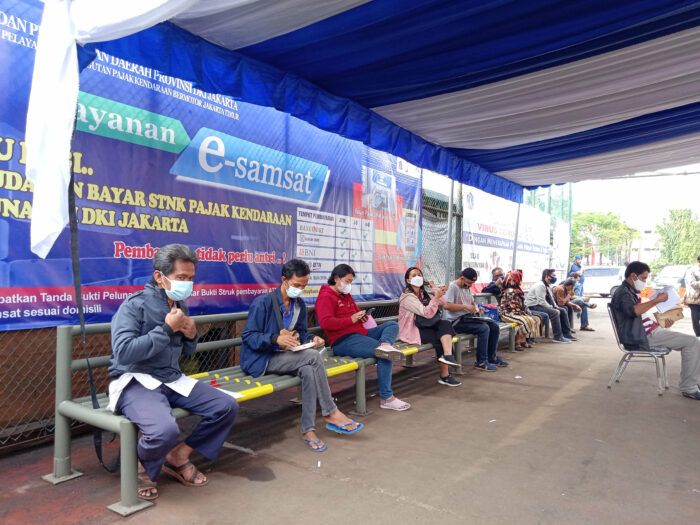
The huge demographic “bonus” and Industrial Revolution 4.0 (4IR) will drive manpower challenges, said Manpower Ministry official.
China could create 88 million jobs by 2030 through green efforts

One of the transitions identified by the World Economic Forum is eco-tourism, which is projected to create some US$53 billion of additional revenue.
More companies implementing 4-day workweek in Japan

Panasonic Corp has joined a small, but growing, number of Japanese companies to offer staff a four-day workweek to encourage better work-life balance.
Companies in Japan urged to innovate by business groups

Japan’s major business organisations want companies to spur economic growth, and to view the pandemic as a business opportunity.
Indonesia sets out to address labour issues in 2022

Manpower Minister Ida Fauziyah has revealed resolutions to address labour issues, including breakthroughs to restore the national economy.
Vietnam speeds up digital transformation

There are now around 64,000 digital technology companies in Vietnam, after 5,600 new companies were established in 2021.
India to implement new labour codes in FY2022-23

The Labour Ministry is planning to implement all four new labour codes in the new fiscal year, set to replace 29 current labour laws.
61.7% of Malaysian companies want to continue with hybrid work model

A survey has shown that the majority of businesses in Malaysia are opting to continue with the hybrid model of on-site and remote working.
Australia pumps A$252.5 million into digital economy

The government plans to consult with industry, as well as the education and training sectors on ways to meet the country’s digital needs.
Future of remote work will depend on nature of industry and job role

The cost savings of remote working are attractive as employers do not have to pay rent for office space, building utilities, and compensation for transport.
Your 2021 scorecard on digital transformation

How has your organisation fared in terms of digital transformation efforts in 2021, and what can be improved?
Retaining talent begins with understanding what employees want

If managed well, organisations can transform the ‘Great Resignation’ to the ‘Great Attraction’, attracting and retaining the best talent.
India likely to implement 4-day work week

If the country’s new labour codes are implemented, there is a likelihood that workers in India may be able to enjoy a four-day work week in FY2022-2023.