SK Telecom is shifting its internal AI drive from individual employees to the organisation as a whole, after a year in which AI agents spread quickly through its workforce.
More than 7,500 employees at South Korea’s largest mobile carrier use AI agents each month, and over 4,000 have built their own. Around 1,500 of these agents are in regular use. Employees use them to prepare reports, analyse mobile network data and automate routine tasks.
Much of that uptake came from a companywide initiative launched in March, which encouraged every employee to develop AI tools for their own work. Getting those tools to work across entire departments is a harder task. It requires AI systems that can access company databases, work with existing software and handle sensitive information.
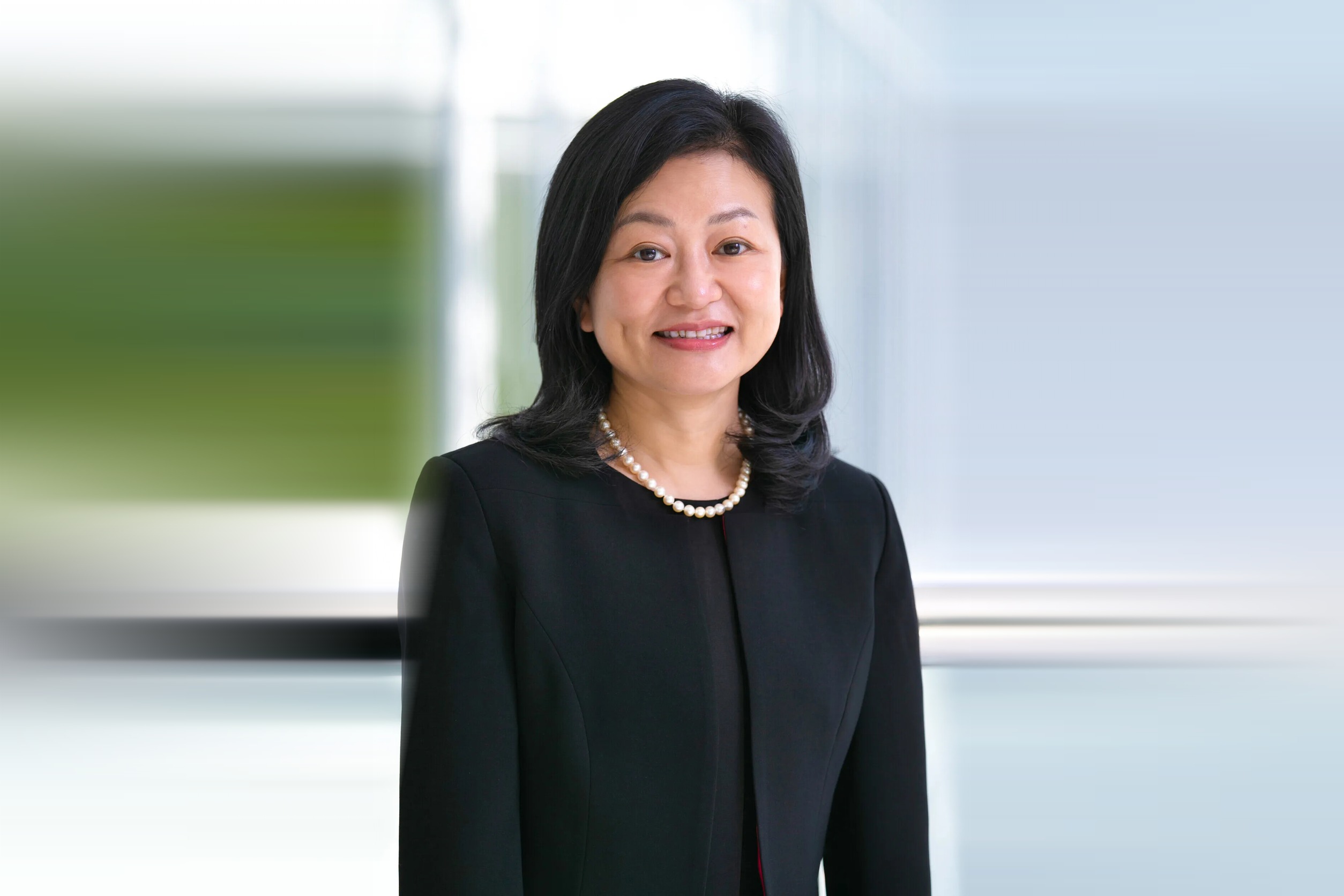
“We have solved most of the problems that individuals could handle on their own,” said Kim In-soo, Head of SK Telecom’s AI Board, reported The Korea Herald. “Now the more difficult problems, which require support from the company, are coming to the surface.”
The organisation’s response is AX Innovation 2.0, unveiled last month at its training centre in Icheon, Gyeonggi Province. Under its guiding principle of moving “from individuals to organisations, and from convenience to practical value”, business processes, collaboration and management systems are to be redesigned around AI. The strategy rests on what SK Telecom calls the “AX J-curve”: productivity dips while employees retrain and operations are reorganised, then rises once the technology becomes part of everyday work.
Three programmes support the plan. An AX Enabler Task Force will take on problems that teams cannot easily solve alone. These include employee training, data and security infrastructure, and systems for evaluating AI agents as organisational resources. AX Sandbox builds on an experiment from the first half of the year, in which a single employee worked with AI agents to plan, develop and test services. It now looks at how groups of employees and multiple agents can collaborate on more complex tasks. AX Catalyst supports employees leading AI adoption in their own departments. The first 10 catalysts were selected in September and received help with model usage costs, technical resources and data integration.
Data protection has been a recurring obstacle. “You identify a task where AI could be highly effective, only to discover that the data it needs cannot be provided,” Kim said, referring to restrictions on sharing personal and confidential information with AI models.
SK Telecom’s answer is Z.E.Z., a system that keeps sensitive records in a separate environment. The AI receives only the metadata, comparison tokens or calculated results it needs, so agents can process tasks such as employee medical expense claims without accessing the original data, reported Korea Bizwire.
How the company’s data is structured has also slowed things down. Much of the technical data built up through its network operations was designed for conventional software, which makes it difficult for AI agents to understand what individual fields represent. In one project covering around 9,000 databases and 300,000 data fields, SK Telecom used AI to generate explanations for technical labels. The accuracy of AI-generated answers to related questions rose from around 40% to more than 80%. Kim estimated that processing the data through external AI models could cost 100 million to 200 million won (US$75,000 to US$150,000) a year, so the company used its own models and computing infrastructure instead.
READ MORE: In South Korea’s most credentialed job market, SK hynix drops the degree
Two further projects target the same problem. Data Desk will automatically generate descriptions and business context for internal datasets. Workmap will organise employee responsibilities and workflows into formats AI can understand.
SK Telecom is also weighing which agents justify their running costs. “Our goal is not simply to reduce the number of agents. It is to produce results,” Kim said.
In October, CEO Jung Jae-hun set out plans to use AI-driven productivity gains to redeploy employees into growth businesses, as the carrier looks to AI services and data centres for growth beyond telecoms.