
AI is freeing up time at work. The harder question is what it is for
- Josephine Tan
Most workplace AI comes with a promise of time saved. Far less is said about where that time goes.
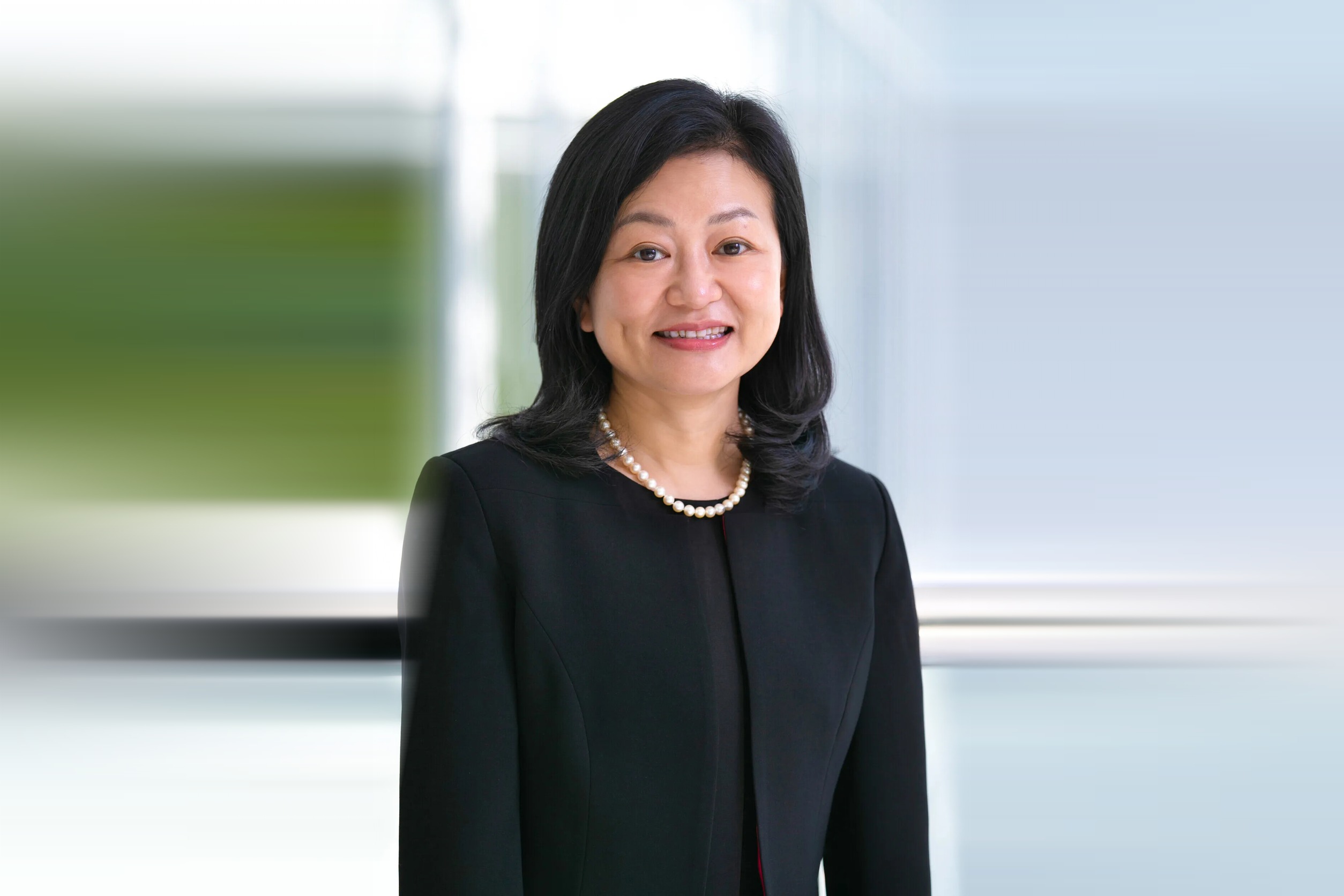
For Jenny Pong, People and Culture Director, Asia-Pacific at global engineering and design organisation Arup, that question is where many of the real decisions sit. “The risk is that we define the benefit of AI too narrowly,” she tells HRM Asia. “If every hour we save simply becomes another hour of output, we may become more productive in the short term, but we could inadvertently weaken the experiences that build expertise and leadership over the long term.”
Arup has used AI, machine learning and other digital tools in its engineering and design work for many years. What has changed more recently, Pong says, is how accessible and far-reaching these technologies have become, forcing the people function to look at skills and knowledge “with a very different horizon”. Teams can now analyse large datasets, automate repetitive workflows and test alternative scenarios far faster than before. In her view, the real value lies in “expanding people’s field of vision, allowing them to ask better questions, test more possibilities, and make more informed choices”.
That still leaves organisations to choose how to use the capacity it creates. Pong describes it as a productivity dividend that needs to be managed deliberately. Some of it should help teams deliver more efficiently for clients, “but some should allow people to spend more time on the activities where human expertise creates greater value: solving complex problems, collaborating across disciplines, engaging more deeply with clients, learning from experienced colleagues and developing new capabilities.”
What the routine work was teaching
The choice is sharpest at the start of a career, since much of the routine technical work AI now absorbs is the same work junior engineers have traditionally learned on.
“Routine work has never been valuable simply because it is routine,” Pong says. “It has been valuable because of what people learn by doing it. A graduate working through an analysis, for example, is not only producing an answer. They are developing an intuition for what looks right, where errors occur, which assumptions matter and when they need to seek advice.”
Her answer is not to hold on to repetitive tasks for their own sake. Instead, organisations need to identify the learning beneath those tasks and design better ways to develop it. That could mean bringing early-career employees into complex projects and client conversations sooner; more mentoring and multidisciplinary problem-solving; more time on site; and teaching people to critically assess and validate AI-generated outputs instead of simply producing the first calculation themselves.
At Arup, early-career members can join Lead From the Start, a leadership development pathway that builds capabilities such as self-awareness, resilience, influence, and feedback from the start of their careers. The organisation’s graduate programme pairs real project experience with formal development through Arup University and support towards chartership, while its current skills programme brings AI enablement together with reinforced expert review and technical rigour.
Leaders in the loop
Whether people feel confident experimenting with AI or feel it is simply being imposed on them depends heavily on leaders, Pong says. They do not need to become AI experts, “but they do need enough practical understanding to ask good questions, recognise where the technology can add value, understand its limitations and have credible conversations with their teams about how work is changing.”
At Arup, that has meant using the tools in plain sight. The organisation’s Asia-Pacific Managing Director has used AI to facilitate, record, and transcribe meeting summaries. Pong herself uses generative AI (GenAI) to plan meetings, prepare workshops and draft first versions of reports and presentations. “I am quite open about recommending AI because I have genuinely benefited from the support it provides,” she says. “Of course, I always make sure to check AI-generated work before relying on it.”
She sees a second leadership responsibility as even more important: matching investment in technology with investment in people. Her team’s role, she explains, is to help leaders look past adoption as a technology programme and think through the workforce questions behind it. Those include what capabilities their teams will need, how roles and career pathways will evolve, and “how do we create an environment where people feel able to experiment, question outputs and speak openly when something does not look right?”
Curiosity with checks
That final question carries extra weight in engineering, where design decisions shape infrastructure that may stand for generations. Pong does not see innovation and engineering assurance as opposing forces. “Good engineering has always involved exploring new approaches, testing them rigorously and understanding their limitations before relying on them,” she says. “AI is another evolution of that.”
Arup’s approach to AI rests on principles of safety, transparency, and accountability, and she singles out one in particular: people remain responsible for AI systems and their outputs. The amount of checking is scaled to the stakes.
“Using AI to help organise information or explore an early idea is very different from using it to inform a decision with implications for the safety or performance of critical infrastructure,” Pong explains. “The higher the consequence, the greater the need for scrutiny, verification and professional oversight.”
The organisation’s work with the Asian Development Bank on a liveability framework for Nusantara, Indonesia’s new capital city, shows where that line falls. Spatial algorithms and demographic data can help map transport corridors and optimise utilities, she notes, “but no algorithm can define what makes a city welcoming, inclusive, and lovable.”
Policy alone does not create that balance, however. “Creating an environment where somebody feels confident saying, ‘I don’t think this answer is right, let’s test it,’ is just as important as encouraging them to use the technology in the first place.”
Change at every desk
Pong’s career has taken her through HR roles in management consulting, aviation, financial services, technology and construction. The clearest lesson she draws from that is that “technology transformation is ultimately people transformation”. The best systems create value only when people understand why change is happening, have the confidence and capability to work differently, and feel they have some agency in it. Transformation also works better, she adds, when people closest to the work help design it.
She has also learned that a one-off training course only goes so far. “People build confidence through using technology, asking questions, learning from colleagues and applying it to real problems,” she says. “That is particularly true with AI because the technology and its applications are evolving so quickly. The ability to keep learning becomes as important as the skills you have today.”
READ MORE: The people strategy behind Arup’s 6,400-strong Asia-Pacific powerhouse
What sets AI apart from earlier waves of change, in her experience, is its breadth. It is not confined to one function or a specialist team, and it could reshape how an engineer interrogates a design, how a project manager synthesises information, or how a leader prepares for a conversation. “That means organisations are not managing one technology implementation with a defined group of users,” Pong says. “They are navigating many different changes in how work is done at the same time.”
That makes it impossible to plan every use case from the centre. Organisations need clear boundaries around safety, data and accountability, “but within those boundaries you also need enough trust for people to explore, share what works and learn from what does not.”
For an organisation built on bringing many disciplines together, she sees the larger prize beyond individual productivity. “The opportunity is not simply for each person to become more productive,” Pong concludes. “It is to use new technology to help those different areas of expertise connect more effectively and tackle increasingly complex challenges together.”