
The agile anchor: How Lenovo reimagines stability for a volatile world
- Josephine Tan
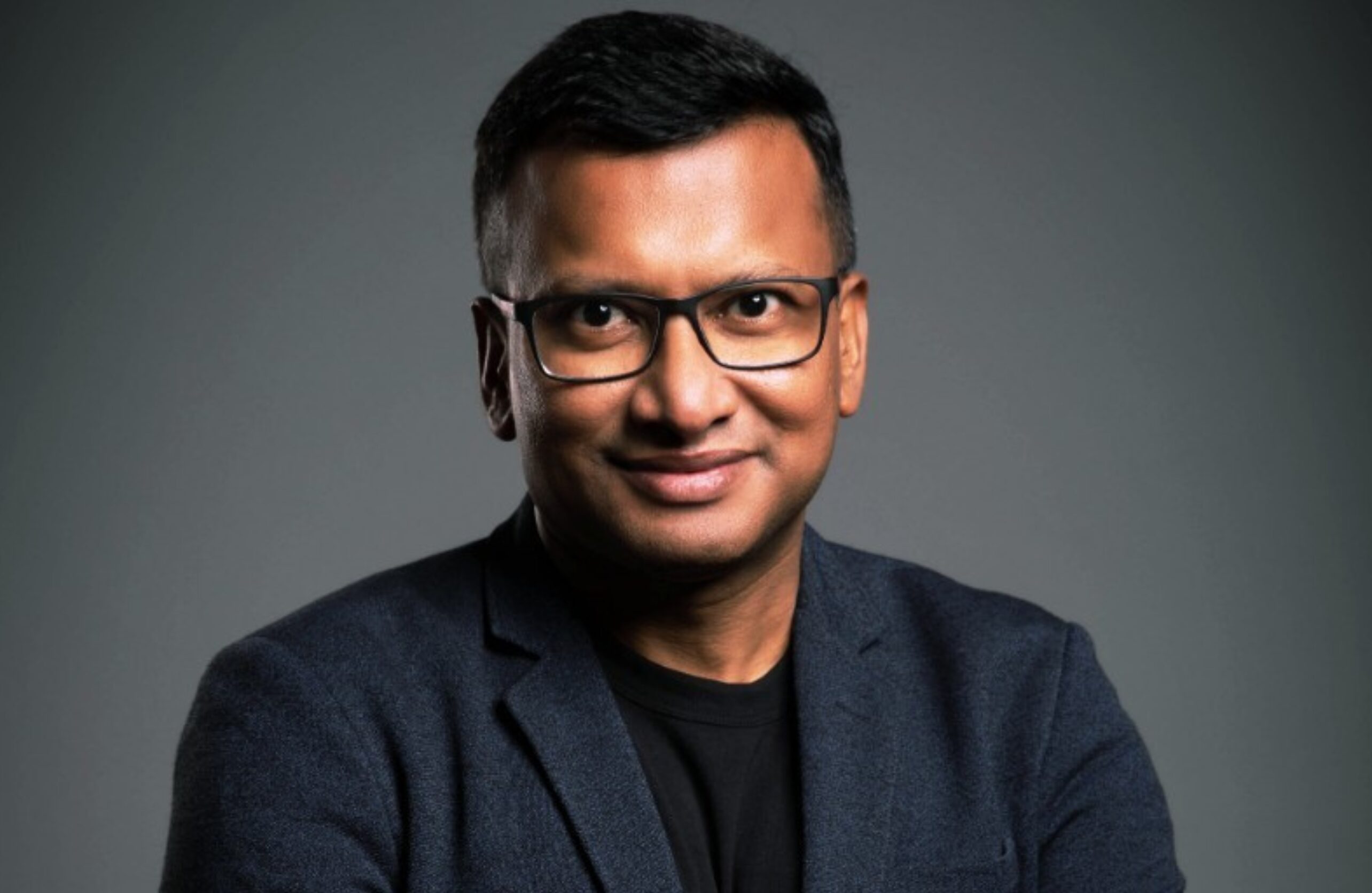
“Stability is not always about the frequent changes in a strategy, but about ensuring we are all aligned with the common vision or goal,” – Subhankar Roy Chowdhury, Executive Director and Head of HR, Asia-Pacific, at Lenovo
The modern business landscape, often described as Brittle, Anxious, Non-linear, and Incomprehensible (BANI), has organisations scrambling for stability. Yet, this pursuit of a static operational state may be fundamentally flawed. According to Subhankar Roy Chowdhury, Executive Director and Head of HR, Asia-Pacific, at Lenovo, true stability lies not in an unchanging strategy but in an unwavering, shared vision.
“Stability is not always about the frequent changes in a strategy, but about ensuring we are all aligned with the common vision or goal,” Chowdhury told HRM Asia. For Lenovo, that vision has been “Smarter AI for All,” a consistent journey spanning over five years. This anchor has enabled the organisation to shift from a devices-centric model to a leader in intelligent transformation, services, and solutions. This redefinition of stability—as alignment rather than rigidity—serves as the foundation for the most essential factor for future success: agility.
Chowdhury pointed to a convergence of divergent forces creating intense volatility, from geopolitical shifts and tariffs to demographic divergences, data privacy regulations, and evolving labour policies. Laying over all of this is the revolutionary force of AI. In this environment, the very definition of HR success is being rewritten. When asked what single metric will define a successful HR department five years from now, Chowdhury is clear.
“For an organisation to be agile, to me, is the single most important factor for organisational success in the future,” he explained. “And for the HR function, how do we keep ourselves agile and relevant in the onslaught of these things happening would be the test of a good human capital function in an organisation.”
For Lenovo, this agility starts with a deep integration into the organisation’s core business transformation. While many still see Lenovo as a PC company, Chowdhury revealed a little-known secret: “You will be surprised to know that 48% of our revenues come from non-PC.” This is not an accidental shift; it is the result of a deliberate, multi-year “significant capability and talent transformation.”
That transformation cannot be monolithic, especially across the diverse Asia-Pacific region. Chowdhury emphasised that HR strategy must be customised to local talent demand, supply, costs, and labour policies. “Talent cannot be a switch that can be tuned on and tuned off,” he noted, highlighting the need for long-term, differentiated approaches.
He offered two contrasting examples. In Japan, a market with a significant ageing population, the HR strategy is two-pronged: reskilling the existing workforce while simultaneously “expanding our outreach to campus hiring programmes to look at how we build a future pipeline.” Conversely, in Indonesia, a high-growth market with a “significant young population,” the focus is on building a robust talent pipeline to support its consumer business and new manufacturing operations, resulting in one of the organisation’s most engaged workforces.
As an organisation that builds and sells AI solutions across its four major business groups, Lenovo’s HR function is uniquely positioned to lead the charge on internal adoption. “We have to eat our own cooking,” Chowdhury said. “We have made rapid enterprise-wide accelerated progress in AI.”
For the HR function, this involves moving beyond basic generative AI (GenAI) to deploying advanced AI agents later this year. The aim is to develop significant manager- and employee-enabled services, focusing on highly transactional, time-consuming processes. Chowdhury provided examples, such as using AI to help managers create job descriptions, screen “heaps of resumes” for the most relevant candidates, conduct complex talent searches, and streamline the onboarding process for new staff. The expected outcomes are “stronger efficiency, better ROI,” and a notable improvement in “employee satisfaction.”
Of course, the deployment of AI immediately raises the question of the skills gap. Lenovo is addressing this with a comprehensive “build, buy, or borrow” talent strategy, with a strong focus on the “build” component. Chowdhury outlined a multi-layered approach to making the entire organisation AI-ready. This starts with functional AI modules on the “Grow at Lenovo” learning platform, offering courses such as AI for marketing or AI for HR. It also includes enterprise-level training to familiarise sellers with the organisation’s own AI offerings.
Furthermore, AI is being integrated directly into the learning platform, including an AI coach. “For example, if I’m not good at conflict management,” Chowdhury explained, “I can take the help of an AI coach, and the AI coach will help me layer by layer understand how to build my conflict management skills.” For those in highly specialised sales roles, the organisation also provides AI certification courses to ensure they possess the highest level of capability to represent Lenovo’s solutions in the market.
The evolved HR professional: From linear to multi-dimensional
Reflecting on his 30-year career, Chowdhury sees a profound evolution in the HR profession itself. “I think the days when I joined the profession, the world for an HR professional was a lot more linear,” he mused. “Now, the world, as I described…is a lot more multi-dimensional.”
This complexity demands a new, more sophisticated skill set from HR leaders. Chowdhury identified several critical shifts. First is the non-negotiable need to be “extreme business savvy,” ensuring that “everything that we do strongly aligns, resonates, and is integrated with the business strategy.” Second is the rise of “very high analytical skills,” as HR has moved from being one of the least data-oriented functions to one with a significant focus on analytics. Finally, he stressed that HR professionals are now more than ever the “guardians of ethics and compliance,” responsible for creating a value-driven workforce and upholding integrity above all.
This evolution is mirrored in Lenovo’s leadership values, which champion entrepreneurship, innovation, and a profound sense of customer centricity. This focus on the customer is so ingrained that it is tied directly to compensation. “We align our customer-centric score to our rewards and bonus plans,” Chowdhury noted, a critical practice as the organisation shifts to multi-year annuity-based services that require deep, long-term relationships.
Ultimately, Chowdhury sees the modern HR function as performing a crucial balancing act. The role is to help the organisation build long-term capability and drive transformation, “but at the same time ensuring that growth happens with safeguarding values, ethics, all the other governance that comes together with it.” It is about driving “growth that comes along with ensuring that we are a very responsible company” to the organisation, its society, and the environment.