
“Who participates in AI will determine who benefits from it.”
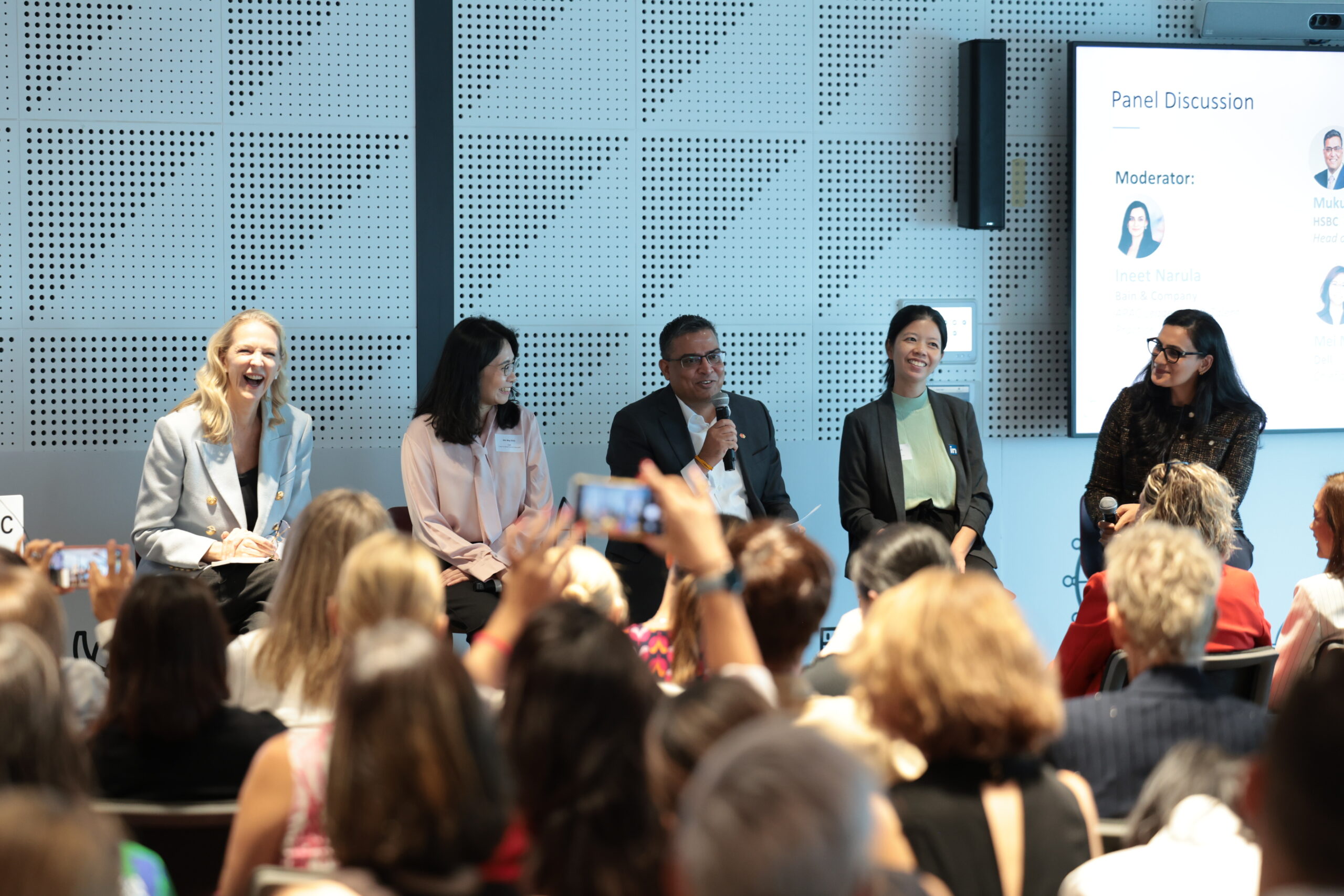
That warning from Christine Fellowes, Co-Founder and Chairperson of the Singapore-based gender advocacy group NINEby9, sits at the heart of a new regional study examining how AI is reshaping women’s participation and progression in the workplace across the Asia-Pacific.
Launched in Singapore, AI and the Future of Women in the Workplace draws on global literature, labour market data spanning 29 million LinkedIn profiles in the region, and in-depth interviews with 55 HR and technology leaders. Its conclusion is unequivocal: AI will either accelerate gender equity—or quietly entrench existing disparities unless organisations intervene deliberately.
“AI is not just another technology cycle,” Fellowes tells HRM Asia. “This shift is fundamentally about knowledge and cognitive work. For the first time, technology can take over the work people actually do, not just how work is delivered.”
Why this AI moment is different
Unlike earlier transformations, such as mobile and cloud computing, which reshaped infrastructure and access, Fellowes argues that AI directly disrupts analytical, transactional, and research-driven roles—jobs in which women are disproportionately represented.
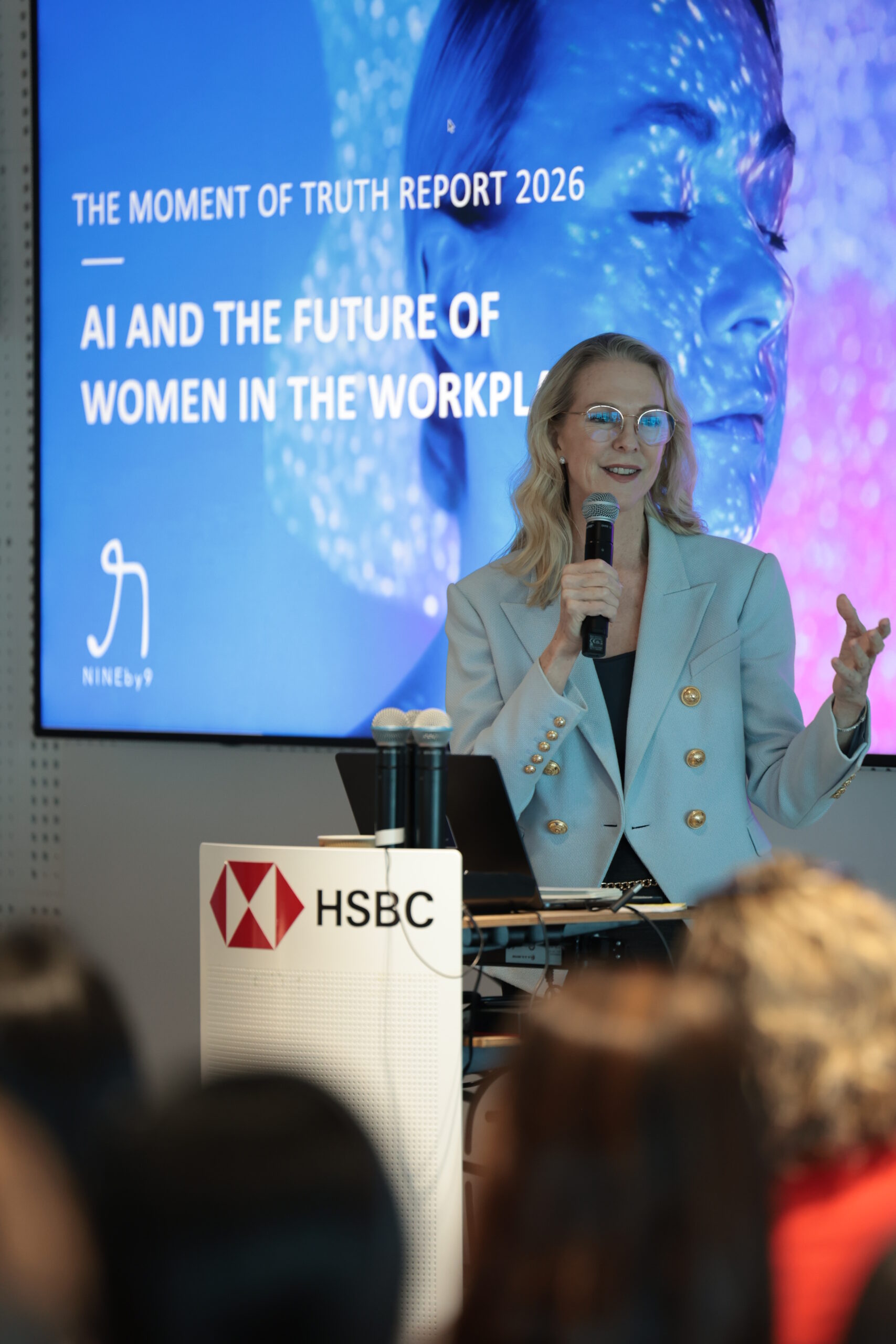
“Previous shifts were about how we communicate or access data,” she explains. “This one is about decision-making, analysis and knowledge work. That’s why the implications for the workforce, and for women, are so much more profound.”
Customer service, junior analyst and research roles are among the first to be automated through bots and large language models. In law firms, financial services, and HR teams, work once performed by early-career professionals can now be completed faster and more cost-effectively by AI.
“What we know from the data is that women are more represented in the roles that will be displaced,” Fellowes says. “At the same time, women are underrepresented in the higher-value roles AI is creating. That creates a double challenge we haven’t seen before.”
Without intervention, she warns, organisations may look back in a decade and ask uncomfortable questions about the absence of women in leadership and technical decision-making roles—at a cost not only to equity but also to business performance.
“Diversity is critical for optimised performance,” she says. “If we get this wrong, the workforce and the organisation will be weaker for it.”
The report identifies what it calls a “double exposure” for women: overrepresentation in roles that AI disrupts and underrepresentation in roles that AI augments or creates. This imbalance is already visible across Asia-Pacific and is particularly concerning at the entry level.
As routine junior tasks are automated, entry-level roles are disappearing altogether, removing the very pathways through which early-career talent learns how organisations operate.
“If you take away those roles without redesigning them, you hollow out your future middle management,” Fellowes says. “Those early roles are how people build judgment, confidence and context. They are not expendable.”
In law firms, for example, AI can now complete research and draft briefs more efficiently than junior lawyers. In corporate functions, AI can handle reporting, analysis, and communication tasks that once anchored graduate roles.
“The rethink has to be about apprenticeships,” Fellowes says. “Instead of entry-level people doing low-paid manual work, they should be learning in AI-augmented roles—reviewing outputs, refining prompts, shadowing leaders and understanding how decisions are made.”
Visibility bias and the cost of speed
While women are often portrayed as slower adopters of AI, the research suggests the issue is not reluctance but rigour. Women tend to prioritise accuracy, governance, and ethical clarity—traits that are increasingly critical in AI-enabled workplaces.
Yet organisational incentives frequently reward speed and visibility over judgment.

“AI is amplifying visibility bias,” Ineet Narula, Asia-Pacific Leadership and Talent Practice Lead, Bain & Company, says. “The people who deploy tools loudly are rewarded, while the harder, less visible work—validating outputs, challenging bias, exercising judgment is often ignored.”
This imbalance, Narula says, risks undermining responsible AI adoption at precisely the moment organisations need it most. “If performance frameworks continue to reward speed and volume alone, they directly undermine the behaviours that responsible AI depends on,” she adds.
Fellowes agrees, arguing that performance metrics must evolve beyond time saved and cost reduction. “Accuracy matters. Bias matters. Ethics matters,” she says. “A bad decision made faster is not progress.”
The report also challenges prevailing assumptions about upskilling. While 94% of employees say they are willing to learn new AI skills, women participate at lower rates in self-directed learning environments.
“Optional, after-hours learning sounds neutral, but it isn’t,” Fellowes says. “It assumes equal time, access and energy, and that simply isn’t the reality for many women.”
Data from Coursera cited in the report show that women account for just 32% of enrolments in popular AI courses. Even when women enrol, they are more likely to start at a beginner level, whereas men are more likely to overstate their AI fluency or enrol in advanced courses.
“If learning becomes an after-hours burden, it will disproportionately disadvantage women,” Fellowes says. “Learning time has to be protected during working hours.”
HR optimism, limited mandate
Despite strong belief in AI’s potential, many HR leaders feel ill-equipped to shape its workforce impact. The report finds that while 85% of HR executives are optimistic about AI, only 29% believe their teams have sufficient digital capability to lead AI-driven workforce transformation.
“One of the most important findings in the report is that governance gap isn’t really about HR lacking technical depth—it’s about sequencing,” Narula says. “When HR is engaged after AI pilots are already underway, workforce outcomes are being managed rather than designed, and at that point, the options are already constrained.”
Fellowes adds that governance must be treated as foundational, not reactive—particularly in the absence of consistent global AI regulation. “Organisations need to take responsibility for ethics, safety and bias,” she says. “Governance isn’t a compliance layer; it’s the foundation for building AI that is safer, reliable and fair.”
In response to its findings, NINEby9 has developed an action framework spanning three levels: organisational systems, managerial culture and individual ownership.
At the organisational level, this includes embedding workforce considerations into AI investment decisions and prioritising internal talent development over external hiring. At the managerial level, this entails intentionally redesigning roles, protecting learning time, and making inclusive behaviour visible and valued. At the individual level, it encourages women to experiment openly, build confidence and find community.
“Psychological safety is critical,” Fellowes says. “When women have safe spaces to experiment and fail, their strengths—care, ethics, transparency—become enormous assets in an AI-driven world.”
Looking ahead, Fellowes stresses that organisations are still early in their AI journeys—giving leaders time to course-correct.
“Good looks like HR and technology teams aligned from the start—at use-case design, pilot stage and budgeting,” she says. “It looks like systems, culture and individual ownership moving together.”
For organisations, the payoff is tangible.
“AI can unlock productivity and growth in ways we’ve never seen before,” Fellowes concludes. “But only if we bring our people with us. Managed with intent, AI can drive stronger performance and accelerate gender equity. Managed poorly, it will do the opposite.”