
AI harmony is a design problem, not a technology one
- Josephine Tan
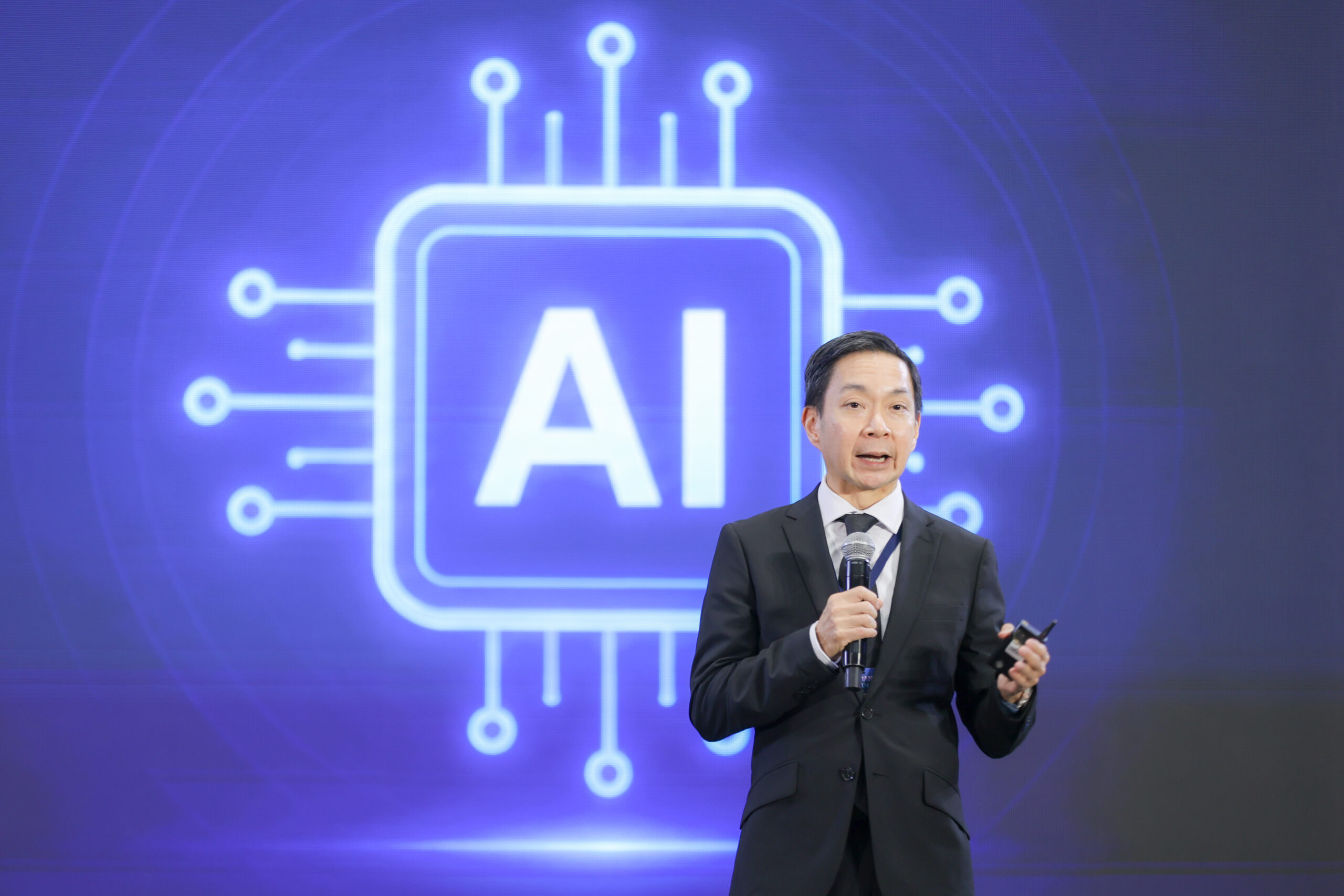
Ask Worawat Suvagondha where organisations most often go wrong with AI, and the answer has nothing to do with the technology. It is, he told HRM Asia, the moment an organisation decides AI is a technology project at all.
As President of the Personnel Management Association of Thailand (PMAT) and Chief People Officer at Siam Commercial Bank (SCB), Suvagondha sat at the centre of the question Thailand HR Tech 2026 was built to wrestle with. The event, convened by PMAT at Paragon Hall, Siam Paragon, on 16-17 June, ran under the theme Human • AI Harmony – Leading the Intelligent Workplace – a phrase Suvagondha treats less as a slogan than as a brief. Real harmony, in his reading, is not a choice between people and machines but a design decision about how both can work at once.
In practice, he said, that means letting AI do what it does best – processing large volumes of data, automating repetitive tasks and generating insight at speed – while people concentrate on what stays uniquely human: judgment, empathy, creativity, ethical decision-making, leadership and relationships. The organisations getting it right are not simply adopting tools; they are redesigning work itself, asking which tasks AI should handle, how jobs will evolve, and what new skills employees will need.
Where the balance tips
The failure mode Suvagondha described is a familiar one. Organisations invest heavily in platforms and automation, then treat the workforce as an afterthought. Productivity may rise in the short term, he said, but trust, engagement and adoption tend to suffer, and AI ends up feeling imposed on people rather than built around them. A second quieter error is measuring success through efficiency alone, while overlooking the employee experience, learning and culture that efficiency metrics never capture.
“The goal is not AI replacing people; the goal is AI amplifying people,” he said. “Technology may create efficiency, but people create meaning.”
That distinction – between what technology can accelerate and what only people can provide – runs through the way he frames the whole transformation. Systems can be upgraded and processes automated, he said, but the harder work is helping people understand what change means for them and why they should believe in it.
60 years, and a widening brief
The vantage point is partly institutional. Founded in 1965, PMAT marked its 60th anniversary last year, and Suvagondha described an arc that mirrors the HR profession itself – from a focus on personnel administration to a far broader remit spanning the future of work, the future workforce and the future workplace. The association today, he said, works not only with HR professionals but with CEOs, policymakers, universities, technology providers and the next generation of talent, operating as a knowledge hub, a professional community, a platform for workforce transformation and a connector between business, education and society. Thailand HR Tech, in his telling, embodies that shift: an event that began as a technology showcase and has grown into a national conversation about leadership, skills, culture and wellbeing.
READ MORE: Thailand’s HR community explores human-centred AI at annual HR technology event
Holding both the PMAT and SCB roles keeps two perspectives in productive tension. The bank, he said, grounds him in the realities of workforce structuring – operating-model changes and skills decisions that affect both business outcomes and people’s lives – while the association gives him a cross-industry view of where work is heading. The throughline he drew between them is that successful transformation is rarely defeated by technology. “The most difficult leadership decisions are often not technical decisions but human ones,” he said.
The capability he would not let go
Asked what single capability he tells his HR team they cannot afford to lose as AI absorbs more routine work, Suvagondha did not name a technical skill. It was the ability to help people find meaning.
As knowledge becomes instant and analysis faster, he argued, the distinguishing work of HR moves away from managing processes and toward something harder to automate: helping people make sense of change, navigate uncertainty and stay connected to purpose. People do not come to work only for a salary or a task list, he said; they want to feel their work matters and that they are part of something larger. The job of HR is to turn organisational objectives into something people can relate to and believe in.
“In the age of AI, knowledge will be abundant and technology will be widely available,” he concluded. “What will distinguish great organisations is not just how intelligently they operate, but how meaningfully they engage their people.”
Coming in Part Two: JOBTOPGUN, Humanica and Darwinbox build very different AI for HR. Ask each of them where it stops – and they all point to the same place. Stay tuned.