

AI has moved decisively from pilot to production. According to Kyndryl’s second People Readiness Report, a global study of 1,100 senior business and technology leaders across eight countries, 57% say AI is now embedded in core business processes or deployed broadly across the enterprise – up sharply from the 35% who reported full integration a year ago.
Yet as the technology settles in, confidence in the people expected to work with it is moving the other way. Just 23% of organisations believe their workforces are fully ready for AI, a six-point drop from last year, and 79% agree the speed of AI will outpace their organisations’ workforce, governance and operating models.
The findings land at a moment of heavy investment: worldwide AI spending is forecast to reach US$52 trillion in 2026, a 44% year-on-year increase, according to Gartner. So is the industry investing in the wrong order – technology first, people later?
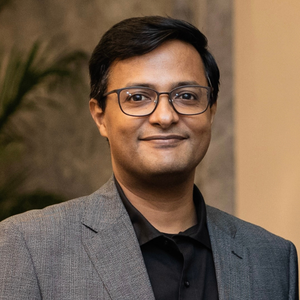
Not quite, says Dr Vishnu Nanduri, AI Innovation Leader, ASEAN and South Korea, Kyndryl. “I would not say organisations are investing in AI too early. The bigger issue is that many are scaling the technology faster than they are changing how work gets done,” he tells HRM Asia.
When AI is treated as a technology rollout, he explains, the focus tends to fall on access – which platform to deploy, who gets the tool, which use cases to prioritise. “Those questions matter, but they are not enough. Leaders also need to decide which decisions AI should support, which roles need to change, and where human judgment must remain firmly in place,” he says.
The report bears this out: 61% of organisations have already started redesigning roles, yet only a third have fully implemented training programmes to help employees work effectively alongside AI. “That suggests that organisations recognise work is changing,” Dr Nanduri says, “but many have not yet built the skills, support, and management systems needed to make that change stick.”
Why readiness is falling as adoption rises
If AI is more deeply embedded than ever, why did the share of leaders who consider their workforce fully ready fall? Dr Nanduri pointed to two forces working at once: the benchmark for readiness has shifted, and real gaps in workforce systems are showing.
“Two years ago, an organisation might have considered itself ready if employees were using generative AI tools or if the business had a few promising pilots. That definition no longer holds,” he says. “Rather, the question is: are your AI investments delivering business impact? And are you embedding AI into core processes, workflows, and decision-making? Readiness has to mean more than basic adoption.”
That higher bar spans the organisation: employees need to know how to collaborate with AI, managers need to know how to govern it, and organisations need clear accountability, skills visibility, and policies on what AI can and cannot do. “The drop to 23% does not necessarily mean organisations have gone backwards,” Dr Nanduri adds. “It suggests they have become more realistic about what AI at scale requires.”
The skills pressure is real, however, Half of leaders (52%) say it has become more challenging to find employees with the right skills to advance their AI strategy – a gap that leaves readiness resting largely on how well organisations develop the people they already have.
What the Pacesetters do differently
The report identifies a group it calls Pacesetters – the 9% of organisations achieving the strongest results from AI. What separates them is not a better strategy or technology, but three operational behaviours: redesigning roles around AI, implementing change management so the workforce understands its new operating model, and building workforce readiness. The payoff is measurable: Pacesetters are 1.5 times more likely to achieve AI-related revenue growth and 1.6 times more likely to report better innovation in products and services.
What does redesigning a role around AI actually look like? “Role redesign starts by looking at the work, not the job title,” Dr Nanduri says, pointing to roles emerging within Kyndryl itself, such as Human Systems Architects, “who design how people and AI collaborate as the systems are being built – not after deployment,” and forward-deployed engineers who operationalise AI solutions with customers in production environments.
READ MORE: Where AI takes over, where humans stay – and where work simply changes
In practice, a role is no longer defined only by the tasks a person performs. “It is defined by how that person works with AI, validates outputs, handles exceptions and remains accountable for outcomes,” he explains. An employee may shift from gathering information manually to interpreting AI-generated recommendations and deciding when human review is needed.
The most common misstep? “They put AI into existing workflows and expect productivity to follow,” Dr Nanduri says. “Pacesetters take a more deliberate sequence. They redesign roles first, implement change management and evolve their culture so employees understand where AI fits into their work.”
Autonomy is outrunning trust
The stakes are rising as autonomous AI agents enter the picture. According to the report, 81% of organisations expect AI agents to make impactful decisions within the next year – yet only 25% completely trust AI systems operating without human oversight.
For Dr Nanduri, that shift redefines management without replacing managers. “As AI agents take on more operational tasks, managers will spend less time supervising routine execution and more time setting the boundaries for how work gets done,” he says. A team may soon include employees working alongside specialised AI agents handling analysis, workflow execution, service management or compliance checks. “The manager’s role becomes less about assigning every task and more about orchestrating the system,” he adds.
That is also where governance becomes a workforce issue rather than a purely technical one. A third of organisations (33%) say they have clear policies on which decisions AI can and cannot make, and 27% are using a registry and monitoring capabilities for all their AI systems. The report finds that organisations with stronger governance report higher workforce trust in their AI strategy – and that high-trust organisations are significantly more likely to see transformative outcomes from their AI investments.
“Organisations want the speed of autonomy,” Dr Nanduri concludes, “but they still need human accountability and clear guardrails.”