

Global expansion is decided in the boardroom, but it is tested somewhere far less glamorous: the payroll run. Every new market brings its own statutory regulations, its own filing calendar, and – too often – its own vendor, adding another system to an already fragmented stack. For the C-suite, what begins as a growth strategy can quickly become an administrative drag on the very teams meant to enable it.
It is precisely this gap between international ambition and day-to-day human resources that BIPO has spent 15 years building the infrastructure to close. And the Singapore-headquartered payroll and HR technology platform is now entering its next phase of growth, backed by a US$50 million investment from Apis Growth Fund III, managed by Apis Partners Group, a private equity firm investing in tech-enabled businesses in financial infrastructure and services.
The scale behind the announcement tells its own story. Founded in 2010, BIPO today supports around 700,000 employees worldwide, processing close to US$2 billion in payroll payments annually across more than 170 countries and regions for nearly 6,000 corporate clients. The investment – the ninth from Apis Growth Fund III, which recently closed at US$1.23 billion – will expand BIPO’s proprietary payroll infrastructure and support its plan to help multinational organisations enter new markets faster.
Three pillars, one roof
What distinguishes BIPO in a crowded HR technology market is not any single product, but the combination. The organisation delivers three core services – its Human Resource Management System, Global Payroll Outsourcing, and Employer of Record services – under one roof, an integrated offering that few players in the industry can match.
For CHROs and CFOs, the practical implication is consolidation. BIPO’s payroll engines are proprietary and developed entirely in-house, serving markets across Asia-Pacific, including Singapore, Hong Kong, Malaysia, Indonesia, the Philippines, Thailand, Vietnam, China, and Australia. Rather than stitching together a different provider for each market, finance and HR teams need only one unified platform – and one vendor – to run multi-country payroll, replacing the disparate, siloed processes that have historically weighed on international HR departments.
Compliance, meanwhile, is not an add-on but an architecture decision. Statutory regulations are integrated directly into the platform, ensuring salary calculations, payments, and claims remain accurate as local labour laws change – without relying on external legal audits to catch what the system should already know.

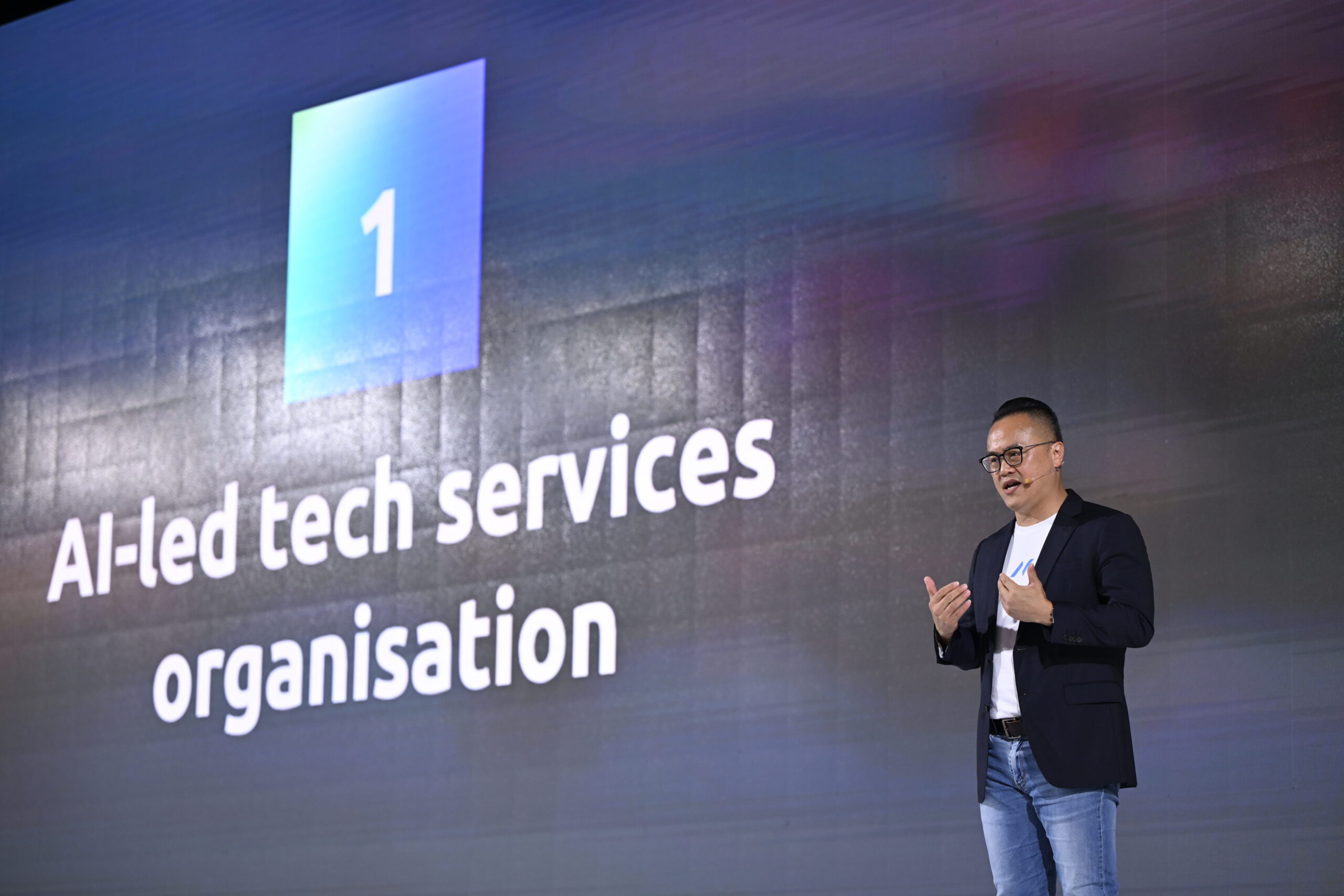
“The most common misconception is to treat payroll as a series of local checkboxes instead of one connected system,” said Michael Chen, CEO of BIPO. “Every market in Asia-Pacific has its own regulations, tax structures and statutory requirements, but the businesses that scale successfully are the ones that build a single, unified view across all of them from day one. When payroll is fragmented, so is visibility, compliance and control. The organisations that get this right treat payroll as a strategic asset that supports every market they operate in, whether they are expanding across Asia-Pacific or scaling globally.”
A bridge that runs both ways
That two-way traffic is central to BIPO’s positioning. For organisations in Europe and North America, Asia-Pacific remains one of the world’s most attractive growth regions – and one of its most operationally complex, with regulatory environments that vary sharply from market to market. BIPO’s regional depth, paired with its Employer of Record service, acts as a bridge: organisations can onboard and compensate talent in new markets swiftly, with full transparency over data, leave, and expenses within a single interface.
The same infrastructure works in reverse. For Asia-based organisations with global ambitions, the platform provides the confidence to scale into new markets without building compliance expertise from scratch in each one.
Looking ahead, the new investment will be directed towards accelerating BIPO’s AI capabilities and strengthening research and development across Singapore and its regional hubs – advancing the organisation’s ambition to become Asia’s premier AI-embedded payroll and HR platform. Notably, BIPO is clear-eyed about where automation ends: the human oversight critical to compliant payroll execution stays in place, with AI enhancing decisions in areas such as workforce scheduling and payroll accuracy rather than replacing the judgment behind them.
Operating across more than 50 offices, BIPO’s integrated payroll and HR solutions have earned consistent recognition through leading independent industry benchmarks, including the Everest Group Multi-Country Payroll (MCP) Solutions PEAK Matrix Assessment.
For business leaders, the key takeaway is less about a funding milestone than about what it signals: the operational complexity of a borderless workforce is a solved problem – for organisations with the right infrastructure in place. When the next market entry lands on the agenda, the question is no longer whether the strategy is sound, but whether payroll can keep pace. Success now hinges on moving away from fragmented local vendors and anchoring your expansion to a single, unified global payroll engine that has localised compliance already built into the code.
Click here to find out more about BIPO’s payroll and HR solutions.