
Different tools, same verdict: The AI question has moved on
- Josephine Tan
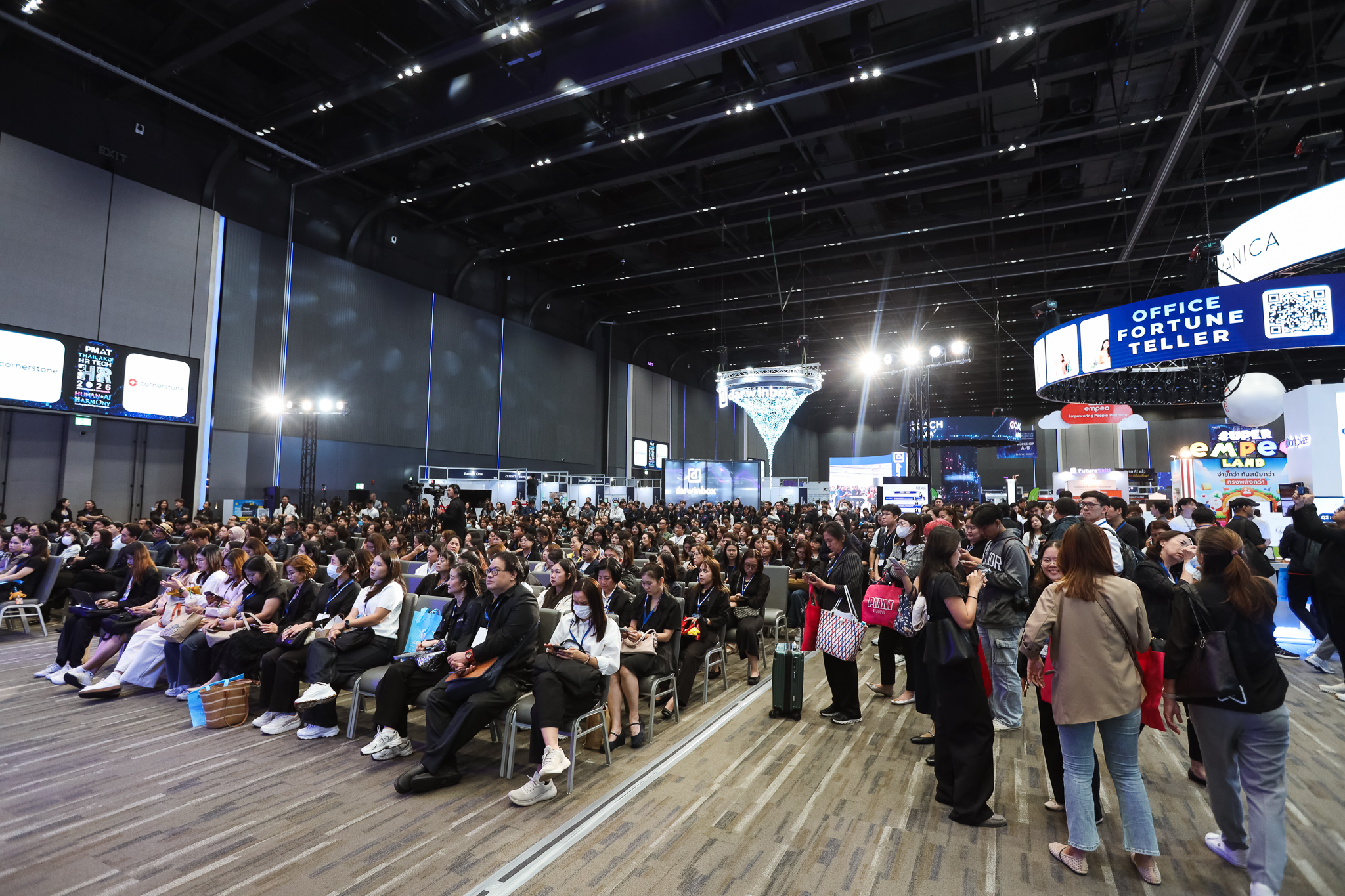
If part one of this series found PMAT president Worawat Suvagondha arguing that AI harmony is a design problem rather than a technology one, the event’s exhibition floor offered an unplanned second opinion. Among the exhibitors at Thailand HR Tech 2026 – held at Paragon Hall, Siam Paragon, on 16-17 June under the theme Human • AI Harmony – Leading the Intelligent Workplace – the same conclusion kept surfacing, reached not from the conference chair but from the specific problems each organisation is hired to solve. Few buyers were still asking whether to adopt AI. The harder questions have moved downstream.
JOBTOPGUN: From waiting to hunting
For JOBTOPGUN, the most common question from HR buyers is blunt: why is our usual hiring process not working anymore? Teams report fewer quality applications, longer time-to-fill and competition for the same narrow pool of skilled people. The realisation that follows, the organisation said, is that the strongest candidates are not in the applicant pile at all – they already have jobs and are not browsing job boards. That reframes the task from attracting more applicants to finding the right person before a competitor does, a shift JOBTOPGUN packages as a “brave new world of hiring”: moving from posting and waiting to actively hunting across the market.
What surprised the organisation most, it said, is how quickly leaders grasp that hunting is only half the job. Reach out to top talent and they will look you up – and if they find silence, even the best outreach falls flat. That is the thinking behind its employer-branding tools, such as HR SAY and Office 24, where employees describe their workplace in their own voice rather than through a corporate brochure.
On the sourcing side, the organisation’s Top Picks engine reads across profiles daily to surface a shortlist of matched candidates, including passive ones, with a plain-language explanation of each fit; a separate AI candidate analysis reads applicants across five behavioural dimensions – how they work with others, communicate, pursue results, respond to authority, and learn and grow – anchored, the organisation stressed, to evidence from a person’s actual history rather than to assumptions.
Its stated policy is that AI should raise questions, not pass judgment: flag what deserves a closer look, but leave the decision, the conversation and the relationship to people. The market, JOBTOPGUN said, has matured past asking whether to use AI; the questions it now hears are whether the technology can be trusted and whether candidates will be treated fairly. “AI reads the data; humans read the person,” the organisation said.
Humanica: From operations to intelligence
Humanica reported a parallel shift in what HR leaders are asking for. Inquiries this year, a spokesperson from the organisation said, have moved away from basic operational technology toward strategic workforce planning and people analytics – and toward what the spokesperson described as a workforce intelligence platform capable of proactive skill-gap mapping, workforce optimisation and real-time burnout detection.
The biggest surprise, in Humanica’s account, was tonal. The older anxiety about AI replacing human talent has, in its words, virtually disappeared. HR leaders are now actively seeking to build what the organisation calls an “augmented workforce,” in which technology absorbs administrative friction so the HR function can become more strategic, higher-impact and more human-centric. The spokesperson tied that ambition directly back to the event’s theme: not people displaced by machines, but people freed by them.
Darwinbox: From tools to readiness
Darwinbox framed the same maturation as a question of readiness. The questions it hears most are about preparing the workforce and culture for an AI-enabled future – AI-human integration, upskilling and reskilling, and what the future workforce will actually look like – with organisations no longer debating whether to adopt AI but how to do so responsibly.
The biggest obstacle, a spokesperson from Darwinbox said, is organisational readiness, which it argued requires far more than buying technology: quality data, leadership alignment, workforce visibility and a clear view of skills across the business. Fragmented systems and disconnected people data remain a common stumbling block, leaving organisations without the single source of truth needed for confident decisions on talent and transformation. Many organisations, it said, discover they are not as ready as they assumed.
READ MORE: AI harmony is a design problem, not a technology one
AI is already delivering value in recruitment, employee services, workforce analytics and HR operations, Darwinbox said, though it was deliberately careful with the word “oversold” – describing its own approach as applying AI to business and employee outcomes rather than adding it for its own sake, and pointing to its claim to be the first human capital management (HCM) provider to build its own model context protocol (MCP) server as evidence of that posture. The opportunity ahead, it said, is “not about replacing people with AI. It’s about helping people work better with AI.”
The same answer, three ways
Stitched together, the three exhibitors describe a market that has stopped arguing about adoption and started arguing about integration – and, almost in unison, locate the decisive variable outside the technology itself. JOBTOPGUN puts it in the gap between reading data and reading a person; Humanica in the elevation of HR from administration to strategy; and Darwinbox in data foundations and change readiness.
It is, in the end, the same premise PMAT’s Suvagondha set out from the conference stage in part one of this series – that the future of work belongs not to the organisations with the most advanced AI, but to those best at combining human capability with machine intelligence.