
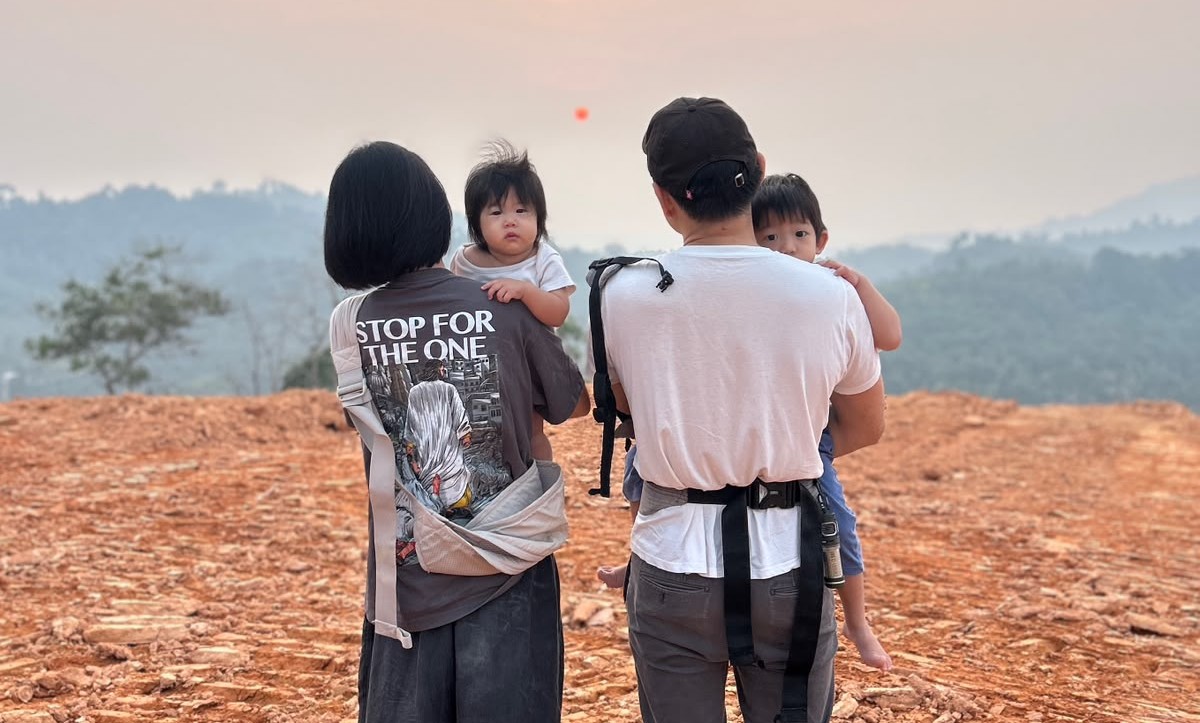
Centre for Fathering CEO Dr Xander Ong with his family during a trip to West Kalimantan in August 2026.
In the workplace, we spend a great deal of time ensuring employees know what they are responsible for. We define roles, set KPIs, hold one-to-ones, invest in training, and build systems of accountability so that every employee knows where their responsibilities lie and why they matter.
Fathering is not that different.
A man becomes a father when his child is born, but he grows into fatherhood when he begins to take ownership. It means going beyond the desire to be a “good father” to truly owning specific responsibilities in his child’s life, such as routines, school matters, emotional needs, difficult conversations, caregiving, and the countless decisions that make up family life.
That shift from helping to owning is also central to good leadership. It means seeing what needs to be done, taking responsibility, and following through without waiting to be asked. In that sense, fatherhood develops many of the same qualities we value in leaders at work: pressure, responsibility, learning, and practice.
I have discovered this personality. In the past three years as a father, one of my biggest revelations has been the mental load my wife carries in raising our children. It is easy to think being involved means helping when asked. But that kind of involvement is not the same as noticing what needs to be done and taking responsibility without being directed.
When my son was born in 2023, I initially approached caregiving like a list of tasks to complete. If he was more easily soothed by my wife, my instinct was to hand him back to her. I was physically present, but I was not developing confidence as a father or becoming the parenting partner I wanted to be.
This is why the five-year study by researchers from the University of Manchester and Manchester Metropolitan University resonated with me. Fathers who spent a period caring for their child alone developed greater practical competence and emotional confidence and remained more involved in caregiving five years later. What mattered was not simply being at home but taking responsibility independently.
A father being present with the mother and baby during the early months is immensely valuable. Fathers can support mothers through recovery, bond with their newborns and learn their children’s routines. But with the support of confinement nannies, grandparents, or domestic helpers, fathers can sometimes remain in a supporting role rather than feel confident making caregiving decisions on their own.
The introduction of 10 weeks of Shared Parental Leave from 1 April 2026 and additional childcare leave announced during Singapore’s 2026 National Day Rally creates an opportunity to change this. Parents would have greater flexibility to arrange their leave so that fathers can set aside time to become their child’s primary caregiver after the mother returns to work.
It is still too early to know whether the expanded entitlement will lead more fathers to undertake solo caregiving. Policy can provide the time, but family decisions and workplace culture will determine how fathers use it.
The signals from an unsupportive workplace are often subtle. A father may be formally on parental leave, yet meetings continue to be scheduled, messages still demand immediate replies, or colleagues speak of his absence as a burden. These cues suggest that taking parental leave carries an unspoken career penalty.
A father-friendly organisation actively supports fathers in taking parental leave and creates the workplace conditions that make it possible. Senior leaders set the tone by taking their own parental leave and prioritising their families. Managers are equipped to plan constructively for a father’s absence and ensure that employees are not disadvantaged in performance assessments or career progression for using their leave entitlements.
When my daughter was born in October 2025, I took 10 weeks of parental leave. I was able to do so because my board directors, my colleagues, and I had prepared for my absence months in advance. Responsibilities were reassigned, expectations were clear, and the organisation continued to function without requiring me to remain constantly available.
That space allowed me to be more fully present at home and take greater responsibility for caregiving. Becoming a father for the second time reinforced what I had begun to learn after my son was born: confidence does not come simply from being near one’s child. It grows when a father takes responsibility, makes decisions, and learns to respond to his child in his own way.
READ MORE: Beyond budget boost: Workplace revolution to support large families
But that transformation should not be left to chance. Like the growth of a bonsai, development often requires deliberate guidance, shaping, and support. Fathers need opportunities to learn, practise, reflect, and build their confidence.
This is where the Centre for Fathering and the DADs for Life movement come in. Through our fathering programmes and peer support groups, fathers learn practical tools and gain the confidence to move from being helpers to owners. We have seen the impact of this support in schools and communities, and we are now working to bring more of it into workplaces, so that no father has to figure out his role alone.
Give a father the opportunity, responsibility, and support to take ownership at home, and he can grow in confidence, empathy, and responsibility. These are also qualities we value in leaders and managers.
Employers can help fathers grow by enabling them to be present and engaged at home, because involved fathering develops ownership, responsibility, and empathy, qualities that shape stronger leaders at work.
Parental leave should be seen as part of an employee’s growth and development. If we want colleagues who take ownership and lead with empathy, we should enable them to step fully into one of the most formative roles they may ever undertake, that is – being a father.
About the Author:
 Dr Xander Ong is CEO of Centre for Fathering and a father of two young children born in 2023 and 2025.