
The technology is the easy part. Transformation stalls on the people.

Singapore’s S$400 million Enterprise Workforce Transformation Package is a bet that the workforce, not the tooling, is the missing piece of the AI.
Taiwan’s AI boom is showing up in the overtime data
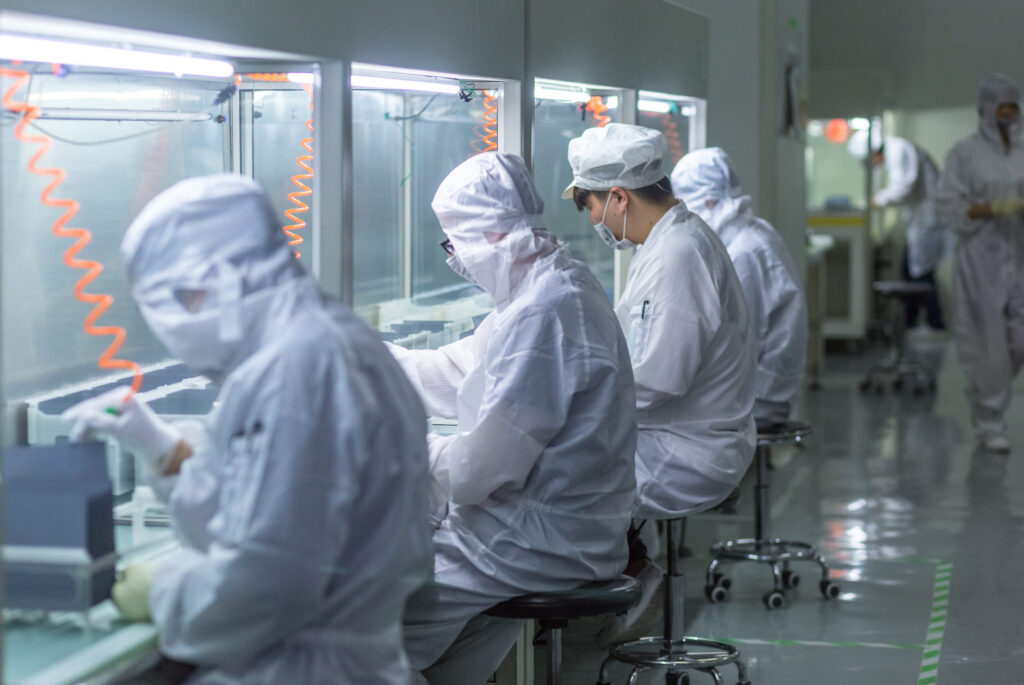
Electronic components employees averaged 28.7 hours of overtime in June – more than three times the national average – as AI-driven orders reshape where Taiwan’s manufacturing hours are going.
Oracle puts 13 AI agents to work across the talent lifecycle

Thirteen agents built into Oracle Fusion Cloud HCM span role design, learning content, manager coaching, and workforce planning.
Zuckerberg’s AI vision: More jobs, fewer workers and ‘personal superintelligence’

Mark Zuckerberg’s new AI manifesto argues that automation would not outpace human capability and outlines what that means for HR leaders.
The dull work built your senior people. Now AI does it first.

If AI absorbs the routine tasks juniors once cut their teeth on, where does the next generation of judgement come from? Dr Gary Ang, co-author of a new Asia Tech Alliance paper, on the pipeline problem HR is not yet planning for.
When disruption is the operating environment, ‘bouncing back’ isn’t the whole job

Organisations have long treated resilience as the ability to recover from a discrete shock. Dr Athenais Sivaloganthan of International SOS argues that the definition no longer fits the conditions employees are actually working under, and that the psychological side of the equation has been the slowest to catch up.
AI didn’t invent hiring fraud. It made it harder to see.
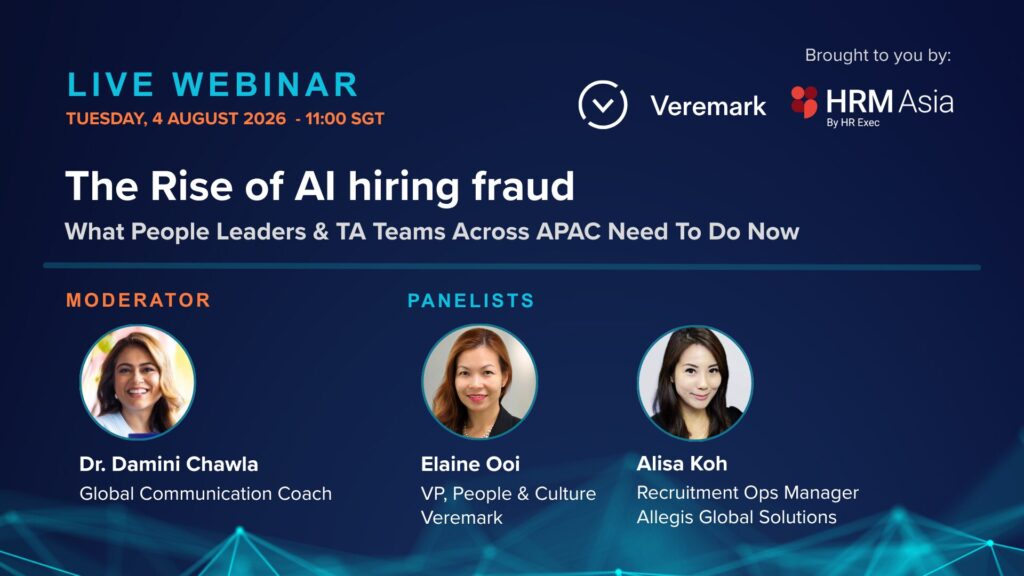
Candidates are using AI to prepare more effectively, and recruiters are struggling to tell preparation from inflation. At an HRM Asia webinar with Veremark, panellists argued the question has moved from whether a CV matches a role to whether the experience behind it is real.
First the layoffs, then the rehiring: AI’s expensive round trip

From Ford’s assembly line to Klarna’s call centres, organisations that bet on AI over experience are quietly buying it back, often for more than they saved.
Employees in Hong Kong are among the world’s heaviest users of AI. Most have never been trained to use it.

Weekly AI use in Hong Kong runs at more than double the global average, but nearly 60% of employees have never received any AI training, an HKUST study of 3,722 professionals finds.
AI less likely to replace jobs in developing economies, but gains aren’t guaranteed – World Bank

The World Bank’s latest report finds that generative AI threatens far fewer jobs in developing economies than in wealthy ones, but warns that the productivity upside will go uncaptured without investment in skills and infrastructure.
Malaysia urged to review wage structure beyond minimum pay to support income growth

The National Wages Consultative Council says employees earning just above the minimum wage are being left out of pay rises and that fresh graduates are starting on less than they did two decades ago.
Finishing the training isn’t the same as changing how you work

As Samsung reskills its workforce from the top down, Samsung Indonesia’s Christine Josephine shares why leadership makes change believable and what it takes to make it stick.
The tool users and the outcome-getters: Hiring’s new diving line

A wage premium for AI skills is already measurable across the region. Kazunori Fukuda, who runs Sansan in Singapore and Thailand, argues most hiring processes still cannot tell who has earned it.
CHRO Thailand 2026 to spotlight AI, talent and workforce transformation
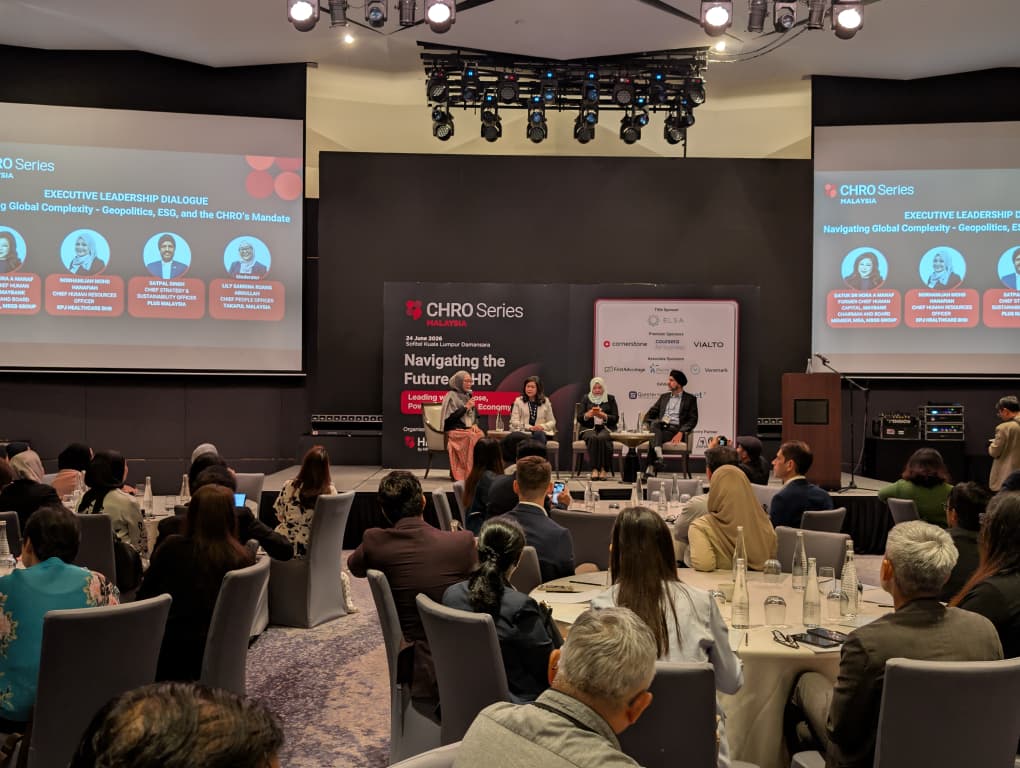
From AI governance to talent retention and workforce productivity, CHRO Thailand 2026 will spotlight the pressing people challenges shaping the future of work in Thailand.
Retrenchments climb to five-year high as Singapore’s job market keeps growing

Singapore’s labour market remained resilient in Q2 2026 with employment continuing to grow despite a rise in retrenchments driven by business restructuring in key sectors.
AI works better when HR helps lead it, new research finds

A recent survey shows AI’s real fault line is organisational: whether HR has a formal seat at the table for AI implementation.
Age-aware isn’t enough. It’s time to become age-inclusive

Age is one of the last dimensions where assumptions still pass as management judgment. Rachele Focardi on why avoiding the generational conversation is making things worse, not better.
The hardest question in AI transformation: “So what?”

Two years into HubSpot’s AI-first journey, adoption and fluency turned out to be the easy part. The real work, says its talent chief, lies in a “missing middle” most organisations never see.
Allyship in technology: Why intentional support still matters

NTT DATA’s Png Kim Meng calls on technology leaders to make allyship an everyday practice that challenges bias, broadens opportunity, and fuels business success.
What screening still catches when the paperwork is perfect
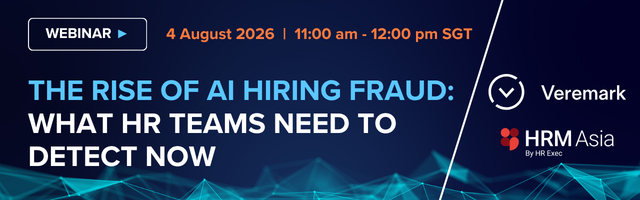
An upcoming HRM Asia webinar, held in partnership with Veremark, examines how AI-generated applications are moving through screening processes across Asia-Pacific and which verification layers still hold.
Nearly eight in 10 employees in APAC use AI weekly. Only 7% of firms have scaled it

A new Asia Tech Alliance paper argues the region’s adoption lead will not translate into business results until organisations redesign the work itself and bring smaller employers along.
How ADP CEO Maria Black leads through uncertain times

CEO Maria Black, marking her 30th year at ADP, says that managing a workforce is only getting more complex, and so is HR’s role.
Fathers who take solo parental leave stay more involved at home, study finds

A five-year UK study of dual-career couples found that fathers who took sole responsibility for a baby during parental leave were still sharing childcare – and still shaping their working lives around it – years later.
Beyond execution: Why the AI revolution is scaling the human premium

As AI absorbs more of the execution in knowledge work, StarHub’s Tan Toi Chia argues the real transformation is happening in how work is designed – and in the human capabilities that never show up on a balance sheet.
AI is embedding faster than workforces are adapting, Kyndryl finds
AI adoption has surged, but confidence in workforce readiness has fallen. Kyndryl’s Dr Vishnu Nanduri explains why the gap is widening and what the organisations pulling ahead do differently.
AI reshapes hiring strategies as employers in Singapore expand cross-border talent search

New research finds employers in Singapore are widening their talent search across borders as AI reshapes hiring and doing so with less urgency than their global peers.
What generative AI can and cannot do for HR, according to a Cornell professor
Cornell Professor Chris Collins discusses how generative AI’s function in human resources has already arrived as data aggregation.
Compliance asks if it was done. Governance asks if you can prove it
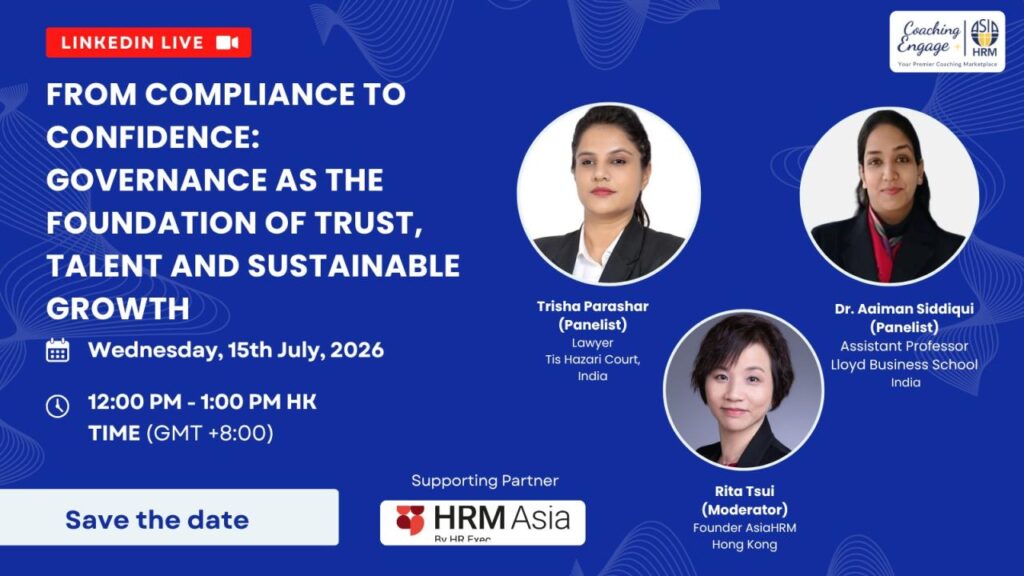
A panel of legal and academic experts unpacked why governance is shifting from control to trust – and where AI is creating new accountability gaps for HR.
Gen Z’s AI anxiety isn’t really about AI

In conversations about leadership, Gen Z’s AI anxiety is not the issue. It is a symptom of an ever-widening leadership gap.
The growth plan is global. Is the payroll infrastructure?

Backed by a US$50 million investment from Apis Partners, BIPO is scaling its proprietary infrastructure to help organisations expand across borders.