
The responsibility of being the most trusted institution in society resides with the modern employer. As trust in traditional pillars of authority continues to diminish, employees and the public alike look to organisations to provide not just economic output but also a sense of stability and ethical grounding. However, this position is precarious. Zsofia Balatoni, Co-Founder and Chief Strategy Officer at Rothman & Roman, tells HRM Asia that the stakes have never been higher for leadership. “The strongest reaction has been to the say-do gap,” Balatoni observes, highlighting a critical vulnerability for organisations today.
This gap represents the distance between an organisation’s external promises and its internal reality. In a landscape where audiences are increasingly alert to inauthenticity, any misalignment between marketing narratives and operational behaviour can lead to a total collapse of confidence. Balatoni is clear on the consequences of this friction, stating that “credibility lives or dies in the distance between external promises and internal reality”. For HR and communications leaders, this means that trust is no longer a metric that can be manipulated through clever messaging. As Balatoni puts it, “Trust is built through behaviour, not campaigns.”
Aligning internal reality with external reputation
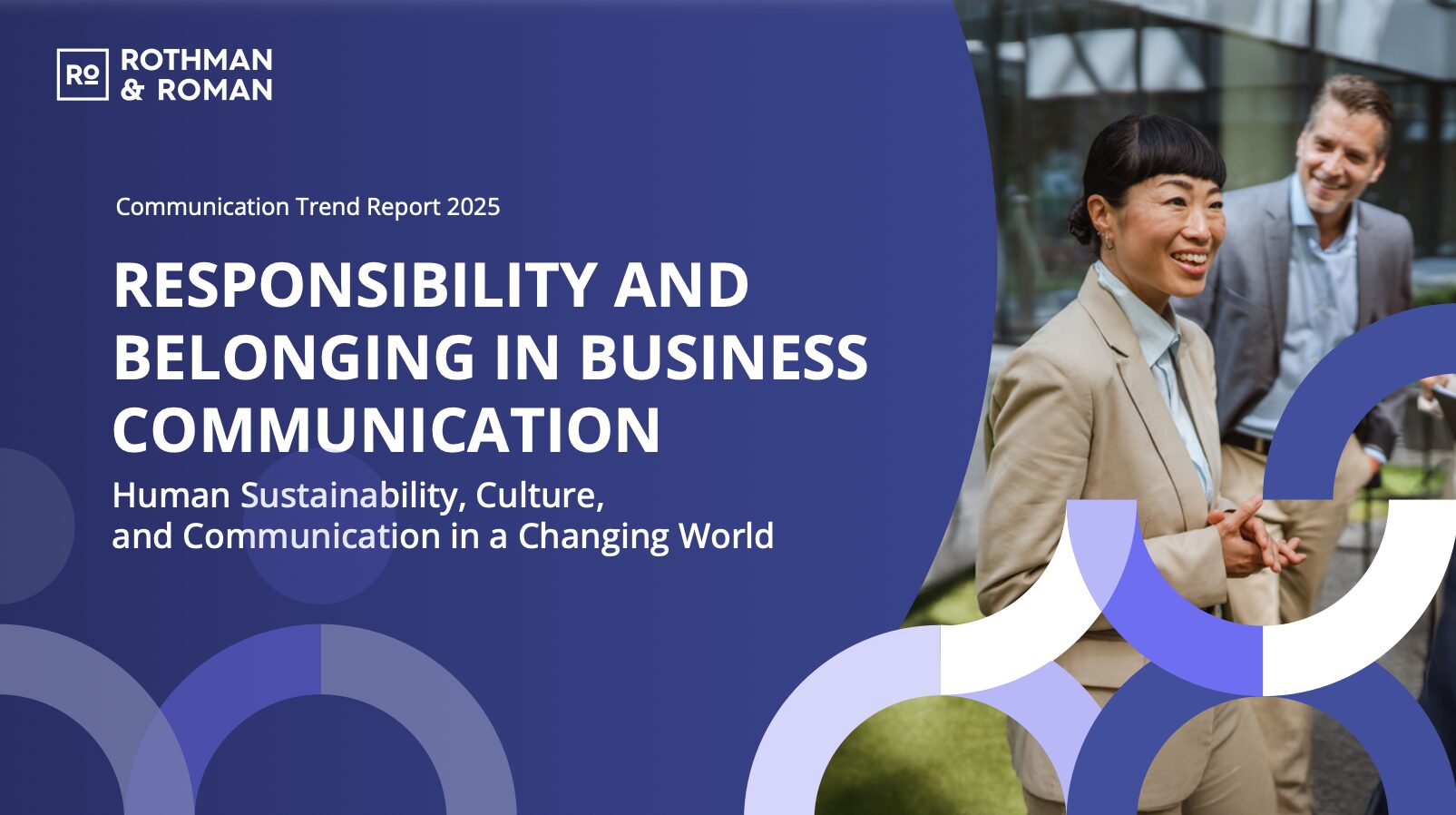
The Rothman & Roman Communication Trend Report 2025 introduces human sustainability as the essential remedy to this trust deficit. Rather than treating employee wellbeing or ethical conduct as isolated initiatives, the report suggests a fundamental shift in how organisations measure success. Human sustainability asks whether the people within and around an organisation are better off because of this presence. To answer this, the report maps sustainability across responsibility clusters, including psychological safety, inclusive hiring, and AI ethics.
Operationalising these concepts requires a departure from traditional corporate silos. Balatoni argues that “human sustainability cannot live in one department”. Instead, these responsibilities must exist at the intersection of HR, marketing, and communications. When these functions work together as a joint mandate, they create a compass for leadership behaviour that can be measured and improved.
Several organisations have moved beyond symbolic gestures into operational substance. EnterpriseSG, for instance, has implemented a “Design-Your-Career” programme that requires employees to map out five-year career plans, thereby giving them ownership of their development. Similarly, Singapore Airlines hosted LIFE 2025, a hybrid learning festival that brought together thousands of employees to focus on AI literacy. For an organisation whose core product is the physical movement of people, this investment in digital fluency signals that leadership views learning infrastructure as seriously as route infrastructure.
Architecting the workforce for an automated era
This internal alignment is vital as the global workforce navigates the integration of AI. The report identifies the current period as the most significant workforce disruption of this generation. This transition demands more than technical upskilling; it requires a human responsibility approach. The rise of agentic AI—systems that can design and direct workflows rather than just execute tasks—necessitates a new philosophy regarding talent.
Balatoni suggests that the “human in the lead” model must replace the simpler “human in the loop” framework. This shift has profound implications for recruitment and talent management. The focus is moving away from static skill sets toward “systems thinkers” capable of directing agent-driven workflows while applying human judgment. In this environment, “recruitment must assess for curiosity, adaptability and collaborative intelligence,” Balatoni says.
However, the responsibility of the organisation extends beyond the search for new talent. There is a moral and operational duty to the existing workforce. As AI alters the nature of roles, leaders must provide clarity and support. Balatoni emphasises that “organisations owe their existing people honesty about what changes, what stays and what support they will receive through the transition”. Transparency during these periods of upheaval is the only way to maintain the internal trust necessary for high performance.
Even in sectors where physical risk is a daily reality, sustainability can be measured through discipline. ComfortDelGro significantly reduced its lost-time injury rate through targeted workshops and a systematic culture of incident sharing. At Temasek Holdings, inclusion is treated as an operating principle rather than a communications item, with a focus on neurodiverse hiring and mentorship through the Temasek Women’s Network.
Ultimately, corporate success is no longer a matter of technological superiority, but of operational integrity. As the distance between external promise and internal reality continues to shrink, the organisations that thrive will be those that treat human sustainability as a strategic business dependency.
The Communication Trend Report 2025, honouring Bhavani Krishnasamy’s dedicated communication, shows that trust comes from consistent actions, not polished campaigns. By focusing on workforce adaptability and closing the “say-do gap,” leaders can create resilient institutions where human capability remains the main source of value.