

Japan’s top business lobby urges firms to raise wages

It identified young employees, workers with children, and non-permanent employees as those who are most vulnerable to inflation.
HR leaders expect to continue remote work in 2023

Nearly one in four HR leaders expect to maintain a 90-100% remote workforce, while half expect to maintain a remote workforce of 50% or more.
Unilever trials four-day workweek in Australian office

For the next 12 months, employees will have the flexibility to choose which day or set of hours is most suitable for them to take off.
Indonesia to improve quality of workforce human resources

Efforts continue to be made to improve human resources and develop vocational education to achieve inclusive and equitable development.
Employees in Singapore urged to identify career opportunities

The government plans to utilise data and artificial intelligence (AI) to generate personalised career insights for workers.
Employers in Malaysia urged to prioritise employees’ mental health

Leave should be granted to enable employees to deal with the mental stress that they feel at the workplace, says the Malaysian Trades Union Congress (MTUC).
China doles out more support for female employees

A revised law, which comes into effect January 1 next year, forbids the sexual harassment of women and reduces barriers to career advancement.
Indonesia considers minimum wage hike in 2023

The Manpower Ministry is still finalising details on workers’ minimum wage in 2023, which will be announced at the end of November this year.
Digital transformation gains momentum in Vietnam

As of end-September 2022, about 490,000 SMEs have participated in a programme that helps accelerate their digital adoption.
Employees in the Philippines can expect year-end bonus

The Department of Labour and Employment (DOLE) is set to issue an advisory to employers regarding the grant of 13th-month pay for private sector workers.
Australia to ban wage secrecy clauses in job contracts

Such clauses have traditionally been used to stop co-workers from comparing their wage package and pushing for pay hikes.
Indonesia looks to train more tech literate workers

Indonesia would need 17 million workers who are able to use and manage technology, said State-Owned Enterprises (SOEs) Minister Erick Thohir.
South Korea’s labour market urged to adjust to employment uncertainty

Job training and reskilling are measures that can be taken to create more employment opportunities in 2023, says business group.
Hybrid work increases productivity in New Zealand

About 83.2% of New Zealand employees say the ability to work from anywhere has made them happier and more productive.
ServiceNow rolls out programme focused on upskilling workers

The RiseUp with ServiceNow platform aims to train one million workers, offering over 600 free courses and 18 job-related certification paths.
Japan’s job availability improves for ninth straight month in September

This comes as employers looked to hire in preparation for a rebound in inbound tourism as the pandemic-related daily arrival cap is removed.
Total employment in Singapore expected to stagnant
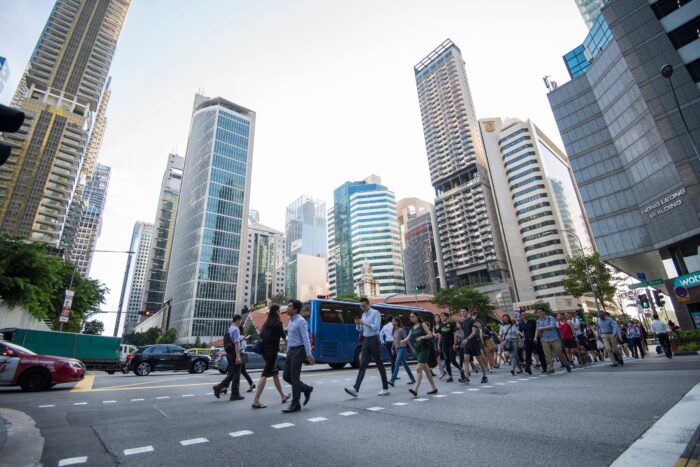
Although employment grew in Q3’2022, global conditions are likely to create an uncertain labour market in the coming months.
Bringing the best out of employees with performance management

Tony Tran, Lead People Scientist, Culture Amp, explains why effective performance management can help create happy and productive employees.
Australia strengthens flexible work rights with new workplace legislation

As part of the new legislation, flexible work will be made more accessible to employees who are parents or care givers, among others.
Younger employees struggling to adjust to flexible work

Besides facing burnout, some 20% of these employees have also expressed stress related to a lack of learning and development opportunities.
Singapore plans to double number of certified HR professionals by 2025

As workplace fairness guidelines become law, more HR professionals are needed, says Member of Parliament Patrick Tay.
Employees in Japan can receive wages through e-wallets from April 2023

Such digital wallets will have a maximum balance of 1 million yen, and employees can use the funds to make purchases or remittances directly.
New Zealand passes Fair Pay Bill to improve employment conditions

Under the Fair Pay Bill, workers will gain a right to a minimum level of training and development from their employers.
Singapore firms find talent retention and reskilling schemes most relevant

Besides schemes that help train and retain employees, firms also applied for programmes that have helped them digitalise and adopt technology.
Increasing hybrid work transforms firms in Australia

Employee experience and overall business processes are changing as employees embrace remote work post-pandemic.
Remote work increases happiness levels among employees in Japan

Remote employees are able to spend more time with their families, sleep better, and experience less stress from commuting to the office.
College graduates in South Korea not actively seeking employment

Besides the lack of job vacancies, some South Koreans are taking time to better prepare, which accounts for their inactivity in the job market.
Hybrid work arrangement still prevalent among office workers

Commuting patterns have not returned to pre-COVID levels as organisations continue to offer hybrid work.
Remote workers in Japan get more sleep

Working remotely allows employees to sleep better and feel satisfied if they balance telework and office work appropriately.
Australia extends paid parental leave to more families

From July 2023, parents hoping to qualify for the extended parental pay scheme will be assessed on their combined income.