

Apple employees reject return-to-office directive

A petition has been launched to advocate for flexible working arrangements to accommodate the varied needs of Apple employees.
Just been promoted? You’ve got 3 months to succeed. Or else!

Ritu Mehrish, Executive Coach and Global Speaker, reveals the six pillars of success for leaders in transition in the workplace.
More than 10,000 businesses in Japan breached overtime laws

Japan’s labour ministry says it confirmed cases of illegal overtime work at more than 10,000 business places across Japan in fiscal 2021.
Australia urged to scrap tax cuts for wealthiest earners

Men are expected to receive AUD$160.6 billion of that money, while AUD$82.9 billion will go to women.
MSMEs key to creating jobs in the Philippines

Growing micro, small and medium enterprises (MSMEs) will help create job opportunities in the country, said non-profit organisation Go Negosyo.
Singapore announces initiatives to attract top foreign talent

The government intends to attract a world-class talent pool, which it believes will also help the retention of local talent.
Cloud-based HCMs: What makes for successful implementations?

Josh Bersin identifies what makes HCMS implementations successful and how these meet organisations’ expectations.
Indian employees look for job fulfilment

Around 34% of Indian employees, compared to 19% globally, say they are extremely or very likely to switch to a new employer.
Japanese firms raising wages to attract workers

Despite increasing wages, digitalisation is seen as the most popular strategy among Japanese firms to address the labour crunch.
Australia to boost migrant intake as labour shortages affect businesses

Australia is set to lift its intake of migrants to a record 200,000 arrivals a year as it attempts to combat a drastic shortage of workers.
Malaysian government asked to delay amendments to employment act

The Malaysian Employers Federation (MEF) cited economic reasons for delaying the implementation of the employment act amendments.
Adopting a people-centric approach to performance management

Dr Joel Davies, Senior People Scientist at Culture Amp, explains how organisations can adopt a people-centric approach to performance management.
Six-day workweek unattractive to talents in India

Executive talents prefer a five-day workweek for office roles, instead of a long five-and-a-half or six-day workweek.
New Zealand records increase in weekly earnings

There were also more full-time workers and fewer part-time workers, with the latter stemming from a decrease of women workers in part-time jobs.
Singapore aims to hire more working-age persons with disabilities

The republic is targeting to have 40% of working-age persons with disabilities (PWDs) employed by 2030, up from about 30% between 2020 and 2021.
Taiwan trade group pushes for minimum wage hike cap

A larger increase might prompt companies to pass additional costs onto consumers, thus driving up prices.
Why a modern HR mindset is key to future-proofing businesses

Accenture’s Gaston Carrion explains why leaders must begin to embrace a modern HR mindset and identifies the five pillars of modern HR.
CHRO Series Indonesia: Putting HR strategy into action with impact
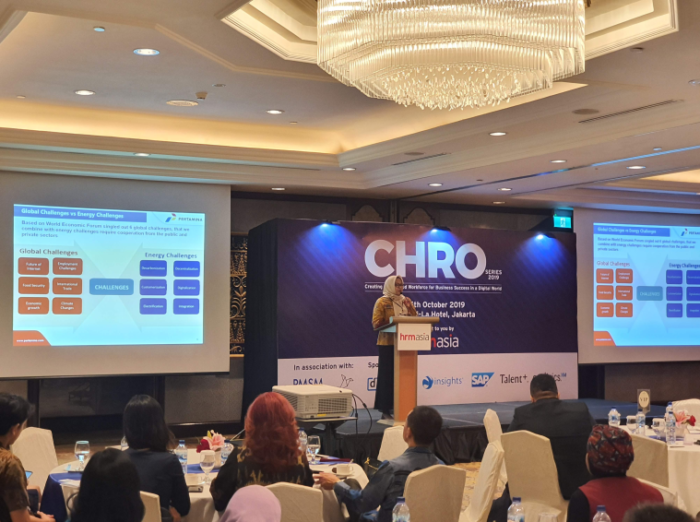
HRM Asia’s CHRO Series Indonesia will return for its 7th edition on October 20 this year at Shangri-La in Jakarta.
Women’s job opportunities key focus of Australia’s job summit

Growing economic productivity, boosting wages and removing barriers to employment are among other topics that will be highlighted.
Indonesia outlines recommendations for developing tomorrow’s workforce

To produce human resources that are relevant to industrial dynamics, educational curricula that focus on practical skills are imperative.
Profit growth at Japanese firms unlikely to translate to wage hike

Businesses are hesitant to raise wages amid the global economic outlook and increased risk of a global recession.
Redefining employee engagement with BI WORLDWIDE

Omar Hadoui, Managing Director, APAC, BI WORLDWIDE, discusses the modern rules of employee engagement to support talent retention.
Flexible work arrangements a priority to jobseekers in Singapore

Employees are also looking for jobs that align with their aspirations and lifestyle to create a more meaningful work purpose.
Majority of Australian firms do not mandate office presence

Over half of HR professionals surveyed expected that remote working arrangements would remain unchanged over the next two years.
Employers should have option of retaining retirees in the Philippines

The hiring and retaining of workers past retirement age should not be mandated and instead be left to the discretion of employers.
Why a successful organisation needs satisfied employees

Gerald Pang, Director, Solution Consulting, Employee Experience, APJ, ServiceNow, shares how to create more meaningful employee experiences.
More young South Koreans take up flexible jobs

They like the flexibility to choose their working hours and enjoy the freedom from corporate culture and relationships.
Succession planning: The secret ingredient to retain top talent

Rob Squires, Vice President and Head of Sales for Asia and Japan, Ceridian, highlights how organisations can leverage technology to prioritise succession planning.
More Apple employees returning to the office

Beginning September 5, a mandatory three-day work policy will see employees return on Tuesdays, Thursdays, and a regular third day.
Chinese city facilitates return to work for moms

The Zhongshan city government in Guangdong province has introduced a series of incentives to support “working moms” reentering the workforce.