

Malaysia addresses skills mismatch to boost employment

Skills mismatch is a critical problem, especially among first-generation graduates, said HR Minister Datuk Seri M Saravanan.
Employment for non-regular workers in Japan rises

Japan’s unemployment rate June remained unchanged at 2.6%, down 0.3% year-on-year, with employment for non-regular workers rising by 0.9%.
Creating a competitive digital workforce in the Philippines

A new bill to prepare more Filipinos for jobs through education and training on digital skills has lapsed into law, said Senate President Juan Miguel Zubiri.
‘Quiet quitting’ gains traction in Australia

The concept sees employees continuing to perform their job duties but quit the habit of going above and beyond in the workplace.
Workplaces in Singapore told to increase lactation facilities

Workplaces should have more lactation rooms so that working mothers can have paid nursing breaks, said MP Louis Ng.
ESG practices key to long-term sustainability

Investors are avoiding investments in companies that are not participating in sustainable activities, Malaysian firms have been warned.
Lawmaker calls for 14th month pay in the Philippines

A lawmaker has filed a bill pushing for a 14th month pay for all employees in the public and private sectors amid rising inflation.
South Korean firms explore shift to virtual offices

Employees can work in the same virtual office with their colleagues and mingle with other workers from other firms in the shared lounge.
Redefining employee experience to change work for good

In a constantly changing world of work, employee experience is key to building an interconnected and future-ready workforce.
WFH a hiring standard in India’s tech sector

Three in four employees in the IT sector refuse to be in the office for even one day a week, citing reasons such as long commutes.
Will a four-day workweek take off in Singapore?

With many employees in Singapore indicating that they want a four-day workweek, some firms have already adopted the practice.
Jobs creation and skills development prioritised in the Philippines

Employers that are signatories to the 1 Million Jobs (1MJ) manifesto will flesh out their plans and strategies to create quality employment.
Australia needs 650,000 more workers to reach 1.2 million tech jobs goal

To achieve that, the government aims to fix gaps in education and training products and pathways and improve the diversity of the tech workforce.
Employers in Malaysia urged to prioritise employee mental health

The Alliance for Safe Community (ASC) has called on employers to implement workplace health promotion (WHP) to better manage workers’ mental health.
India has no plans to provide menstrual leave

There are no proposals being examined to include such leave in regulations, said India’s Union Minister for Women and Child Development.
Businesses in Japan urged to pay employees more

The government has urged companies to raise wages on par with price hikes of around 2%, a level the central bank has set as its inflation target.
Australia moves to provide casual workers with sick leave

The Victorian state government has paid out A$6m, covering over 30,000 workers who have signed up to its pilot scheme to trial sick leave for casuals.
More female graduates in Malaysia find employment

The unemployment rate gap with men has been narrowed for a third straight year but differences remain for jobs requiring higher level degrees.
Employment in Singapore rises in 2Q2022

This was attributed to the hiring of foreign workers in the construction and manufacturing sectors, as well as more residents finding employment.
Minimum wage in Thailand set to rise by 5-8%
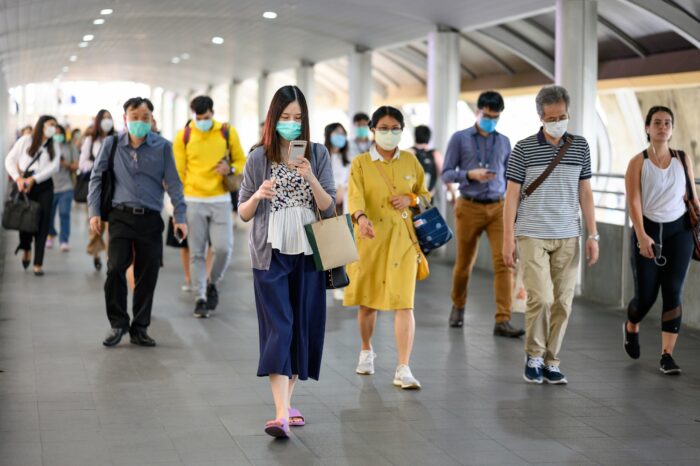
A new hike in minimum daily wages of between 5% and 8% is expected in September, since the rates have remained unchanged for over two years.
Australia adapts jobs strategy to achieve high-skills nation

Jobs and Skills Australia will advise on a range of current and emerging labour market and workforce skills and training issues.
Some companies in Malaysia defy minimum wage rule

The Malaysian Trades Union Congress (MTUC) has claimed that there are still several companies which have not complied with the new minimum wage rule.
Informal workers in Indonesia hit all-time high

In the early days of the pandemic, the percentage of informal workers was 56.64%, but this continued to increase till almost 60% as of this February.
New laws in Australia push for paid domestic violence leave

More than 11 million Australians, including about 2.4 million casual workers, will soon have access to 10 days of paid domestic violence leave.
Upskilling of workers a priority in the Philippines

Besides upskilling workers, the government also intends to address the jobs mismatch issue and boost jobs creation in the country.
Malaysia clamps down on workplace sexual harassment

An Anti-Sexual Harassment Bill is expected to be passed, along with the set up of a tribunal to investigate complaints of sexual harassment.
Singapore firms and workers urged to adopt growth mindset

Upskilling requires effort and very strong commitment from both workers and employers to bridge the skills gap, said the manpower minister.
Cambodia to equip youth with skills for jobs of the future

The Minister of Education has urged all young people to learn new technology and multiple skills in preparation for the workplace of the future.
Majority of South Koreans want to prolong working life

The reasons provided by elderly citizens include earning enough for living expenses and wanting to work so long as their health allowed.
China faces largest retirement wave in next 10 years

The working population born during a baby boom in the 1960s will enter retirement, putting higher pressure on pension funds and social problems.