
The commercial case for purpose: Why Grundfos’ new CHRO is acting as a “multiplier of growth”
- Josephine Tan
- Topics: Features, Home Page - Features, Leadership, Talent Management
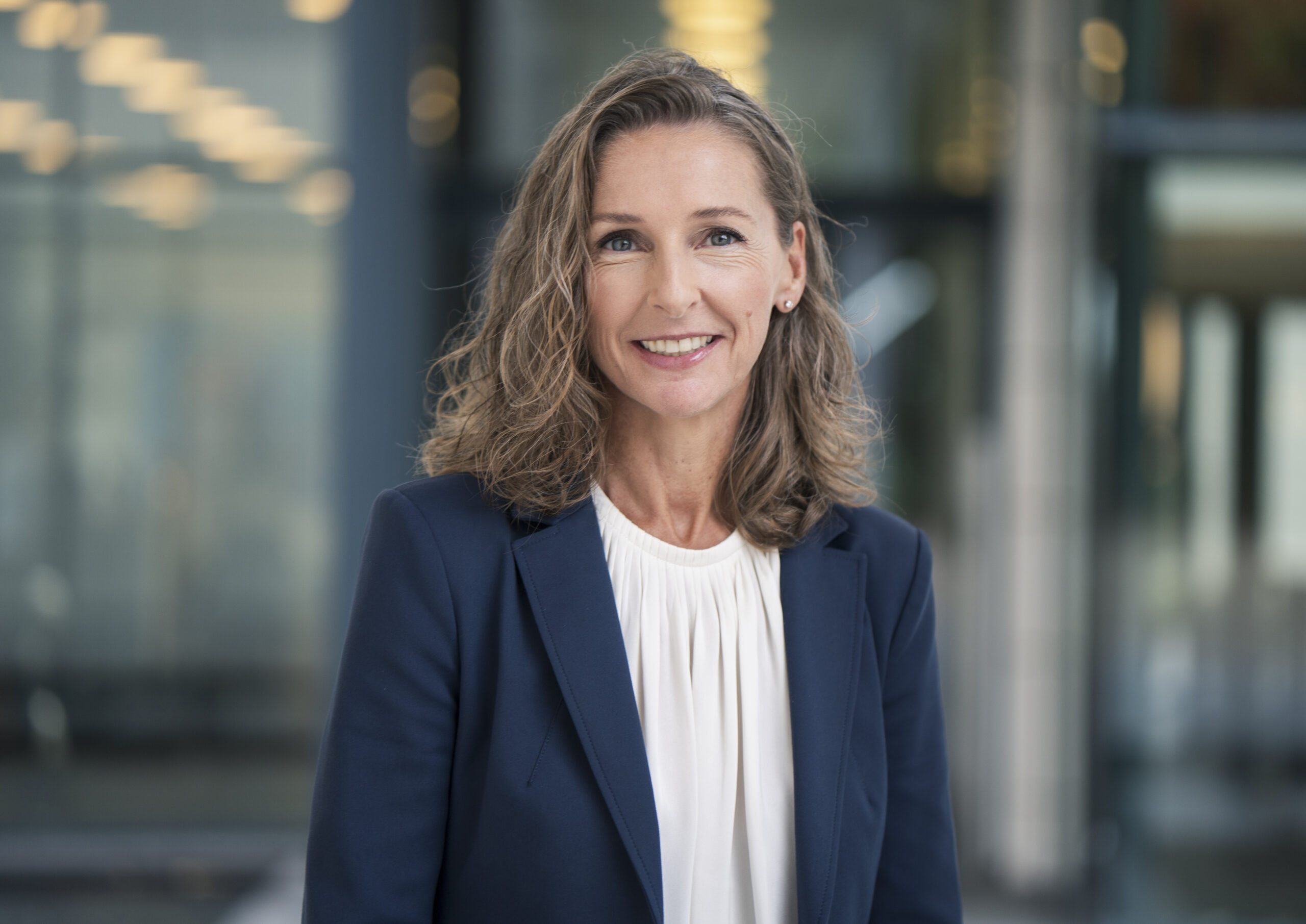
“HR is much more than an admin function—we have a chance and an obligation to be a multiplier of growth in our business and in our people.” – Anne Grønbjerg, Chief Human Resources Officer (CHRO), Grundfos
As Grundfos continues strengthening its position as a global leader in water and climate solutions, the organisation is sharpening its focus on people, culture and long-term capability building. Stepping into this pivotal moment is Anne Grønbjerg, the organisation’s new CHRO, whose unconventional path offers a fresh perspective on how HR can drive both purpose and performance.
Speaking with HRM Asia, Grønbjerg discusses how her global business experience shapes her approach to people strategy, how Grundfos brings its purpose to life for employees, and why HR must act as a true multiplier of growth for the organisation.
Your career spans global leadership in shipping and industrial manufacturing, including roles in commercial operations and as managing director across multiple countries. How has this diverse, on-the-ground business experience prepared you to lead Grundfos’ people strategy, and what specific insights do you bring to the CHRO role as a result?
Anne Grønbjerg: HR has often been seen as a purely administrative function. And while excellent admin processes remain very important, HR-as-admin is simply not enough in today’s changing landscape. The smart businesses recognise that long-term sustained growth depends on building a culture that delivers on financial and commercial goals, while creating an inclusive and meaningful experience for employees. That means fostering environments where people can grow, develop, make an impact, and feel connected to the organisation’s bigger purpose. And where they can show up as themselves and feel that they belong.
You could say that my commercial experience has given me that deep understanding of a need to balance business results—growth, profit, KPI progress—with ensuring that our teams and leaders are thriving and growing. You simply cannot have one without the other and expect to run a successful organisation for the long term.
Over the years, I have had the good fortune to work in many different functions across our organisation—from setting and executing commercial strategy with our business development teams, to leading sales, spending time with customers to understand the challenges, and working closely with product managers, engineers, and marketers. Having been on the ground and leading diverse teams across all continents, I have seen firsthand the day-to-day realities our people and leaders face.
Each of those experiences has shown me how interconnected our people and functions are, and how much stronger we are when we work as one team.
That’s the approach I am bringing into the CHRO role. HR is much more than an admin function—we have a chance and an obligation to be a multiplier of growth in our business and in our people. My aim is to craft people strategies that are practical, commercially integrated, and empowering, so that our colleagues can thrive and we can deliver on Grundfos’ mission.
As you transition into this role, how do you plan to leverage Grundfos’ core purpose of “pioneering solutions to the world’s water and climate challenges” to connect with employees and create a meaningful workplace experience that goes beyond compensation and benefits?
Grønbjerg: At Grundfos, we believe the best way to connect to our purpose is to live it. That is why we empower our people to engage with the causes and communities that matter most to them.
We do this through a mix of employee-led and leadership-driven initiatives. An example is our Water2Life programme, which is entirely employee-driven and has so far provided access to clean water to more than 60,000 people in countries such as Vietnam, India, Honduras, and Kenya. It is initiatives like these that show our colleagues the tangible impact they can have when they bring our purpose to life.
We also know that people thrive when they feel they can contribute beyond their day-to-day roles. That is why every Grundfos employee is offered three paid days off each year to volunteer for their chosen cause. We see our people leverage that freedom, if you will, to do work that benefits the societies we are part of. I love that we can do that, at scale.
I also want to emphasise that our core business—pumps, pumping solutions, and systems—actively contributes to making the planet more sustainable, whether through high energy efficiency, water savings, reduced chemical use in processes, or optimisation and improved uptime. These benefits allow operators to focus on more value-adding tasks. In essence, when you work at Grundfos, you can find reassurance in the fact that you are actively helping to address the world’s energy and water challenges.
As our Founder, Poul Due Jensen, said: “The world is full of problems that can be solved in a better way.”
Ultimately, when our people and their communities thrive, so does Grundfos. Purpose is not something abstract to us—it is part of creating a meaningful workplace where employees feel proud, connected, and inspired—and it is built into the products and services we develop and sell to our customers.
Grundfos’ CEO Poul Due Jensen also stated that you will “further strengthen the ties between HR, our business, our employees and our purpose.” From a strategic standpoint, what does this look like in practice? Can you share an example of a specific initiative you plan to implement that will not only benefit employees but also drive a tangible business outcome?
Grønbjerg: First of all, and perhaps obviously, as a C-level member of Grundfos’ Group Management team, I am working closely with my colleagues to create an inclusive, high-performance culture that reflects Grundfos’ DNA and values.
For me, this means making sure that our people strategy is fully integrated with our organisational strategy. It is about ensuring that the way we grow our people is directly linked to how we deliver for our customers and society. In practice, it means that we in HR must always be actively curious, always asking, “Where is the business headed now, and what can we in HR do to help Grundfos overall reach our business goals?”
One example is the work we are doing right now to update and clarify what great leadership looks like at Grundfos through five simple leadership behaviours, based directly on our values.
At Grundfos, our six values are extremely important to us, as they come directly from three generations of our founding family. Founder Poul Due Jensen (1912-1977), Niels Due Jensen (1943-2024) and his son, our current CEO Poul Due Jensen.
By clearly outlining how we want our leaders to embody our values and providing excellent leadership that brings us closer to our business goals and helps our people thrive, we aim to integrate all these elements.
Finally—being a fan of execution and progress—one of the things I love about this initiative is that we will build those five leadership behaviours directly into our core processes like people development, succession planning, recruitment, learning opportunities and employee engagement, so that we make sure it sticks and grows strong roots.
We are also becoming more ambitious about HR’s role in identifying and helping to build the long-term capabilities that will enable our entire organisation to succeed.
In an increasingly global and dispersed workforce, how do you balance the need for a unified corporate culture with the needs and cultural nuances of different markets? Additionally, how will your experience with diverse teams shape your strategy for global talent management?
Grønbjerg: At Grundfos, we believe that a strong and inclusive corporate culture involves giving people the freedom to express their culture, diversity, and individuality. When colleagues feel safe to bring their whole selves to work, it fosters the trust and respect that enable us to fulfil our shared purpose of providing water and climate solutions. In other words, we need to leverage both our diversity and our collective strengths to achieve our goals.
For employees who want to step out of their comfort zone and take on new or greater responsibilities, we have formal learning and development programmes—and we encourage and try to facilitate across-functional moves, either as temporary or longer-term assignments. We know that experience from several functions and several countries and/or cultures helps our people take and understand different perspectives, which is a critical skill in a global organisation like Grundfos, where we are moving into new markets and solving new and bigger problems for our customers in the years to come.
READ MORE: Skills, AI, and culture: Inside Mondelez’s next-generation HR strategy
As testament to our commitment, our Grundfos India, the Philippines and Singapore offices recently earned their Great Place To Work certification. Nearly 90% of our colleagues in these locations affirmed that we are a great place to work—an achievement that we are honestly very proud of, and something we will strive to expand even further.
Another good example is how we develop new products and solutions; every time we bring a new offering to market, success can involve (for example) a hydraulic engineering team in China, a software team in India, product management in Denmark, and sales in the US. We live in this multicultural, global collaboration every single day, very much informed by our shared organisational culture and values.
On a personal note—and to end on a positive note—something I have noticed over all my years of travelling, meeting customers and colleagues across the globe, and working and living for more than 13 years outside my home country is that people are people. While that may sound silly and banal, I find it both extremely important and greatly encouraging to remember that, while it sometimes seems that strong forces pull us apart, we have so much more in common.
There truly is such a thing as shared humanity, and if we are mindful and curious about it, the rewards are immediate and huge—for people and organisations alike.