

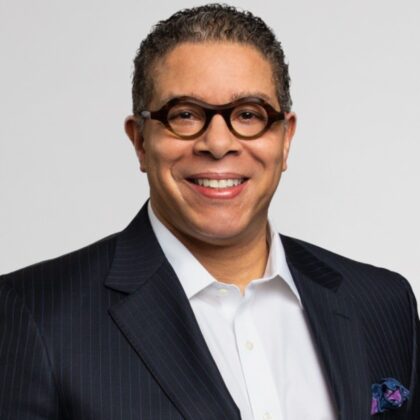
When Darrell Ford joined UPS as CHRO in 2021, a planned HR transformation was already underway, but it was about US$30 million behind schedule.
“We needed to fix that,” says Ford, who spoke to HR Executive late last year, shortly after being inducted as a 2025 Fellow of the National Academy of Human Resources.
HR Executive’s 2024 HR Honour Roll winner said his initial mandate was clear: Get HR transformation on track and modernise the function’s agenda. That has ultimately involved a “systemic series of changes,” from reinforcing the value of talent strategy at the board level to rolling out a new leadership model to guide talent assessment and advancement.
A three-year HR transformation journey eventually expanded to five years—and plans are revisited annually. Continuous improvement is critical, he says.
“Each year, the bar moves. It changes,” Ford says. “There’s always something to focus on.”
Laying the foundation for HR’s AI transformation
For most HR leaders, including Ford, that “something” right now is AI.
While driving employee adoption and navigating fear of AI among employees are common obstacles cited by many HR professionals today, at UPS, the environment is different, Ford says.
“We’re already a technology-heavy, data-heavy, digital-first company. We just happen to deliver packages, too,” he says.
Embracing technology is “nothing new” for the workforce. But for AI transformation to be effective, the foundation must be right, Ford says.
That’s why UPS’ HR function has focused heavily on getting clean data first, an objective Ford anticipates being realised by the end of this quarter. Clean data is among the most important “foundational pieces” that need to be in place in order for HR to effectively leverage AI.
“If you don’t have clean data, AI doesn’t work,” Ford says.
Another priority is ensuring the skills and capabilities of the organisation’s HR professionals are “meeting the moment” in this age of AI.
“The expectations of HR have been raised,” he says.
Consistent and continuous
That demand means HR’s decision-making, particularly around technology, needs to be more strategic than ever.
Ford’s team is consistently focused on balancing service and cost.
“How can we leverage a new tool or technology for the greater good to improve the employee experience, to improve the manager experience and to improve the bottom line as well?” he says.
Balance is also integral to the organisational design questions surrounding how humans and AI will need to work alongside each other. Developing workforce skills for that new landscape is the “next frontier,” Ford adds.
It is a pursuit that needs to be undertaken with an eye towards continuous improvement. A few years ago, for instance, UPS rolled out a Digital Fluency course for leaders worldwide, designed to build baseline knowledge and prepare them for the fundamentals of UPS’ digital-first approach. That training is now being revisited as technology and the workforce evolve.
“We want our leaders to be in a position to leverage AI to transform the business. Not just the administrative things, but we want them thinking about how to apply it,” Ford says. “We’re well beyond concepts; we’re into application.”
Finding where the HR ‘magic’ is
HR’s evolving remit has CHROs getting increasingly closer to the IT function.
“I spend more time with our chief digital and technology officer than probably anybody else on the leadership team,” Ford says. “And that’s really about building this capability and preparing the organisation for change.”
Ford says he is excited for HR’s opportunity to “steer” UPS through ongoing enterprise-wide transformation. Technology is “part of the answer” to creating future-ready organisations, but without employees “at the centre”—and HR leading that charge—transformation would not be sustainable.
“The question for us is, are we ready for the moment? Are we up for the challenge? And I’m excited about that because I believe that we are.”
READ MORE: The architecture of work is changing: HR must own the blueprint
Despite HR’s elevated role today, Ford says he still relies on a number of HR philosophies that have held true throughout his career. For instance, HR should have a “bias for action,” take its responsibility as a “truth teller” to the executive team seriously and keep a forward focus. “Whatever we take on, let’s make sure we leave it better than we found” is a motto that Ford says has characterised his approach to HR leadership.
More than ever, effective HR leaders need to prioritise deep business acumen to ensure the people strategy is tailored to directly drive business outcomes.
“Driving change at scale and solving complex problems—that’s where the action is. And at each organisation and in each solution, it will be different,” Ford says. “So, you have to think about what is unique with your business model and then lean in and find those opportunities. That’s where the magic is.”
About the Author:
 Jen Colletta is Managing Editor at HR Executive, where this article was first published.