

In a region where demographic shifts, skills shortages, and digital acceleration are colliding, the arrival of AI has become a defining moment for HR leadership in Asia-Pacific. With significant portions of work set to be automated, organisations must decide whether AI will simply optimise tasks—or be used as a catalyst to redesign work in ways that strengthen engagement, purpose, and human potential.
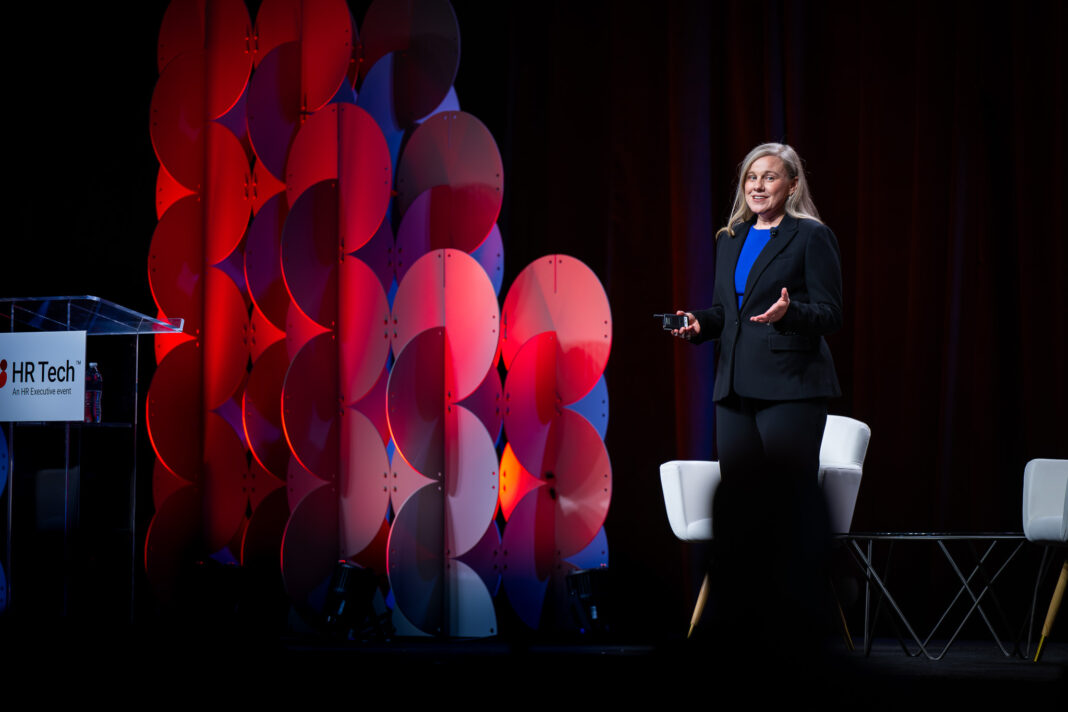
That tension was brought into focus at SAP Connect 2025 last October, when Chief People Officer Gina Vargiu-Breuer posed a critical question during the central keynote: what makes work meaningful for people in the age of AI?

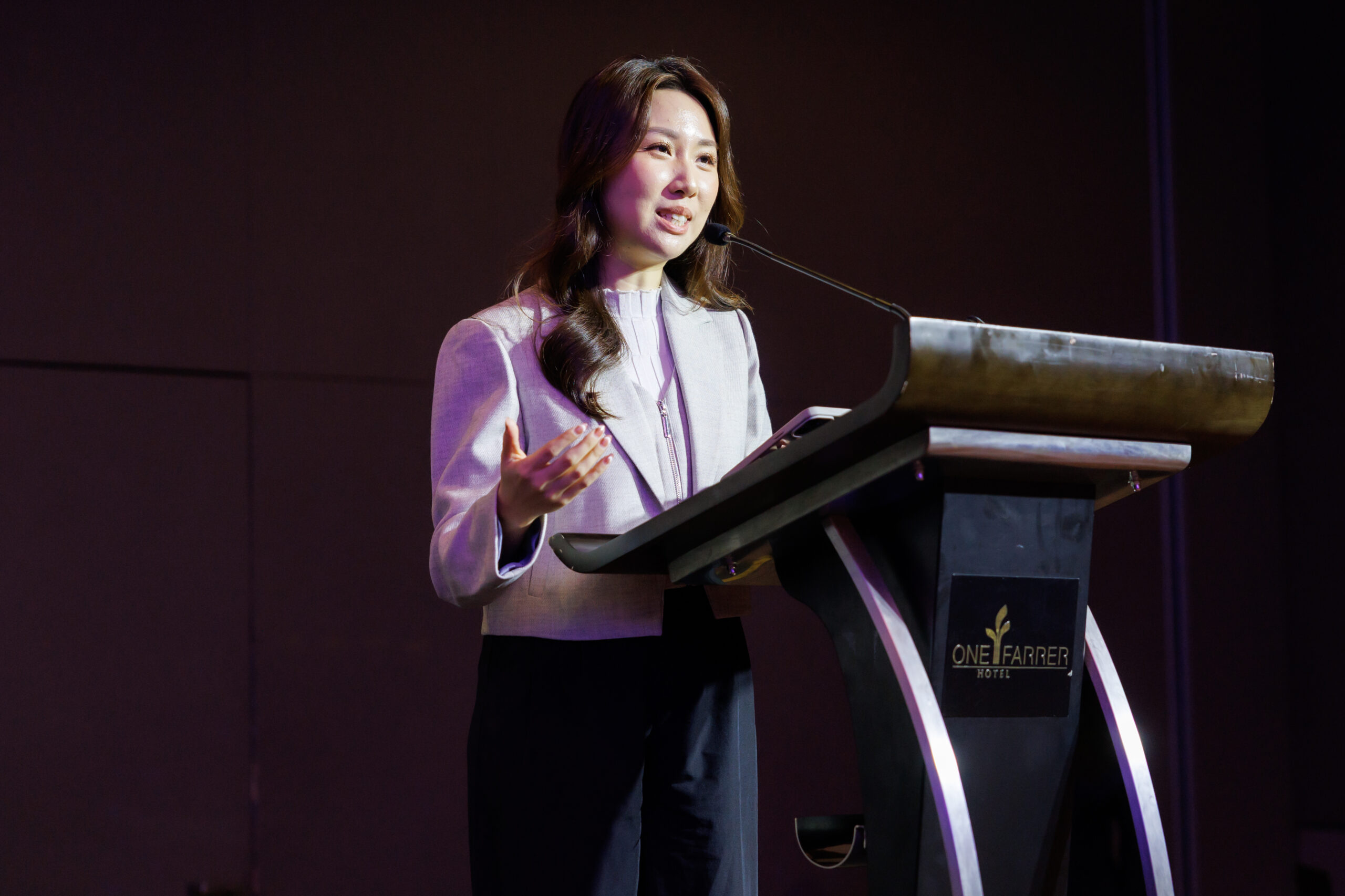
For Dr Autumn Krauss, Chief Scientist at SAP SuccessFactors and Head of the Future of Work Research Labs, the answer lies not in resisting automation, but in redesigning work with intent. “AI is transforming what we do and how we do it,” she told HRM Asia, “but what remains the same are basic psychological needs and fundamental characteristics of jobs that make them motivating and meaningful.”
Drawing on global research and futurist methodologies, Dr Krauss and her team argued that organisations stand at a crossroads. The choices they make now—about job redesign, leadership, and HR capability—will determine whether AI becomes a force that amplifies human potential or one that quietly erodes engagement and trust.
Why meaning still matters—especially now
According to SAP’s The Road Ahead: Predictions and Possibilities for the Future of Work, employees estimate that, on average, 42% of their current work could be automated by AI. While that signals enormous productivity potential, it also explains rising levels of what researchers call “technology-induced job insecurity”—the fear that one’s role will be diminished or displaced by machines.
“The danger isn’t the redesign itself,” Dr Krauss explained. “It’s how that redesign happens.” She pointed to decades of organisational psychology research showing that meaningful work consistently rests on five core characteristics: autonomy, skill variety, task identity, task significance, and feedback.
“We not only have an obligation to preserve these aspects of work that currently exist,” she said, “but also an opportunity to strategically bake them into the design of our new work.” Done well, AI-enabled redesign could actually improve employee experience and engagement, rather than undermine it.
The risk, however, is that organisations pursue efficiency in isolation. One possible future outlined in the research—what Dr Krauss described as the “AI maximalist” approach—treats automation as the default answer to every task. In that scenario, humans are left with whatever work AI cannot do, regardless of whether it is motivating or developmentally meaningful.
SAP’s research team endorses a different path: the “symbiotic strategist”. “This is about deliberately leveraging the complementary strengths of AI and humans,” Dr Krauss said. “Not because it sounds nice, but because it produces better outcomes for both organisations and employees.”
Leadership at a crossroads
Nowhere is this tension more visible than in the evolving role of people managers. SAP’s research suggested that AI will increasingly absorb operational and administrative responsibilities, theoretically freeing managers to focus on leadership, coaching, and development.
But Dr Krauss cautioned against assuming this transition will be seamless. “We think it’s naïve to believe that removing administrative work automatically makes someone a better leader,” she said. “Many managers weren’t selected or promoted because of their people leadership capabilities in the first place.”
In fact, 35% of the people managers surveyed said they would no longer feel confident in their roles if AI took over their operational tasks. “That tells us there are both skills gaps and motivation gaps,” Dr Krauss said. “And that’s a significant challenge organisations need to address head-on.”
Looking further ahead, SAP’s research outlined a more radical possibility—one in which traditional people manager roles disappear altogether. In this future, AI handles coordination and performance oversight, while human leaders evolve into mentors who are deployed dynamically across the organisation.
“These mentors wouldn’t sit in a rigid hierarchy,” Dr Krauss explained. “They would support team growth, contribute institutional knowledge, and help employees navigate more fluid, boundaryless roles.” Such a shift would also dismantle one of the most entrenched assumptions in corporate life: that becoming a people manager is the primary path to career advancement.
“If that pathway breaks,” she said, “organisations will need entirely new models for progression, reward, and status.”
HR’s moment of truth
If managers are at a crossroads, HR is standing at the centre of the intersection. SAP’s global research with 500 C-suite executives found that one of the strongest predictors of whether HR is seen as a strategic partner is whether the function itself has the skills to adopt AI.
“HR is in a prime position to transform itself using AI—and to lead the transformation of the broader workforce,” Dr Krauss said. But that leadership must start at home. “The C-suite needs to believe HR has the AI literacy to do this well,” she added.
This insight underpinned SAP’s recent Think Tank initiative, which brought together 14 senior HR leaders from around the world to explore how the function itself must evolve. Rather than focusing on future job titles, the group identified six archetypes that represent HR’s emerging identity in the age of AI.
Among them, Dr Krauss believes one stands out as particularly urgent. “If I had to choose, the Change Architect is the most valuable role for HR to prioritise right now,” she said. “A thoughtful and intentional approach to change is required so organisations and employees mutually benefit from what AI makes possible.”
The other archetypes—including Role Redesigners and Workforce Architects—exist to enable that transformation. Together, they point to an HR function that is far more proactive, data-literate, and deeply involved in shaping how work itself evolves.
Building AI literacy without losing trust
Central to all of this is AI literacy. SAP’s research consistently showed it is the single strongest predictor of employee attitudes towards AI and their willingness to adopt it. “We’re bullish on AI literacy,” Dr Krauss said. “Because as the technology evolves, we can’t anchor people to narrow technical skills. We need a foundational understanding of what AI is, what it isn’t, and how it should be used responsibly.”
That understanding also shaped how employees emotionally relate to AI. Notably, 40% of employees surveyed said they have already used AI for emotional support at work, and more than half of them felt more supported by AI than by their colleagues.
READ MORE: SAP Connect 2025: AI ushers in new era for work, putting HR at the centre of disruption
“For us, that’s as much a commentary on the state of work today as it is on AI’s capabilities,” Dr Krauss observed. “It tells us something important about disconnection and unmet needs in the workplace.”
Rather than framing AI as either a “teammate” or a “tool”, SAP’s research proposed a middle ground—a fit-for-purpose mental model that acknowledges AI’s growing presence without anthropomorphising it. “It’s new,” Dr Krauss said simply. “And we need to treat it that way.”
Choosing the harder, better future
Across all its future-of-work scenarios, SAP’s research resists the idea of a single inevitable outcome. “We don’t think there will be one future,” Dr Krauss said. “There will be multiple futures, shaped by the choices organisations make.”
The future that best serves both business performance and human wellbeing, however, is also the hardest to execute. It requires HR leaders to redesign work deliberately, rethink leadership pathways, and invest seriously in AI literacy—not just for employees, but for themselves.
As Dr Krauss put it, “HR’s responsibility is to identify the future that is mutually beneficial, and then work the organisation towards it.” In the age of AI, preserving the meaning of work may be HR’s most strategic mandate yet.