
‘It’s a mindset shift’: Why people analytics has become essential business infrastructure
- HRM Asia Newsroom
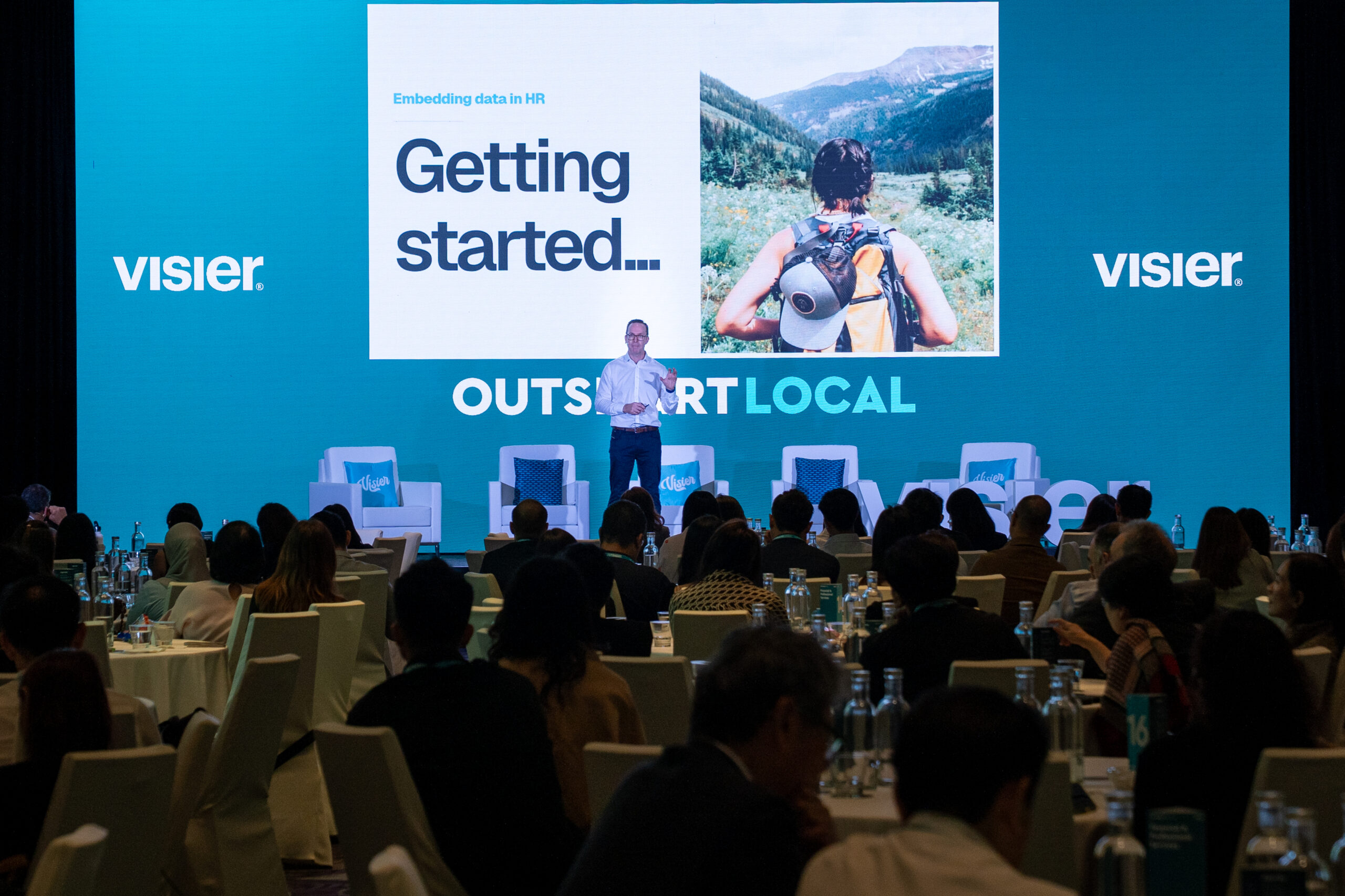
Held in Singapore on 1 July 2025, Visier’s Outsmart convened thought leaders and industry experts to explore transformative business strategies.
People analytics has emerged from the back office and into the boardroom, becoming a critical driver of business performance in an AI-accelerated world. That was the clear message at The Workforce AI Edge, Visier’s inaugural event held on 1 July 2025. Bringing together senior leaders across HR, business, and technology, the event showcased how data-driven insights are transforming workforce strategy and how organisations that fail to embrace this shift risk being left behind.
The event opened with a keynote by Low Peck Kem, Chief HR Officer and Advisor, Workforce Development, at Singapore’s Public Service Division. She laid out a compelling vision of how people analytics and AI must work in harmony with human judgment. She said, “Data-drawn insights, when coupled with values-based leadership, are key to preparing organisations for future challenges.” In her view, AI should amplify, not replace, human wisdom.
This perspective was echoed and expanded by Ryan Wong, CEO of Visier, who later shared deeper insights in an exclusive interview with HRM Asia. “Too many decisions are still made on gut feeling,” he said. “Organisations that consistently plan, measure, and optimise based on people data will outperform over time.” His message was clear: analytics is no longer a support function—it is a strategic imperative.
A recurring theme throughout the event was the growing urgency to embed people analytics at the core of business strategy. Organisations are increasingly moving beyond traditional HR reporting and using workforce data to guide critical decisions around hiring, retention, productivity, and long-term competitiveness. As analytics become more deeply integrated into strategic planning, they enable leaders to make smarter, faster decisions that drive tangible business outcomes.
One of the most compelling insights came during a fireside chat with Sim Cher Whee, Vice-President, People Strategy, Technology and Talent Acquisition, Micron Technology, who shared how people data now plays a pivotal role in workforce planning, financial forecasting, and shaping overall corporate strategy. Meanwhile, Paul Rubenstein, Chief Customer Officer of Visier, illustrated how organisations are using analytics to uncover hidden workforce trends, improve decision quality, and accelerate results across the business.
Wong summed up this transformation, saying, “Outsmarting the competition isn’t about being more clever—it’s about seeing the problems others haven’t even considered. People analytics reveals unexpected truths. It helps you ask better questions and identify issues you didn’t even know existed. That’s the real value—it reveals what you need to see, not just what you want to see.”
Beyond surveys: Understanding the ‘why’
While many organisations still rely heavily on engagement surveys, Wong challenged the idea that surveys alone provide actionable insight. “Surveys often become a shortcut for real understanding. They tell you how people feel, but not why they feel that way, or what to do next,” he said.
Instead, Visier advocates a more integrated model called the “People Analytics Journey.” This approach combined survey data with behavioural and transactional insights to surface deeper patterns and root causes. “We ingest all employee survey data into Visier and correlate it across multiple dimensions. Then you can identify gaps, trends, and areas of concern,” Wong explained.
The People Analytics Journey consists of five stages:
- Understand your people
- Understand how and where they work
- Plan and optimise
- Elevate productive activity
- Repeat the cycle
By treating analytics as a continuous loop, organisations can make steady progress towards better outcomes, whether that is improving performance, lowering attrition, or enhancing employee wellbeing. “If you skip the ‘understanding’ phase, you’re just solving surface-level problems,” he cautioned.
Perhaps the event’s strongest message was that people analytics must no longer be viewed as a niche HR function. Instead, it is becoming a foundational part of enterprise strategy. Leaders across industries are recognising that workforce intelligence is not merely useful—it is essential.
Specifically, Aileen Tan, Group Chief People and Sustainability Officer at Singtel, spoke about how AI-powered analytics enables HR to “up our game”—by making smarter talent decisions, optimising costs, and navigating transformation.
READ MORE: Visier drives AI-powered HR transformation with Singapore expansion
To help HR leaders gain executive buy-in, Visier’s Rubenstein presented a session titled Building a Business Case: How to Grow and Defend Your People Analytics Investment, which outlined a framework for demonstrating ROI. He emphasised the importance of clearly linking analytics to outcomes, including technology efficiency, HR productivity, talent performance, and overall business impact. “Always establish value before price,” he advised.
The growing interest in people analytics mirrors broader economic and technological trends. “People are your largest cost and your greatest asset,” Wong added. “Every CEO today is trying to balance growth with cost. If growth slows, how do you manage workforce costs intelligently? Uninformed decisions are no longer an option.”
He believes that organisations that operationalise analytics are more agile, consistent, and resilient. “People impact is business impact,” he said. “The biggest ROI comes from aligning workforce data with operational KPIs.”
The event closed with a forward-looking warning. Wong urged business leaders to recognise the scale of disruption ahead. “Over the next five years, we’ll see unprecedented restructuring—driven by AI automation, economic pressures, and the need to stay lean. Jobs will disappear, but new roles will emerge,” he said. “The question is: will you adapt or be left behind?”
The Workforce AI Edge made one thing clear: people analytics is no longer a luxury; it is essential business infrastructure. As technology accelerates and workforce expectations shift, organisations that embed analytics into their strategic playbook will be best positioned to lead.
“The stakes are high,” Wong warned. “If you’re still treating HR data as a compliance checkbox, you’re falling behind. AI and analytics evolve every quarter—you can’t wait a year to catch up.”
His closing message was unequivocal: “This isn’t just a technology shift. It’s a mindset shift. If you haven’t made the move, it’s time.”