
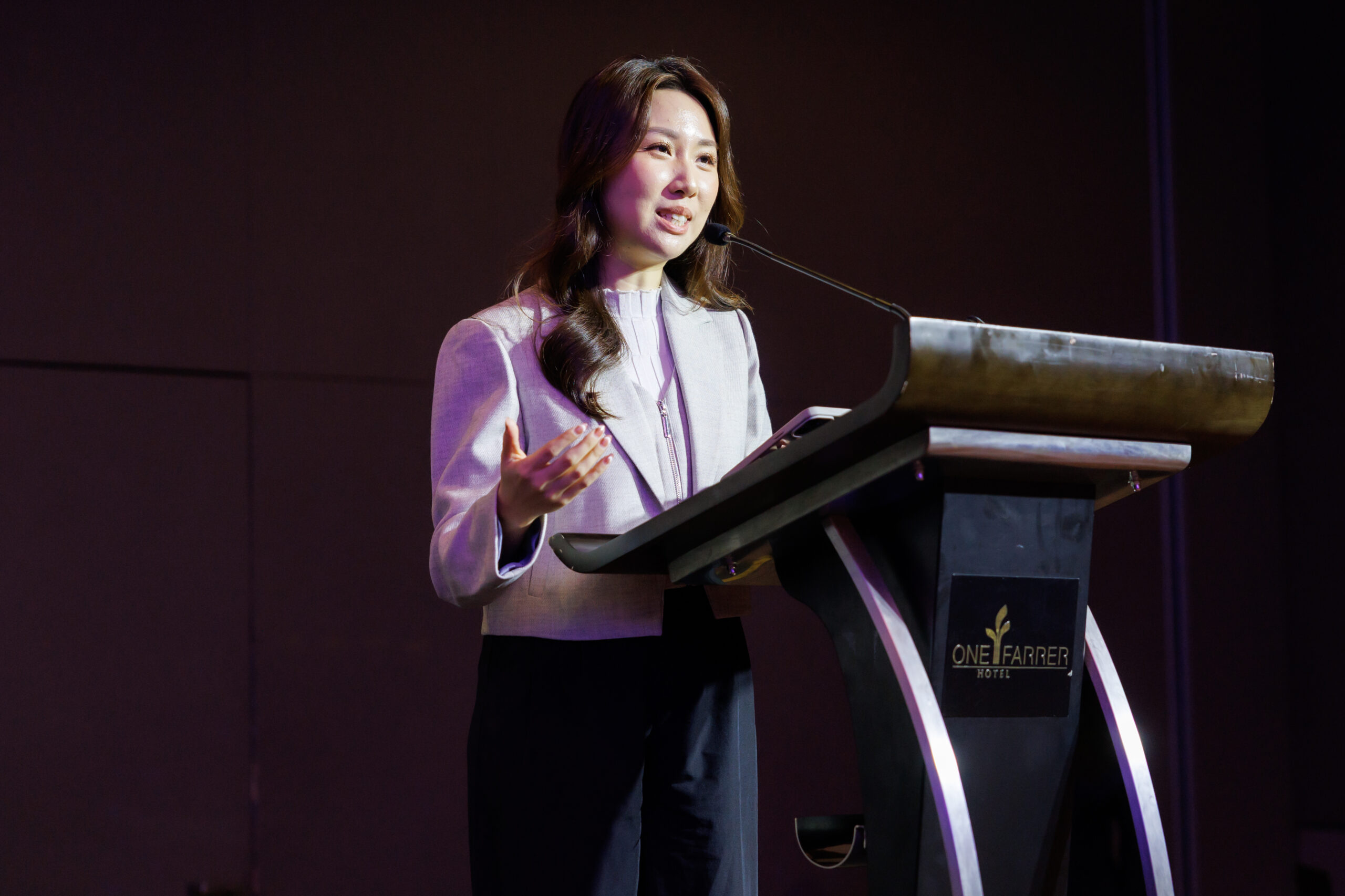
Carmen Yap, Centre Director of Aventis Wellness, speakers at the Readers’ Choice Awards 2025 on making employee wellbeing a strategic priority.
With nearly half of Singapore’s workforce reporting burnout, corporate wellness has reached a tipping point. No longer confined to gym memberships or wellness days, employee wellbeing is now a strategic imperative—one that directly influences talent attraction, retention, and organisational resilience in an increasingly competitive labour market.
This shift was reflected at the Readers’ Choice Awards 2025, where the Best Organisation for Corporate Wellness category, sponsored by Aventis Wellness, recognised employers that have embedded holistic wellbeing into leadership, culture, and business strategy. Rather than rewarding isolated initiatives, the award spotlights organisations that take a deliberate, data-informed approach to supporting their people.
Moving beyond ad-hoc wellness initiatives
For Aventis Wellness, championing this category is a natural extension of its mission to promote positive, sustainable workplace wellbeing. According to Dr Christopher Fong, Principal Consultant, Aventis Wellness, the distinction between surface-level programmes and genuine wellness leadership lies in intent, integration, and impact.
“Employee wellbeing should never be a standalone or purely reactive initiative,” Dr Fong told HRM Asia. “It needs to be embedded into organisational culture and leadership practices, as it directly influences engagement, productivity, and long-term sustainability.”
To assess this, Aventis Wellness applies its Corporate Wellness Index, which evaluates organisations across five core pillars: Physical, Occupational, Intellectual, Social, and Emotional Wellness. This holistic framework looks beyond visible perks to examine whether wellness efforts are consistent, intentional, and aligned with business objectives.
“Truly exemplary organisations demonstrate sustained commitment, strong leadership involvement, and measurable impact across all five dimensions,” Dr Fong explained. “By contrast, ad-hoc wellness activities may provide short-term morale boosts but rarely reflect a mature or integrated wellness strategy.”
The heightened focus on wellness reflects deeper changes in workforce expectations following the pandemic. In Singapore, rising burnout levels signal that employees are seeking more than token gestures—they expect meaningful, long-term support for their mental, emotional, and physical wellbeing.
This expectation is further shaped by a multigenerational workforce spanning Gen X, millennials, Gen Z, and soon Gen Alpha. Across generations, mental wellbeing, psychological safety, and work-life balance now rank among the most influential factors in employer choice, often rivalling compensation.
“This award reflects the evolving role of wellness in HR and business strategy,” said Dr Fong. “Forward-looking organisations are treating wellness not as a peripheral HR initiative, but as a central pillar that drives talent attraction, retention, productivity, and long-term organisational resilience.”
Gold Award: CapitaLand Investment
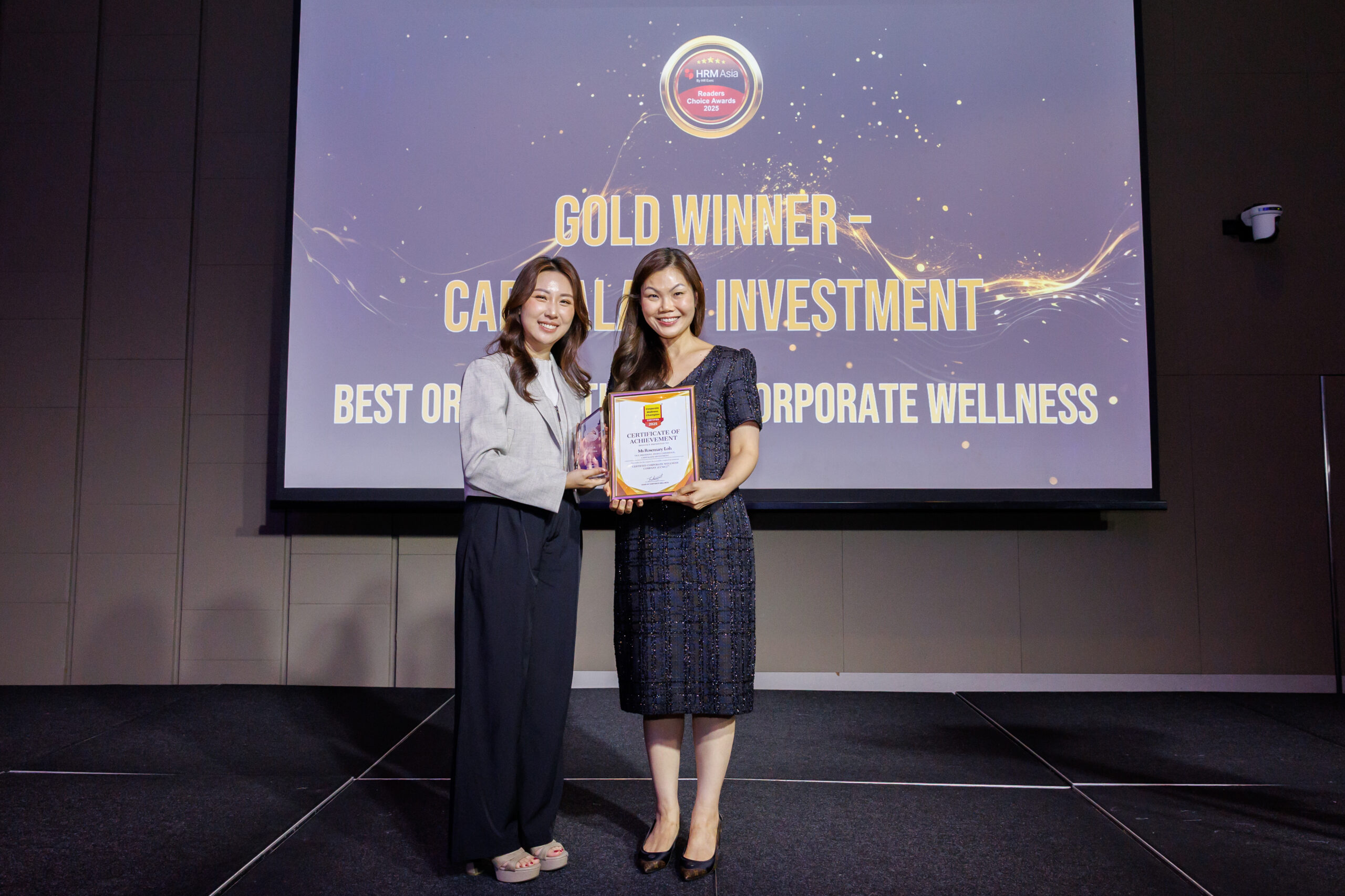 Taking home the Gold Award for Best Organisation for Corporate Wellness, CapitaLand Investment (CLI) exemplifies what an integrated wellness strategy looks like in practice.
“This recognition affirms our commitment to creating a workplace where our people feel supported, valued, and empowered to thrive both professionally and personally,” said Rosemary Loh, Vice-President, People Experience, CapitaLand Investment. “Wellbeing is not just a programme for us—it’s a core part of our culture.”
CLI anchors its approach around six dimensions of wellness—mental, financial, purpose, social, career, and physical—and has deliberately shifted from a programme-based mindset to a culture-driven one.
“Instead of viewing wellness as a series of activities, we focus on embedding it into the way we work every day,” Loh explained. This includes flexible work arrangements, access to mental health resources, and leadership development that emphasises empathy and psychological safety.
For organisations looking to elevate their wellness strategy, Loh advises starting with listening. “Understand what truly matters to your people through surveys, focus groups, or even informal conversations. Begin with small, meaningful steps that address immediate needs.”
Crucially, leadership behaviour sets the tone. “Wellness becomes sustainable only when it is championed by leaders and embraced across the organisation,” she added.
Silver Award: Singapore General Hospital
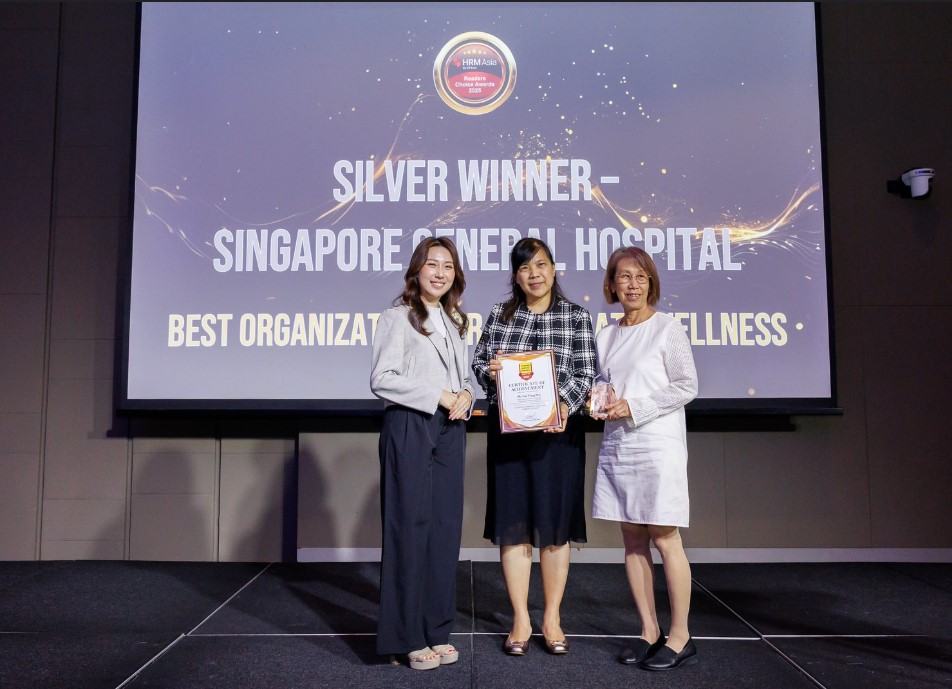 The Silver Award was presented to Singapore General Hospital (SGH) for its people-first approach in a highly demanding healthcare environment.
“We are honoured to receive this recognition, which affirms our commitment to putting people first,” said Tan Yang Noi, CHRO of SGH. “Creating a workplace where our employees feel supported, valued, and empowered to grow both professionally and personally is central to how we operate.”
A key enabler of SGH’s strategy is its Office of Wellbeing, which works across the organisation to deliver initiatives anchored on four pillars: Kindness at Work, Transformation at Work, Health at Work, and Family at Work. These pillars guide how wellbeing is embedded into everyday practices and organisational culture.
Tan also highlighted its partnership with Aventis Learning Group to deliver curated programmes that enhance employees’ intellectual and social wellness, reinforcing the link between capability development and long-term wellbeing.
Bronze Award: IHH Healthcare and Singapore Nurses Association
Joint Bronze winners IHH Healthcare and the Singapore Nurses Association (SNA) further underscore the importance of values-driven, people-centric wellness strategies.
 For SNA, the award recognises its commitment to championing nurses’ wellbeing, professional development, and dignity. “This recognition honours the dedication of our nursing leaders and members,” said Sahari Ani, Vice-President, Singapore Nurses Association. “Most importantly, it reinforces our belief that caring for nurses strengthens the entire healthcare ecosystem.”
SNA’s approach centres on building social capital through a “by members, for members” philosophy, creating an environment where individuals feel empowered, valued, and connected. Sahari’s advice to organisations is clear: “Begin with your people. Build trust, listen genuinely, and take consistent actions that humanise the workplace.”
From recognition to action
Beyond recognition, the Best Organisation for Corporate Wellness award carries a clear message for the wider HR community. Employee wellness is no longer just a moral responsibility—it is a strategic lever.
The Certified Corporate Wellness Champion (CCWC) accreditation, highlighted by Aventis Wellness, signals to current and prospective employees that an organisation takes evidence-based, holistic wellness seriously. In a competitive labour market—particularly with millennials and Gen Z placing increasing emphasis on wellbeing—this credibility can be a powerful differentiator.
As Dr Fong concluded, “For winners, this award affirms that they are ahead of the curve. For others, it is an invitation to move beyond ad-hoc perks and invest in structured, data-informed wellness frameworks.”