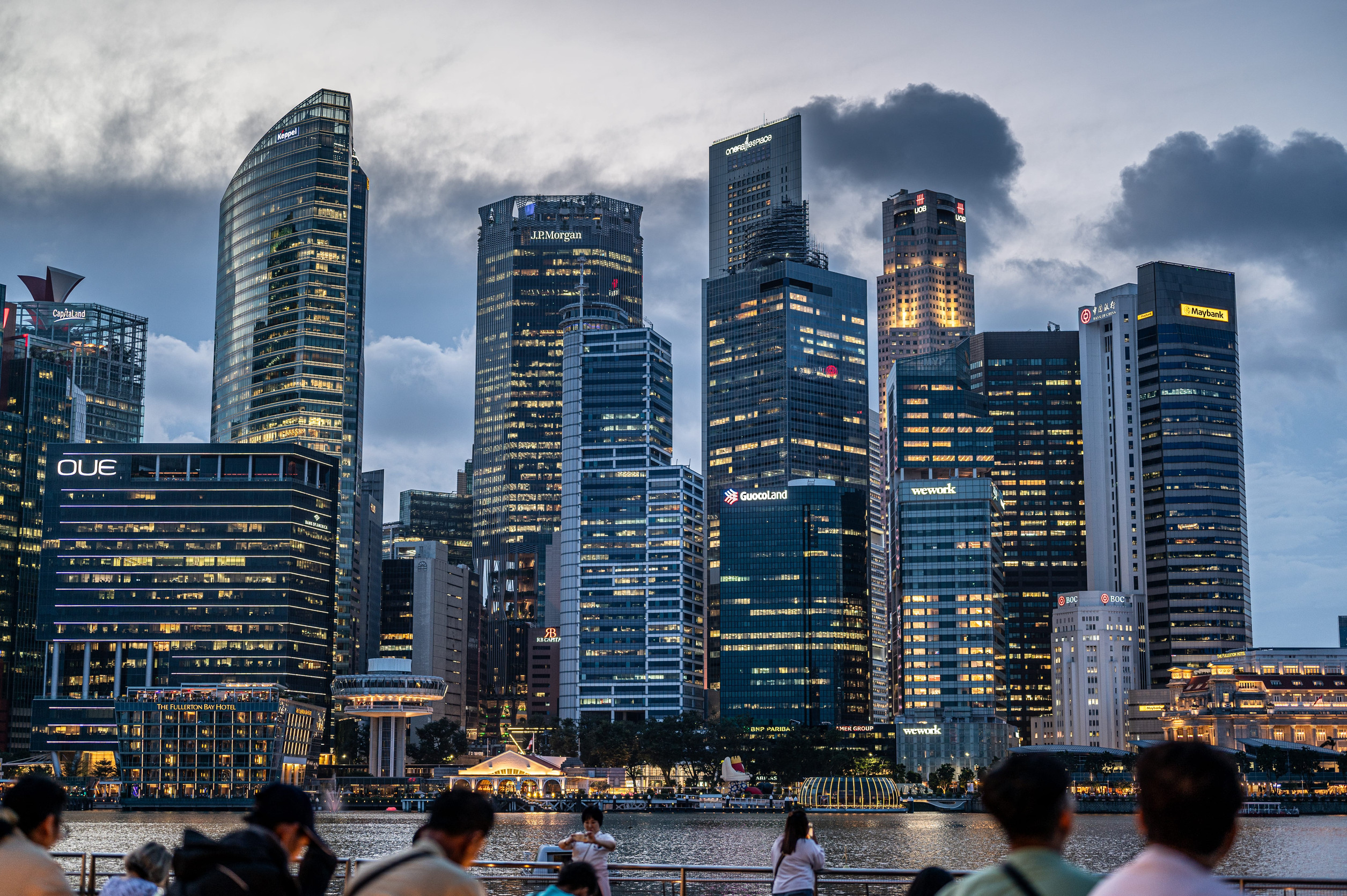
Business leaders in Singapore are increasingly viewing geopolitical uncertainty as the most pressing risk to their organisations, according to the H2 2025 Global Leadership Monitor by Russell Reynolds Associates. For the first time, geopolitical volatility has overtaken economic growth as the top concern among executives in the city-state.
The survey revealed that 74% of leaders in Singapore now rank geopolitical uncertainty as the country’s number one threat, up from fourth place in H2 2024. Other top concerns include uncertain economic growth (53%) and trade conflicts (50%), with the latter showing the sharpest rise in priority, climbing from eighth place in previous years. This contrasts sharply with the broader Asia-Pacific region, where trade conflicts rank ninth, and globally, where they rank 11th, highlighting Singapore’s unique exposure to regional tensions.
“Geopolitical volatility is now a core business risk for organisations in Singapore, disrupting supply chains, investments and strategy planning,” said Euan Kenworthy, Country Lead, Singapore, Russell Reynolds Associates. “This affects both MNCs, regionally headquartered organisations and family enterprises. For regionally headquartered organisations and family enterprises, the answer lies in transformation and executive teams staying agile. It is also imperative that boards ensure they have the right diversity of global expertise to help them navigate these uncertainties.”
While 56% of leaders in Singapore feel prepared to tackle technological change, and 63% feel ready for increased regulation, confidence drops sharply when managing geopolitical uncertainty, with only 38% expressing readiness.
READ MORE: Singapore salaries set to rise 4% in 2026, but real wage growth remains subdued: Mercer
Technology and AI are reshaping talent pipelines, with 71% of executives citing automating and AI-driven hiring processes as likely to have the greatest impact on leadership talent availability over the next 12 months. Three in four leaders now view generative AI (GenAI) as a critical future skill, and 68% express excitement about its revenue-generating potential. Yet adoption remains limited: only 20% integrate AI into daily workflows, while 40% cite internal expertise shortages as the main barrier.
Strategic thinking dominates Singapore leaders’ priorities, with 63% ranking it as the most critical capability, well above the global average of 58%. Innovation and creativity (42%) and decision-making (40%) follow, while technical skills rank much lower, with only 4% emphasising technological literacy.
And despite economic and geopolitical uncertainty, leaders in Singapore remain largely loyal to their industries. The survey found that 83% are open to career moves within their sector, while only 28% are willing to switch industries, compared with 53% globally. Nevertheless, 67% are ready to leave their current employer, reflecting active career strategies amid a volatile business environment.