
A generation is arriving fluent in AI. Nobody has worked out how to train them
- Josephine Tan
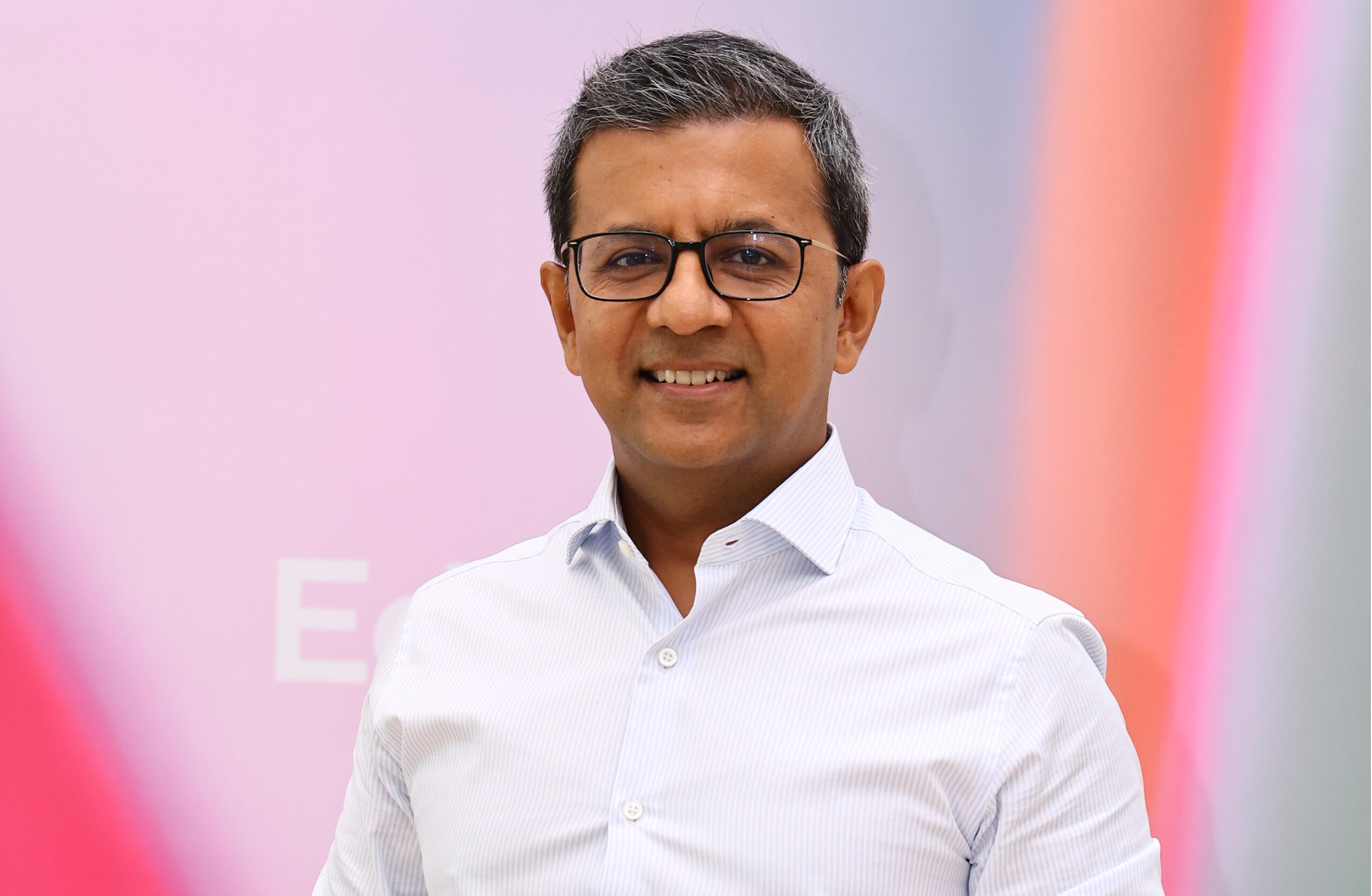
“Knowing when to question an answer, how to verify it, and when a decision needs to remain human comes with experience.” – Raghav Gupta, Head of Education, Asia-Pacific, OpenAI
Raghav Gupta has a phrase he uses with students, and with his own children. Productive struggle.
The idea is an old one. “To really learn something, you have to wrestle with a problem, make mistakes, get feedback and try again,” the Head of Education for Asia-Pacific at OpenAI tells HRM Asia. The wrestling is the part nobody enjoys and, in his account, where the learning happens.
The tools his employer builds are designed, in large measure, to remove that friction. Gupta describes this as useful: an answer in seconds has obvious value. He is equally direct about the trade-off. Lean on the tools to skip the difficulty entirely, he says, and “you can look more productive without actually becoming more capable.”
A cohort raised on those tools is now approaching the point of entry into workplaces.
What arrives with them
In a 2026 survey of 500 university students in Singapore commissioned by OpenAI, 94% reported using AI several times a week or more. Behind the frequency sits an appetite to do something with it: 88% said they want to build an AI app, product or company before they graduate.
Gupta reads that as a statement about expectations. “Students in Singapore see AI as part of how they will learn, build, and work,” he says, and he expects them to want the same conditions from an employer that they have had at university. Access to good tools. Work substantial enough to use them on. Room to build something.
What is unlikely to satisfy them is AI attached to the edges of a job. They “won’t necessarily be satisfied using AI simply to make an existing task a little faster,” he says.
He offers usage data as corroboration. According to figures he cited, close to 60% of weekly active users of Codex and ChatGPT Work across Asia-Pacific are under 35. More than a third of the students surveyed had already built their own AI agent or assistant for study, work, or personal use before finishing their degree.
Then comes the caution, and it points in two directions at once.
“Where employers need to keep in mind is not to underestimate what these graduates can do, but also not to assume that being comfortable with AI automatically means having professional judgement,” Gupta says. “Knowing when to question an answer, how to verify it, and when a decision needs to remain human comes with experience.”
The apprenticeship problem
Judgement, on that account, comes with experience. The complication is what happens when AI takes on the routine work through which junior employees have generally acquired it.
Gupta does not suggest this resolves itself. If routine tasks stop teaching people their trade, he says, employers will have to be far more deliberate about where the learning happens, because it will no longer happen by default.
His answer is not that apprenticeships disappear. It changes shape. Junior employees may encounter more challenging and interesting problems earlier than their predecessors did. They will still need experienced colleagues nearby, he says, people who can challenge their reasoning, explain how a decision was reached, and provide feedback worth acting on.
He expects the traffic to run in both directions. A younger employee is often readier to experiment. An experienced one carries context, domain knowledge and years of judgement. “Put those two things together and you can have a very powerful learning environment,” he says.
Some version of this is being rehearsed at the National University of Singapore, where an expanded collaboration extends ChatGPT Edu and Codex access across the university, brings the tools into selected courses, and runs hackathons and build days on real problems. Gupta describes those sessions in terms that return to where he began: students test ideas, get them wrong, and improve them.
What a credential does not tell you
If employers lack judgement, then it is what they should screen for.
OpenAI now offers its own certification pathway, though it is not currently available in Singapore. Asked what a hiring manager should read into one, Gupta treats it as evidence of disposition. “It’s always a positive signal when someone has taken the initiative to learn something new,” he says. It shows curiosity and a willingness to invest in a new skill. It remains, in his words, one part of the picture.
What he would want beyond that is to see how a candidate thinks.
“I’d want someone to show me their thought process, how they’ve used AI to solve a real problem or improve something they were working on. What was the problem? How did they approach it? How did they know whether the output was actually good? What did they do when it wasn’t?”
The skill he describes is not operating the tool. It is, in his words, “having the judgement to know when the answer is useful, when it needs more work, and when you shouldn’t rely on it at all.”
A different starting point for mid-career employees
Where the employee already has a career behind them, Gupta is firm about what employers should avoid. “They know their industry, they understand their organisation, they know their customers. AI training should build on that experience, rather than make people feel like everything they’ve learned over the last 10 or 20 years is suddenly less relevant,” he says.
What he asks of employers is largely about permission. Time to learn. Access to the tools. Room to experiment against the actual work.
He has run sessions with students, educators, corporate teams and small businesses, and what he describes noticing is the moment somebody realises what they can make. He remembers one participant who built a website after a workshop and then went round telling colleagues it was possible. “That kind of confidence can have a real ripple effect.”
He couples that with a harder requirement. Employers, he says, need to be honest about how roles are changing and bring employees into that conversation.
READ MORE: The apprentice and the veteran: How expertise survives automation
Set the two groups side by side, and the difference is one of order. Mid-career employees are integrating AI into the experience they already have; graduates are building experience and fluency at the same time. What both need, on his account, is training that leads somewhere: meaningful work, greater confidence, and room to progress.
OpenAI is working through its own version of this in Singapore, where it is building an applied AI lab, its first outside the US, and has committed to creating technical roles locally. A forward-deployed engineer training programme is due to begin in October.
The gap between capability and use
Looking three to five years ahead, Gupta expects the companies that pull ahead to be separated less by the technology they buy than by what they do with it. He describes a capability gap between what AI can already do and how most companies use it, one that widens as the technology improves unless the way of work is organised to match it.
Enterprise usage data cited by OpenAI, he says, point to a shift among the most advanced companies: away from assisting with individual tasks and towards handing AI more substantial pieces of work, connecting it to the information it needs, then spreading what works across the business. He is careful not to equate usage volume with business value. Software engineers adopted agents first, he notes, but the fastest growth now comes from knowledge employees in legal, sales, recruiting and marketing.
The rest comes down to how leaders behave. Managers who talk openly about what they use AI for, and about what they have had to correct, give everyone else licence to learn in public. And employees, Gupta says, pay attention to what senior leaders actually use, not to what they announce. “The leaders making the fastest progress are learning the tools and using them visibly,” he concludes.