
The aerospace sector has always been strong at rallying around technical challenges. Whether it is digitalisation, AI, sustainability imperatives or growing global connectivity, the industry has consistently shown an ability to adapt and evolve as these forces reshape the ecosystem. Yet despite this progress, the industry is underestimating a far more immediate risk: whether it has the workforce capable of making these ambitions operational.
The defining challenge facing aviation today is not technology adoption, but whether the workforce is ready to operate, govern and scale it effectively. Take Singapore’s development of its next airport terminal. Beyond world-class infrastructure, success will hinge on engineers who can work confidently with AI-driven systems, digital specialists who can manage rising operational complexity and sustainability experts who can turn net-zero ambitions into daily operational decisions. Without these capabilities, even the most advanced infrastructure risks underperforming.
The gap between what the industry is building and the capabilities available to operate it is widening. If left unaddressed, even the most advanced systems will fall short of their potential. As we look ahead to the 10th edition of the Singapore Airshow, it feels like a timely moment to reflect on what comes next—how we prepare aviation’s workforce for the future, and how the industry can come together to take collective action on an issue that is fundamental to long-term resilience and growth.
Widening skills gaps in the talent equation
As the industry evolves, so do its talent requirements. New roles are emerging, with growing demand for skills in AI, data analytics, cybersecurity and sustainability—disciplines that were once peripheral but are now central to aviation’s future. However, this shift is not unique to aviation. According to LinkedIn data, it mirrors wider workforce trends across industries. In fact, some of the fastest-growing roles in 2025 include AI researcher, sustainability consultant and AI engineer.
Aviation is competing for the same talent pool as tech companies, energy firms and other sectors—all of which are also trying to secure people with these capabilities. That competition puts the sector at a distinct disadvantage. The industry’s niche nature, pandemic-related attrition, an ageing workforce, and rising competition have left gaps in both technical and digital capabilities. According to Accenture, 98% of aviation companies have identified a skills gap, and 93% expect it to persist over the next three to five years—the issue is no longer cyclical. It is structural.
While initiatives have been rolled out to strengthen the talent pipeline, the scale and speed of change signal an urgent need to rethink aviation education, reskilling efforts and long-term career pathways.
The human factor still matters
Despite the push towards automation, aviation remains fundamentally a people-centric industry.
While digital fluency and literacy are now core competencies, human judgment, adaptability and collaboration remain central to the industry. Take unmanned systems in aviation for instance, they are only as effective as the people programming them, monitoring them and making decisions when unexpected situations unfold.
This reality places immense pressure on the talent pipeline, where operational expertise must now intersect with digital and systems capabilities. The industry’s ability to innovate, scale and adapt depends on having people equipped not just with technical skills, but with systems thinking, cross-disciplinary knowledge and the judgment to navigate complexity.
What’s encouraging is seeing how educational institutions and training partners are already responding. In Singapore, institutions such as Singapore University of Technology and Design (STUD) and Embry-Riddle Aeronautical University are advancing multidisciplinary approaches that bring together engineering, AI, data analytics, and applied aviation expertise to support the future of air mobility and connectivity. Similarly, overseas training providers such as Hillsboro Aero Academy contribute industry-aligned pilot training pathways that reinforce operational readiness. Together, these developments point to the kind of integrated approach the sector needs to build a resilient, future-ready talent pipeline.
Being ‘global’ is the industry’s strength
Isolated initiatives, however well-intentioned, will not close a skills gap that is both global in scale and urgent in timeline. Increasingly, organisation-by-organisation efforts are no longer sufficient. What aviation does have is its collaborative infrastructure—the sector already operates through global connectivity, long-standing cross-border collaboration and multidisciplinary teamwork across engineering, operations, safety, technology and services. And that is our advantage.
The reality is: workforce challenges are not isolated. Hiring and retaining talent post-pandemic, according to Accenture, is an industry-wide challenge as confirmed by nearly all industry executives globally. When the problem is global, the response cannot remain fragmented. It requires leaders to look beyond organisational boundaries and recognise workforce readiness as a shared responsibility.
As an industry that connects and serves a global audience, I believe aviation is well-positioned to mobilise the same cross-border coordination for workforce development. But it requires rethinking how talent is developed, recognised and retained across the ecosystem—bringing together airlines, MROs, airports, universities and government to create clearer pathways into the industry.
In practice, this means championing openness and learning. Knowledge-sharing through platforms like the Singapore Airshow. Supporting reskilling to help individuals stay relevant as roles evolve. Developing talent frameworks that recognise transferable skills across organisations. Strengthening entry pathways through sustained public-private partnerships.
Building the workforce with intentionality
Ultimately, the sector’s ambitions will not be realised by technology alone. They will be shaped by the people trusted to lead, operate and adapt these systems in an increasingly complex environment.
Organisations need to prioritise workforce development with the same rigour as technology investment and foster cultures that value continuous learning, cross-functional collaboration and adaptability.
Building a workforce as global and adaptive as the industry itself requires intentional collaboration. I have seen firsthand how Singapore’s aviation ecosystem demonstrates what is possible when industry, government and education work together. The real test is whether the industry can act collectively—and fast enough. Without a future-ready workforce, aviation’s ambitions for growth, sustainability and resilience will remain aspirational rather than achievable.
About the Author:
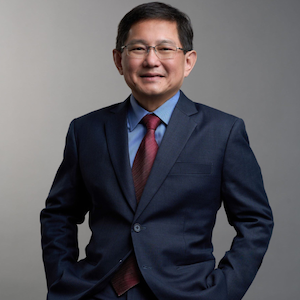 Leck Chet Lam is Managing Director of Experia Events.