

Long COVID affects workplace productivity in Malaysia

Businesses in Malaysia have been urged to do more to support employees who continue to suffer from the disease.
Middle managers caught between hybrid work policies

Hybrid managers feel less connected to their company culture than their full-time remote or full-time on-site peers.
Skills development key to maintaining employee job security

31% of Generation X workers in Singapore between ages 42 and 57 are worried about losing their jobs if they fail to keep up with digital transformation.
Can four-day workweek provide health benefits to employees?

A study found that employees who switch to a four-day workweek sleep an hour more than they did when working five days a week.
All in a day’s work: How fathers can balance family and work

Singapore’s Centre for Fathering is advocating for family-friendly workplace policies that can create happier families and more productive employees.
New Zealand urged to address gender pay inequality

To ensure women in the workforce are paid fairly, the government has also been urged to make pay gap reporting mandatory.
New Zealand union calls for 4-day workweek

The Council of Trade Unions (CTU) is suggesting a comprehensive pilot of a four-day working week as part of a strategy to develop the economy.
Clear communication key to address gender equality issues

Recognising that women have the right to equality should be stemmed within society, and this can be achieved through conversations.
Australia moves to stamp out workplace harassment

Employers are mandated to prevent sexual harassment and discrimination in the workplace under laws to be introduced into parliament.
Non-essential meetings place financial burden on organisations

Getting employees to attend unnecessary meetings can cost big companies up to US$101 million per year, and can negatively impact employee engagement.
Could hybrid working hold back women’s careers?

Female employees who choose flexible hours or work from home may risk missing out on opportunities through in-person interaction
Employees in India can expect wages to rise in 2023
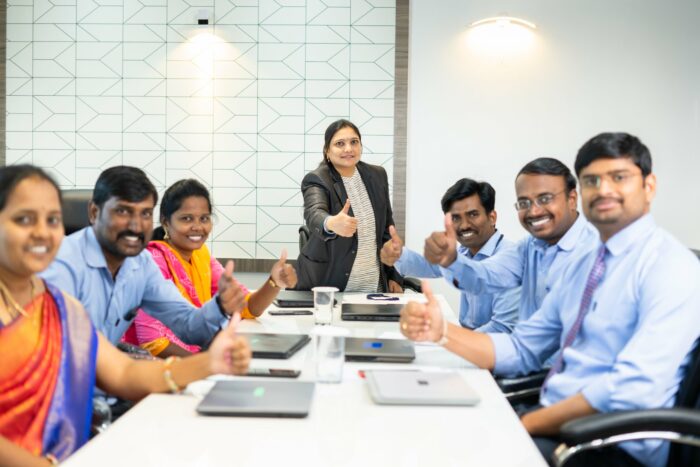
After an annual rise of 10.6% in 2022, which is the highest in the world, salaries in India are expected to increase by 10.4% in 2023.
Remote work does not impede career progression

Instead of mandating a return to office, Dell is letting employees choose where they want to work and giving fair opportunities to all.
Productivity can be key tool to boost wages in Australia

Instead of multi-employer bargaining, the Australian government has been urged to increase productivity to raise wages.
Fujitsu Japan enhances work experience with pet office

The office space, opened on trial till the end of the year, has workstations for three employees and space for up to six dogs at any one time.
How to create HR sustainability at workplaces

As organisations face challenges in retaining talent, the Good Work Framework by the World Economic Forum provides strategies to overcome these issues.
Creating more engaged and productive employees

ServiceNow’s Now Platform Tokyo solution now comes with more features to help organisations navigate complex business challenges.
Number of informal workers expected to decline in India

Citing the many challenges of managing informal workers, many companies in India are looking to formalise their workforce.
Hybrid meetings leave employees in Singapore feeling disconnected

59% of employees said hybrid meetings would be more effective if all participants could contribute and speak equally.
Mitigating “distance bias” as employees return to work

A stay interview is one example of how managers can know their team members better and lay the groundwork for better retention.
More Japanese continue to work after the age of 65

Japan has the largest proportion of residents aged 65 and up in its population, with 25.1% continuing to work.
Navigating a new world of work in Indonesia

Organised by HRM Asia, CHRO Series Indonesia will explore the latest hybrid work models that can empower leaders to build successful HR teams.
Australia considers implementation of four-day workweek

A labour union is calling on the government to axe the standard five-day workweek to boost productivity and employee wellbeing.
Two-thirds of workers in New Zealand want more work-life flexibility

Workplace practices and working preferences have shifted, and employees are now looking for jobs that better fit their lives.
Indonesia prioritises more inclusive workplaces

Ensuring workers’ rights is key to building inclusive and safe work environments in a recovering world of work, says Vice President Ma’ruf Amin.
Employers in Malaysia urged to support employee training

Employers should shoulder the responsibility of ensuring that their workers are given ample training to improve their skills, says trade union.
Is Singapore ready for a 4-day workweek?

Employers and employees should adopt a “flexible mindset” on a four-day workweek, said Gan Siow Huang, Minister of State in the Manpower Ministry.
New benchmarking tool aims to uplift Australia’s workplace standards

The benchmarking tool is designed to help organisations focus on employee wellbeing and improve organisational leadership.
70:30 hybrid work model proposed in the Philippines

A 70:30 hybrid work ratio (70% onsite and 30% work-from-home) has been recommended to the government to sustain economic recovery.
South Korea considers banning work texts outside working hours

A proposed bill prohibits employers from making repeated or constant work-related instructions after statutory working hours.