
Klook’s Gen Z strategy: Agility is the new loyalty
- Josephine Tan
As organisations grapple with how to engage and retain Gen Z talent, many leaders frame the conversation around disruption, entitlement, or declining loyalty. But at Klook, Gen Z is not a problem to solve but a strategic advantage to harness.
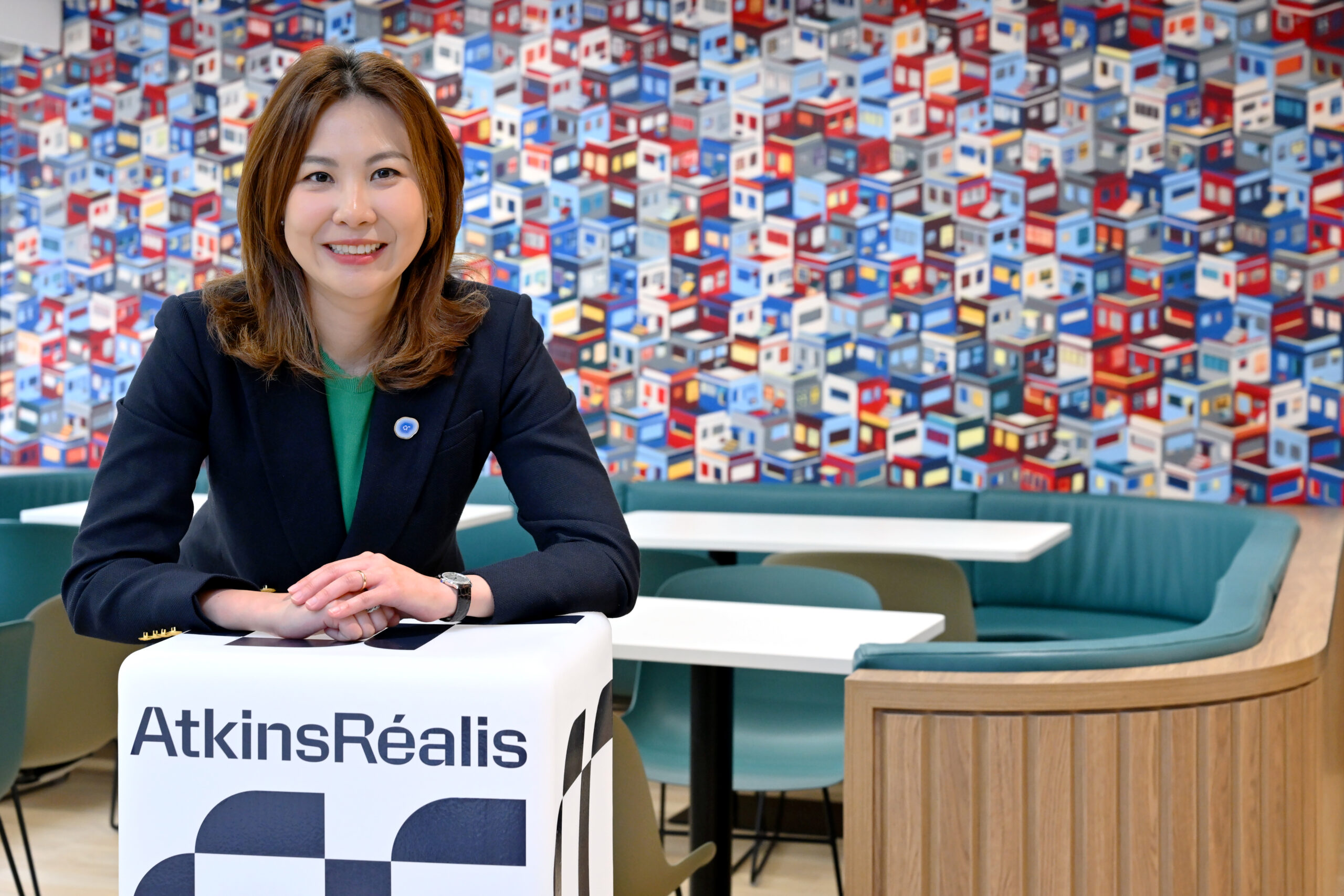
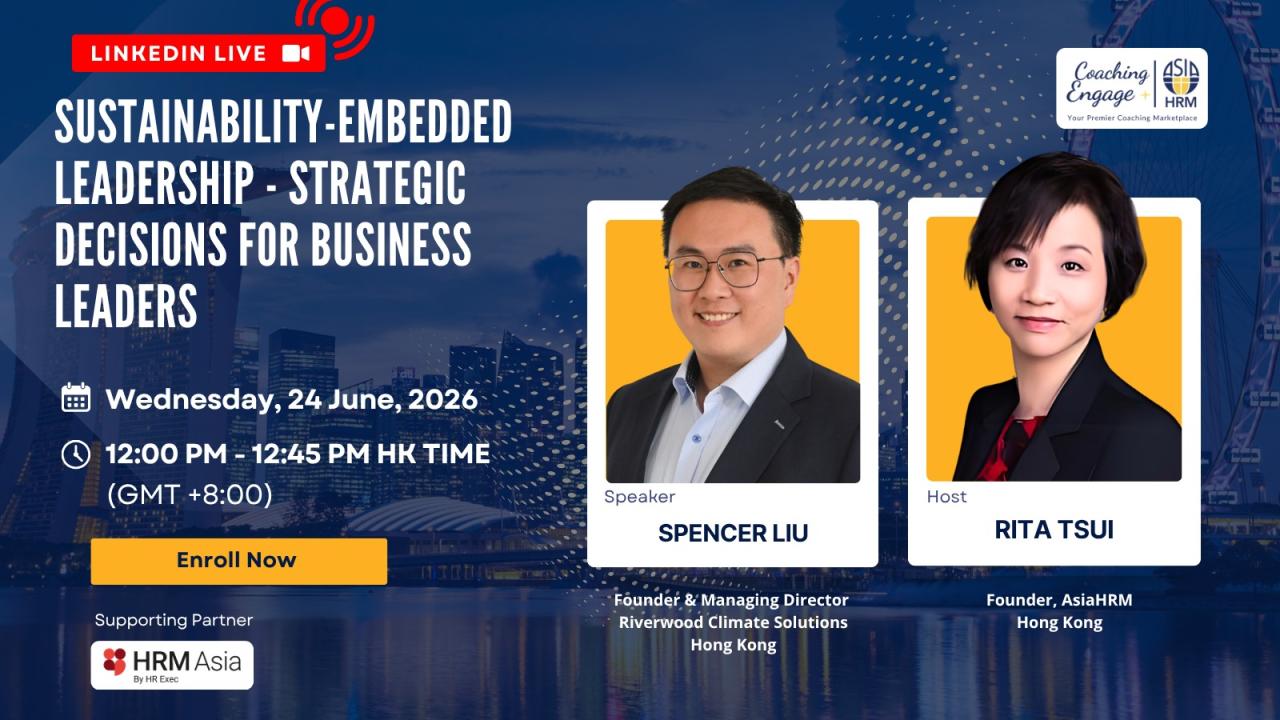
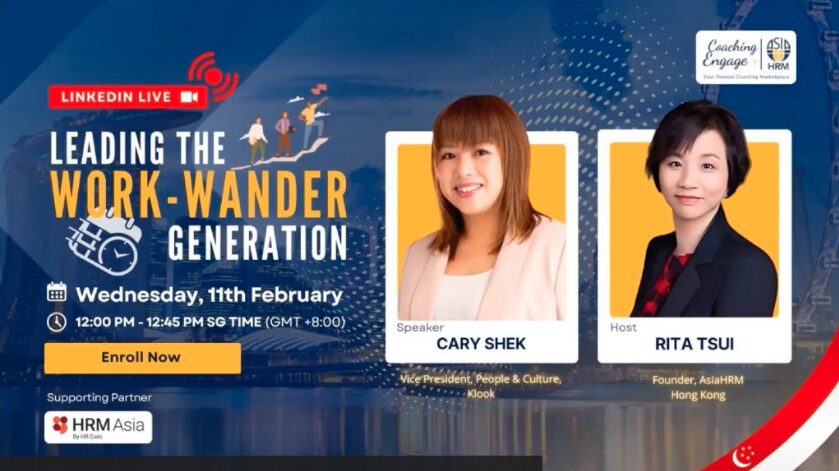
Speaking with Rita Tsui, Founder of AsiaHRM, at the Asia HR Leaders Live Series, Cary Shek, Vice-President, People and Culture at Klook, shared how the travel technology company has redesigned its people strategy to align with what she calls the “work-wander generation”.
In a sector where speed and adaptability determine survival, Shek believes Gen Z’s expectations are not misaligned with business performance—they are accelerating it.
From managing attendance to managing impact
One of the biggest mindset shifts leaders must make, Shek said, is moving away from managing presence to managing outcomes.
“Stop managing attendance and start managing impact,” she emphasised.
At Klook, hybrid work is structured around intentional collaboration rather than compulsory office attendance. The company currently operates on a four-day-in-office, one-day-remote model, but teams have autonomy to organise that flexibility as they see fit.
Office time is deliberately used for brainstorming, mentoring, fast decision-making, and strengthening team cohesion. Remote time, meanwhile, is positioned for deep work and decompression.
The philosophy reflects a broader reframing of Gen Z’s attitude towards work. Rather than viewing work as a place, Shek described it as part of a lifestyle. Leaders who cling to rigid structures risk disengagement. Those who design for impact gain productivity and trust.
Trust, however, is not blind. Klook anchors flexibility in clear output goals, transparent communication and ongoing feedback. “If everyone knows what success looks like and by when, you don’t need to monitor how or where they do it,” Shek said.
Employee = Traveller = Creator
In an industry built around travel experiences, Klook extends its business model directly into its employee value proposition. Shek described the company’s “workcation” initiative—a programme that allows employees to work remotely from another Klook office for up to 14 days without using annual leave. While there, employees use Klook’s platform to book experiences, test the user journey, flag product issues and generate authentic social media content.
This approach operationalises what Shek calls the “slash identity”—recognising that employees today are not defined by a single professional label. They are employees, travellers, and creators simultaneously.
Rather than restricting these identities, Klook integrates them into its business strategy. Every trip becomes a live user-testing session and a potential marketing asset. Employees sharing travel content organically strengthens employer branding and consumer trust in ways paid campaigns cannot replicate.
Supporting lifestyle, Shek argued, does not dilute productivity. “We don’t lose performance. We gain loyalty.”
Replacing career ladders with career lattices
Traditional vertical career progression, Shek noted, is increasingly incompatible with Gen Z expectations. The notion of waiting two to three years for promotion can become a retention risk.
Klook instead adopts a career lattice model. Employees can take on cross-functional projects, move laterally to build new skills, and co-create roles in response to emerging business opportunities.
Promotion decisions focus on competency rather than tenure. High performers may progress within two years if they demonstrate readiness. Managers are accountable for enabling growth through exposure, not just formal training. Shek referenced the 70-20-10 development model, with 70% of learning derived from on-the-job experience. Cross-functional initiatives serve both individual growth and organisational agility, allowing talent to understand multiple parts of the business while closing internal skills gaps.
This structure preserves accountability through clearly defined roles and responsibilities, project-based KPIs and measurable outcomes. Flexibility in this context does not mean a lack of structure. It means adaptive structure.
Agility as the true ROI
When questioned about return on investment (ROI), Shek challenged the conventional fixation on immediate financial metrics. “The ROI is agility,” she said.
In travel technology, where consumer trends shift rapidly and new destinations rise overnight, the ability to respond quickly becomes a competitive edge. A flatter structure, empowered decision-making and fewer approval layers enable teams to act on market signals without delay.
READ MORE: The compliance trap: How silence in your organisation may be masking disengagement
Speed, Shek noted repeatedly throughout the session, is oxygen in tech. Change is constant. Organisations that resist generational shifts risk suffocation. Rather than asking how to fix Gen Z, Shek urged leaders to examine friction points as indicators of outdated systems. Transparency demands expose inefficiencies. Calls for flexibility reveal opportunities to redesign collaboration. Desire for rapid growth challenges static talent frameworks.
Embedding a “push boundaries” mindset
Klook reinforces its culture through town halls, recognition programmes, and the celebration of small wins that exemplify its core value of “push boundaries”. Even within the People and Culture function, processes such as recruitment are continuously reviewed for efficiency and AI-enabled enhancements.
For Shek, sustaining agility requires modelling it. Culture cannot be declared; it must be demonstrated through daily decisions, communication patterns and visible leadership behaviour.
As organisations across Asia contend with multi-generational workforces and evolving expectations, Klook’s approach offers a reframing: the work-wander generation is not undermining traditional models—it is stress-testing them. The question for HR leaders, Shek concluded, is simple but provocative: are the tensions with young talent problems to be controlled, or signals to modernise the way we work?