
People first, then profits: The case for wellbeing as strategy
- Josephine Tan
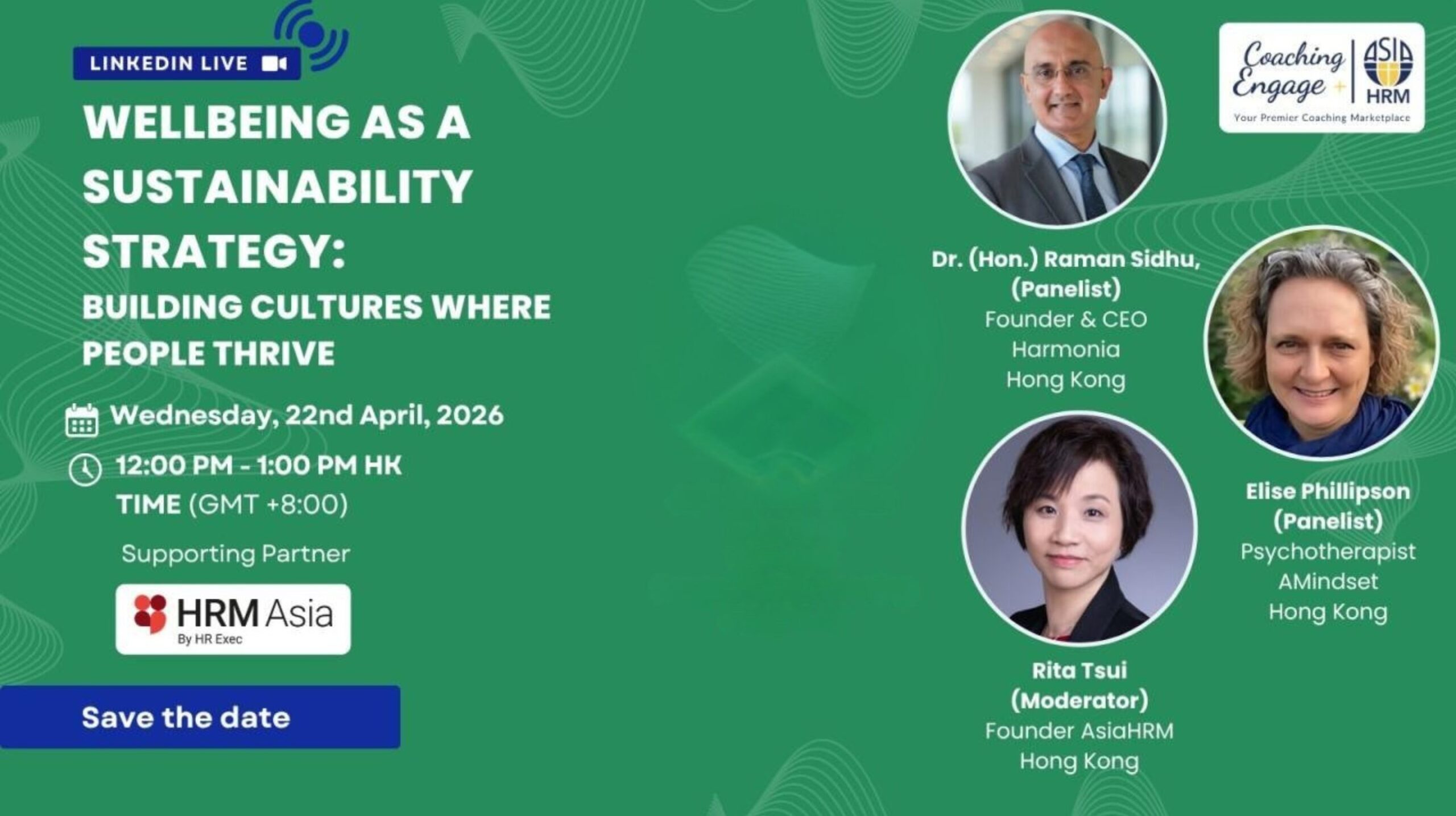
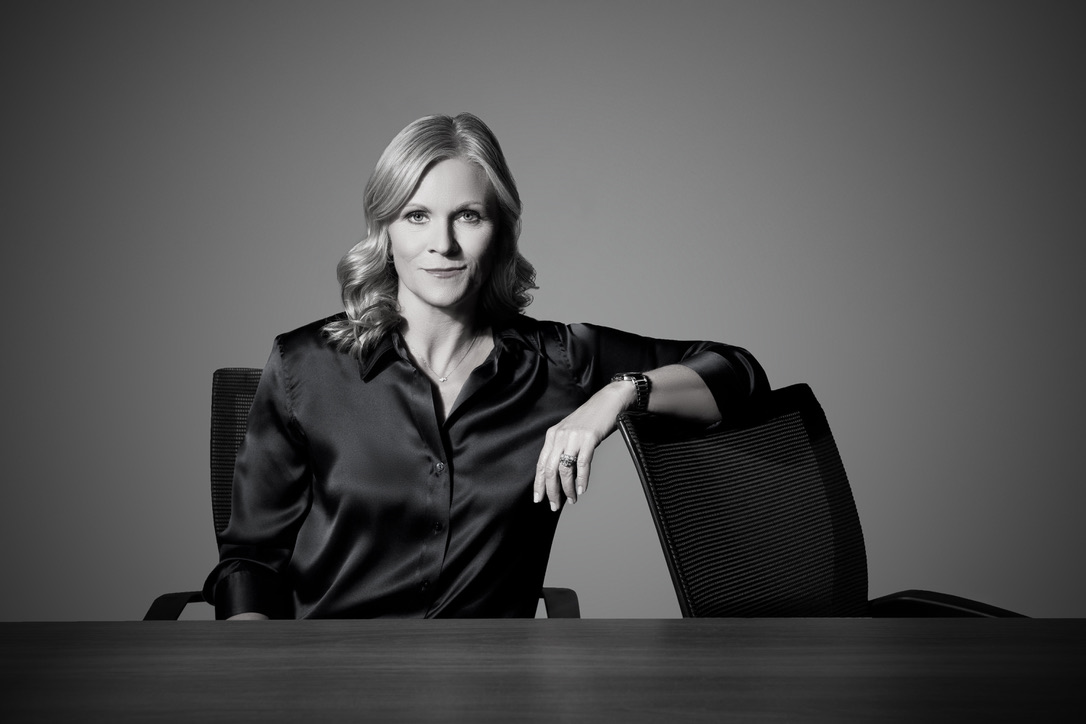
When Rita Tsui helped design a holistic employee wellbeing programme at her previous organisation, she expected mindfulness sessions or stress management workshops to top the popularity charts. Instead, it was a quarterly shoulder massage – offered tentatively as a trial – that had employees scrambling for slots. The anecdote, she told the panel, says something important about the gap between what employers think their people need and what employees actually feel safe enough to use.
That tension sat at the heart of the latest session of the Sustainability in Business Series hosted by AsiaHRM, which brought together two practitioners – Dr Raman Sidhu, Founder and CEO of Harmonia Hong Kong, and Elise Phillipson, Psychotherapist at AMindset – to explore what it truly takes to build cultures where people thrive.
The precondition that programmes cannot replace
Both speakers converged quickly on a foundational concept: psychological safety. For Phillipson, whose practice draws on psychodynamic theory and internal family systems therapy, this means creating an environment where employees do not feel they must hide or perform to survive in the workplace.
“When a workplace offers unconditional positive regard – assuming that your employees are coming from a good place – then employees feel safe to express their needs, set boundaries, and open up about anxieties without fear of retaliation,” she said.
For Dr Sidhu, psychological safety is the precondition for something equally vital: autonomy. “When psychological safety becomes the pervading culture, or as they say, the smell of the place, then that leads to autonomy,” he said. “And autonomy leads to creativity, collaboration, and that’s when it becomes a thriving place to work.” He was direct about what this means for leaders: building a culture where people thrive is not fundamentally about compensation, gym subsidies, or free snacks. “It is about how you treat people,” he said.
Why wellbeing programmes so often fall short
Organisations tend to approach employee wellbeing programmatically, and understandably so. Structured programmes enable planning, scaling, and measurement. But as Dr Sidhu observed, wellbeing is not a process. It is about humans, who have emotions, social needs, good days and bad days. The result is a gap between what is publicised internally and what actually happens on the office floor, a gap that employees quickly see through.
The consequences of failing to close it are measurable. “You will see absenteeism. You will see turnover. You will see employee engagement down, and most importantly, productivity down,” Dr Sidhu said. He drew an analogy: investing in wellbeing programmes while simultaneously piling pressure on employees is “like being in an abusive romantic relationship and taking your partner out for a nice dinner. It is not going to compensate. The essential conditions have to change.”
Phillipson added that many programmes fail because they treat symptoms rather than root causes, and apply one-size-fits-all solutions to a workforce of distinct individuals. She pointed to accessibility as a frequently overlooked dimension, and elaborated, “If you have a programme that requires a three-week wait for an appointment, that doesn’t help somebody who is in crisis at 2am.” Digital tools such as text-based counselling, she noted, reduce the barrier to entry and can also function as early warning systems for organisations – anonymised data can reveal patterns of anxiety or distress that signal something is wrong at a systemic level before it escalates.
The invisible erosions
Even organisations with genuinely good cultures are not immune to damage. Dr Sidhu identified line management as one of the most powerful – and most underexamined – forces acting on employee wellbeing. “The person you are led by plays a significant role in terms of the impact on workplace culture, boundaries, and how each individual is treated.” He noted that when leaders fail to create truly inclusive environments, the knock-on effects – favouritism, cliques, discrimination in its many forms –quietly but decisively corrode trust.
Phillipson pointed to a more intimate layer of erosion: the unresolved personal histories that employees and managers alike bring into the workplace. A person who grew up under constant criticism may interpret a manager’s neutral feedback as a devastating attack. A manager who was shaped by authoritarian leadership in their own early career may unconsciously replicate those patterns with their team. “What we try to do with people who come and see us,” she said, “is find the origins of their defensive and offensive behaviours and see if they still apply in the current environment.”
She also raised the importance of healthy boundary-setting, something she described as structurally undervalued in many corporate cultures. “If you don’t have a shield between yourself and everybody around you, above you or below you, you disappear. You get overwhelmed, you burn out,” she said. The phenomenon is especially acute for what she called the “sandwich generation” – professionals in their 40s and 50s navigating peak career demands while managing both ageing parents and children at home.
The EAP paradox and the stigma problem
Employee Assistance Programmes (EAPs) are among the most common wellbeing investments made by organisations, yet their utilisation rates, particularly for psychological services, remain low across Asia. Both speakers identified stigma as the primary culprit, though they were careful to distinguish this from a failure of programme design alone.
In her work with organisations, Phillipson has encountered organisations where EAP physical services – massage, yoga, meditation – are fully subscribed, while the counselling arm sits almost entirely unused. “They’ve got everything in place, and all you get is tumbleweed. Not a single person uses them,” she said. The reversal happened at one organisation only after a board-level director spoke openly about having sought therapy and found it transformative. “It took a long while for people to get over their self-stigma, but they started to make use of the mental health aspect of the EAP,” she added.
Di Sidhu located the stigma problem within a broader cultural context. Across Asian societies – diverse as they are – there is a common thread, he argued, where declaring a mental health struggle is perceived as shameful, particularly for those in positions of authority. “Leaders are expected to be strong and not vulnerable. Mental health is seen as somebody else’s issue,” he explained. This makes the normalisation of such conversations not merely a communications exercise, but a long-term cultural project requiring sustained effort from HR professionals, mental health practitioners, and senior leadership working in concert.
“It’s okay not to be okay. It’s fine if you’re not fine because it’s normal. It happens to all of us,” he added.
What leaders can do differently
On the question of early intervention, both speakers emphasised that leaders need not be trained clinicians to make a meaningful difference. Phillipson, drawing on her background as a Mental Health First Aid instructor, described the skill as fundamentally observational: “You look for deviations from the baseline. Is a normally social person withdrawing? Is a high performer suddenly making uncharacteristic mistakes?” The point is not to diagnose, but to notice and to ask. “You don’t need to have the answers. You just need to realise there’s a difference and acknowledge it,” she said.
Dr Sidhu, however, cautioned that this noticing requires leaders to first tend to their own psychological state. A leader in a state of constant hypervigilance cannot tune in to the human climate around them. “You need to come out of that state of constant stimulation to be able to tune into human beings,” he said, noting with some concern that senior leaders are among the least likely to take up EAP support, as though the pressures of seniority had somehow placed them beyond the reach of stress.
Framing wellbeing as a sustainability strategy, as AsiaHRM’s series does, may be more than rhetorical. Dr Sidhu was explicit about the business logic, explaining, “It’s a great sustainable investment for people and for profits both – not just profits, people first and then profits.” Phillipson echoed the point from a productivity angle: when leaders truly know their people, deploy them to their strengths, and create the conditions for engagement, “that really increases productivity and culture, ultimately your organisation’s bottom line.”
The conversation on sustainability continues next week, when AsiaHRM’s Sustainability in Business Series turns to governance – a topic its host Rita Tsui, considers inseparable from business survival. As a member of the Hong Kong Corporate Governance Institute, Tsui will make the case that strong governance is not merely a compliance obligation but the structural foundation on which everything else – culture, people, and profit – depends. The session will take place next Wednesday, 29 April 2026, from 12pm to 12:45pm. To register, click here.
Those themes take on added urgency at HR Tech Asia 2026, where Tsui will deliver an Association Spotlight session titled HR Governance in the Age of AI: Building Fair, Transparent, and Trustworthy People Systems. The session will address how organisations can ensure the ethical use of employee data, govern AI tools responsibly, and define HR’s role in oversight. Click here to register for HR Tech Asia 2026.