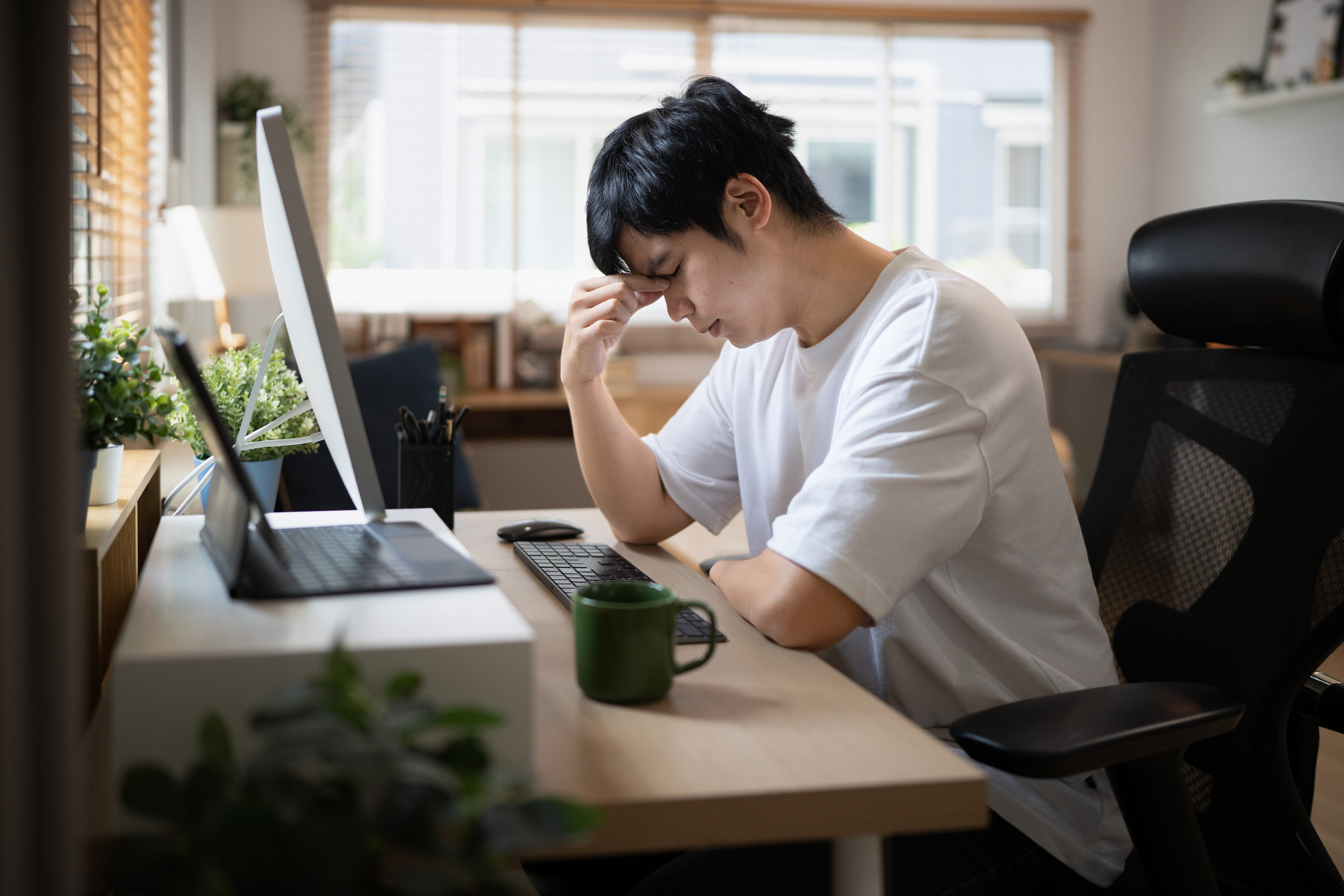
Remote work and everyday digital tools have made it easier for employees to keep working when they are unwell, and researchers argue that the standard understanding of presenteeism no longer captures what that behaviour looks like.
A new paper by Professor Sir Cary Cooper of The University of Manchester, Professor Luo Lu of National Taiwan University and Professor Kao Shu-Fang of Soochow University contends that definitions built around physically turning up to the workplace despite illness are out of step with modern working life. With hybrid and remote arrangements now widespread, employees can stay home and still answer messages, join virtual meetings, or handle urgent tasks while sick.
That shift prompts the authors to propose a new definition: presenteeism as the “behaviour of attending work in the state of suboptimal health, with varied location choices and degree of engagement”. Existing measures, they say, are too narrow, tending to count how often employees work while ill or how much illness dents their productivity. In their place, the paper sets out a three-dimensional framework covering health, location and engagement.
Each dimension asks a different question. The first is whether the trigger is a physical or a mental health problem. The second distinguishes on-site work from remote work. The third separates employees who work a full schedule at normal intensity from those who scale back hours and effort. Taken together, they produce eight distinct forms of presenteeism.
The categories pull apart cases that have often been treated as one. An employee with a physical illness who goes into the office and works a full day sits in a different bracket from one who stays home and handles only urgent requests, and the same distinctions apply to someone managing anxiety or depression – a category the authors say has been relatively neglected, with most existing research focused on physical sickness. That granularity, they argue, could help separate cases where working while ill is harmful from cases where employees are adapting their work in ways that protect their health while covering essential responsibilities.
READ MORE: The CEO of your own wellbeing: Empowering employees through accountability and resilience
Adapting, however, depends on having the room to do so. “Technology has given people much greater flexibility over where and when they work, but that flexibility can become a trap if employees feel they have to be available all the time,” said Cooper, 50th Anniversary Professor of Organisational Psychology and Health at The University of Manchester. The paper also raises concerns about unequal access to that flexibility: remote work is not open to everyone, meaning some employees can adjust their arrangements when ill while others have little option but to travel in.
For employers, the authors suggest a more useful question is whether employees have the latitude to reduce their hours or workload when unwell, rather than treating working while sick as inherently good or bad behaviour. Future research, they add, should test whether greater control over location, hours and workload makes presenteeism a more adaptive behaviour – with organisations left to balance performance against wellbeing as digital tools continue to reshape the workplace.