
Beyond the first hire: What makes inclusive hiring last in Singapore workplaces
- Josephine Tan
- Topics: DE&I, Features, Home Page - Features, Recruitment, Singapore
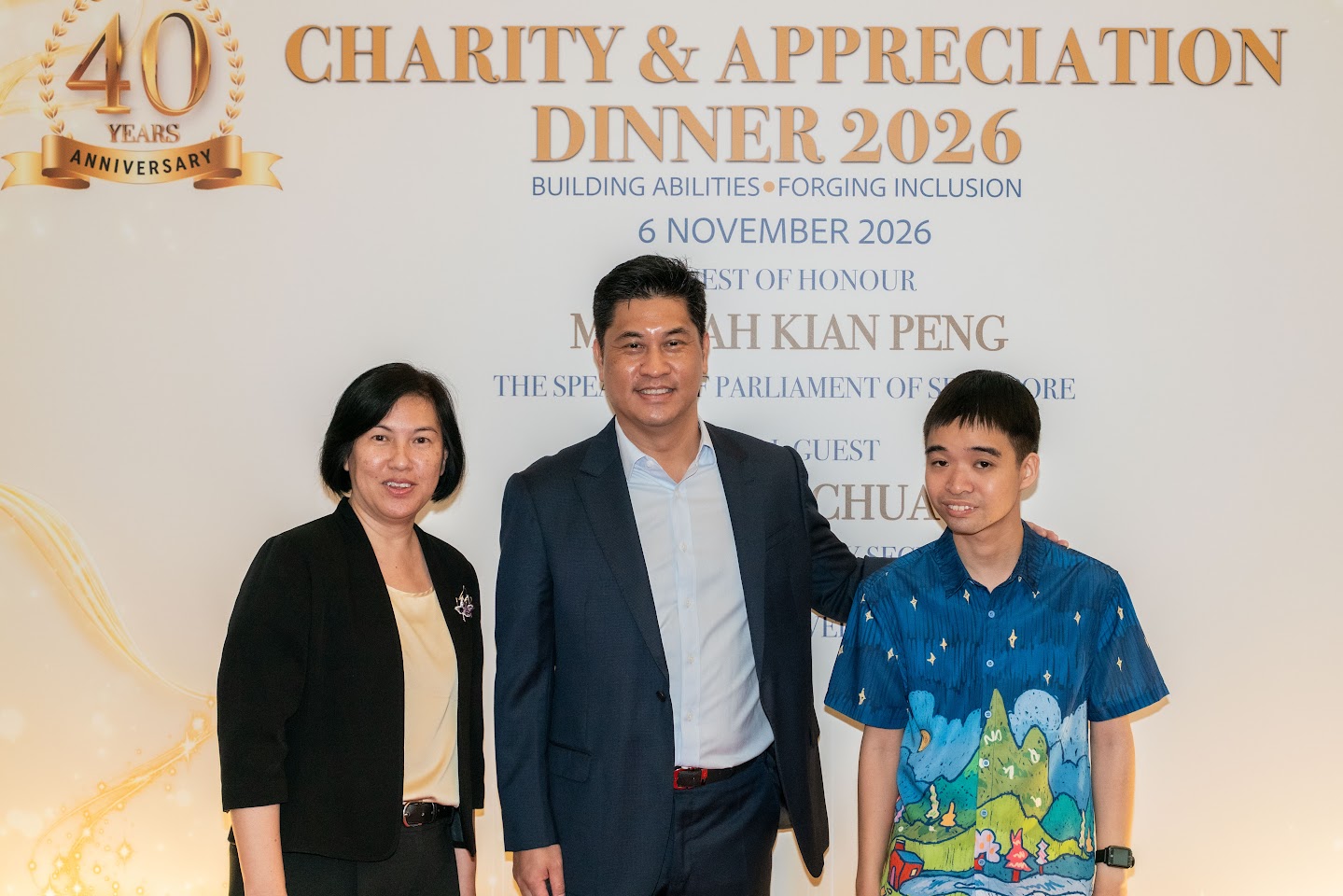
Most days, Timothy Mok’s work at Loft Logistics follows a packing list. As an Operations Assistant in the organisation’s warehouse, he picks, packs and scans items for each order.
Asked what the job means to him, he keeps it simple. “Working at Loft Logistics means that I can be productive and earn a salary,” he tells HRM Asia.
Mok came to the organisation through Bizlink Centre, which has spent 40 years helping persons with disabilities in Singapore build skills and find employment. He trained at Bizlink’s E-commerce Fulfilment Training Centre, and credits that training, together with his Bizlink job coach, Judy Hon, and his two supervisors, Desmond Chua and Jonathan Lim, with helping him in the role.
Bizlink supported 750 individuals across its programmes in its 2025/26 financial year, according to its annual report, with 427 trained and supported through its training and employability programmes. Its Employment Support Services programme recorded 71 successful job placements from 88 clients enrolled. At the training centre where Mok trained, 39 of the 69 clients trained in its most recent grant cycle, which ended in March 2026, were placed into jobs in logistics and other sectors.
Taking the first step
Getting from training to a job still depends on employers taking the first step, and that is where many hesitate, says Ang Li May, Bizlink’s Chief Executive Officer.
“Employers are increasingly open to hiring persons with disabilities, but are unsure about job redesign, workplace accommodations, communication approaches, or how to support an employee with a disability effectively,” she says. Concerns over productivity, supervision and how a new hire would fit into the team can also stand in the way.
Bizlink, which works with around 180 employer partners, tries to close that gap by helping organisations identify suitable roles, preparing candidates as well as their supervisors and colleagues, and supporting the transition on the job. In Ang’s experience, the first hire often shifts an employer’s thinking. “Once employers have a positive first placement and see the contributions that persons with disabilities can make, their confidence grows,” she says. “Many go on to hire more inclusively because inclusion becomes a business reality.”
For Loft Logistics, that first step came when Bizlink approached the organisation. Co-Founder Daryl Chan says the idea resonated. It offered a chance to employ someone who “did not fit in the traditional mould of what a hire should be in our industry”, while setting a tone within the organisation that differences could be strengths.
Matching tasks to strengths
The organisation did not build a separate onboarding track. Every new warehouse hire, with or without a disability, is cycled through its core activities so supervisors can see where each person’s competencies lie. “It allows us to observe both their physical and mental dexterity for certain tasks and place them in what appears to be a good fit for their skill sets,” Chan explains.
The organisation has two employees with disabilities in the warehouse. Their days combine core tasks they are familiar with and ad hoc tasks handed out along the way. The repetitive core work helps them stay focused, according to Chan, while the ad hoc tasks give them room to upskill “and also give them some relief from mundane tasks”.
Finding that balance did not happen overnight. Chan says the discovery process took time, and supervisors have to “exercise a fair amount of judgement” when assigning core work and deciding which new tasks to introduce. The organisation has not incurred additional costs, he notes, though this will vary by individual. What it has invested is supervisors’ time, spent embedding processes and adjusting them to each person’s needs.
That time has brought returns beyond the placements themselves. Matching individuals to their strengths has pushed supervisors to “really drill down, break down, and question the operational processes”, he says, and the experience has been “very rewarding from a team cohesion perspective”. Both employees now carry out some of their tasks independently each day.
A key part of getting there, Chan adds, was the job coach Bizlink assigned to the organisation, alongside the guidance from SG Enable, the Singapore government agency that supports disability inclusion. The onboarding phase had its challenges. Some tasks were reassigned because they were plainly unsuitable, while others were tested as new possibilities. The job coach’s knowledge of each individual helped the organisation judge which tasks would or would not work, giving it what Chan calls “a much more informed path” in assigning them.
Support of that kind runs through the placements that last, according to Bizlink’s Ang. Bizlink puts its six-month retention rate at around 60%, and she points to inclusive workplace culture, clear communication and supportive supervisors and colleagues as the common threads in placements that hold. “When supervisors provide structured guidance, regular feedback, and reasonable accommodations, employees are better able to build confidence and adapt to workplace expectations,” she says. Workplace buddies and job coaches, she adds, help both employee and employer build the understanding and skills needed for long-term success.
At Loft Logistics, Chan has seen the effects reach well past the two individuals. He describes four changes that have emerged among staff, supervisors and partners: more empathetic interactions and communication, lateral thinking in solving problems, a sharper eye for the natural competencies that drive productivity, and a safe environment where social norms can be openly challenged. None of it, he says, was planned.
Starting from the workplace
On the training side, Ang says Bizlink’s Train-and-Place approach “begins with the workplace rather than the classroom”. The organisation works with employers and an Institute of Higher Learning to understand industry needs, task requirements and emerging skills demands before designing or adapting its programmes. The Bizlink Learning Academy, which brings its training programmes together under a more structured approach, extends that work into workplace, digital and industry-specific skills.
“As the economy evolves, skills development must be continuous,” she says. In return, Bizlink asks employers to share their workforce requirements and changing skills needs, and to offer job trials, attachments and internships. Employers, for their part, gain access to a more diverse talent pool.
READ MORE: How CHAGEE rebuilt a tea store to run on sight instead of sound
Chan believes smaller firms are well placed to act. “SMEs are typically flatter organisations, agile and have the flexibility to make adjustments to existing processes to ‘right-fit’ an individual,” he says. In his view, the difficulty arises only when an organisation’s internal processes are not structured enough to carve out specific tasks for an individual.
He also sees no reason for assessing a person with a disability to differ from assessing any other candidate. With a focused assessment of an individual’s skills, he says, an organisation can recover its costs through productivity gains, supported by government schemes in Singapore. That, in his view, makes inclusive hiring both a strategic advantage and a socially impactful initiative.
For Ang, the shift needed is one of framing. “Inclusive hiring should be recognised as a talent strategy that enables organisations to access a wider talent pool,” she says. In its next chapter, Bizlink hopes to work with employers beyond recruitment and onboarding, on job redesign, workplace accessibility, career development and retention.
For Mok, the next step is personal. “I hope to be able to work long-term and have a permanent full-time job,” he says.