
Thermo Fisher Scientific builds a human-centred model for shared services growth
- Josephine Tan
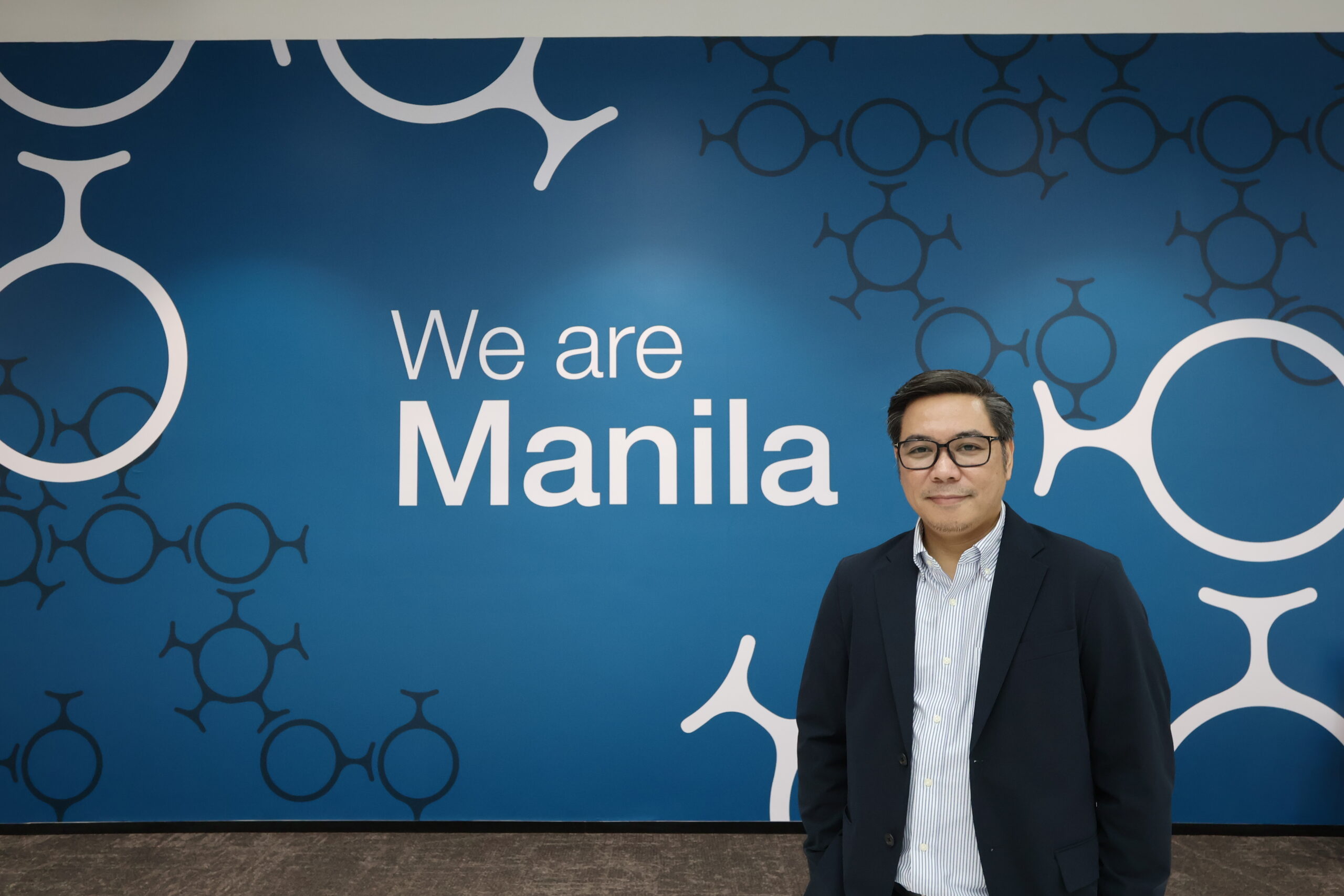
“As our organisation continues to grow, culture has become a key part of how we operate every day. We strive to create an environment where colleagues feel empowered to speak up, contribute ideas, and work together toward shared goals.” – Restie Ramirez, Global Business Services Shared Services Centre Manila Site Lead and Accounting Operations Director, Thermo Fisher Scientific
For decades, the global shared services model was built around a straightforward proposition: centralised operations, standardised processes, and reduced costs. But as automation and AI increasingly absorb repetitive tasks, the role of Global Business Services (GBS) centres is being fundamentally redefined.
Today, organisations are asking a different question. Instead of simply delivering work more cheaply, how can shared services create greater strategic value?
At Thermo Fisher Scientific’s GBS Shared Services Centre (SSC) in Manila, the answer lies in a combination of digital transformation, cultural identity, and long-term investment in people. Approaching its second year of operations, the Manila site is scaling rapidly—from an initial 100 roles to a projected workforce of about 700 employees by 2026. As the Philippines’ IT-BPM sector continues its expansion, with industry projections estimating the sector will generate $US42 billion in revenue and employ nearly 2 million people by 2026, Thermo Fisher Scientific’s Manila operation is positioning itself as a high-impact regional hub supporting its customers across Asia-Pacific.
But while growth and technology are central to the story, Restie Ramirez, GBS SSC Manila Site Lead and Accounting Operations Director for Thermo Fisher Scientific, believes the site’s differentiator is ultimately human.
“The traditional shared services model was built on cost efficiency,” Ramirez tells HRM Asia. “Today, as automation and AI increasingly handle routine work, the focus is shifting toward value creation—where GBS and SSC provide deeper insights, stronger decision support, and greater business impact.”
That transition is already reshaping the nature of work inside the Manila site.
Moving from process execution to strategic contribution
Like many multinational organisations, Thermo Fisher Scientific has been investing heavily in digital capabilities and emerging technologies, including collaborations with OpenAI, to simplify workflows and enhance operational efficiency.
These efforts have enabled more centralised reporting, structured metrics, and more meaningful business conversations. Automation is improving scalability, consistency, and accuracy while freeing employees to focus on higher-value work requiring judgment, collaboration, and problem-solving.
Yet Ramirez is careful to emphasise that technology alone is not enough. “At the centre of all of this are our colleagues,” he says. “While technology continues to transform the way we work, it is people who bring judgment, accountability, empathy, and critical thinking needed to drive meaningful outcomes.”
In Manila, that human dimension is deeply influenced by the Filipino value of malasakit—a sense of genuine care, ownership, and responsibility toward others. Rather than treating culture as a secondary concern, Thermo Fisher Scientific is embedding these values directly into how teams collaborate, adapt, and lead through change.
“We see this reflected in the Filipino value of malasakit—a deep sense of ownership, care, and commitment to making a difference in the work we do every day,” Ramirez explains. “This continues to shape our culture where teams support one another and adapt to digital transformation without losing the human connection that drives collaboration, innovation, and trust.”
Culture as operational infrastructure
In many organisations, culture is still discussed primarily as an employee engagement initiative or employer branding exercise. But at Thermo Fisher Scientific Manila, culture is increasingly being viewed as operational infrastructure—something that directly influences scalability, resilience, and execution.
Ramirez points to the Filipino value of bayanihan, or collective collaboration and shared responsibility, as a foundational principle shaping how the Manila hub operates. “As our organisation continues to grow, culture has become a key part of how we operate every day,” he says. “We strive to create an environment where colleagues feel empowered to speak up, contribute ideas, and work together toward shared goals.”
That collaborative mindset has become particularly important as the organisation scales rapidly. Over the past year, employees have stepped beyond formal job scopes to support critical business needs, while many have proactively pursued cross-training opportunities and expanded responsibilities. According to Ramirez, this adaptability has strengthened both operational resilience and organisational agility.
“Our culture is shaped by the Filipino value of bayanihan—a spirit of collaboration, shared responsibility, and community support,” he says. “We see this reflected in how our teams work together every day to solve challenges, support one another, and drive operational excellence.” The result is a management approach that relies less on rigid hierarchy and more on collective ownership.
Reverse innovation from Manila
The Manila site is also challenging traditional assumptions about how innovation flows within multinational organisations. Historically, global headquarters designed processes that regional hubs were expected to execute. But increasingly, multinational organisations are recognising that regional operations can also become sources of innovation, resilience, and workforce practices that scale globally.
Ramirez believes Manila’s experience offers lessons that extend well beyond the Philippines. “One of the things I am most proud of at our GBS Manila site is the adaptability and growth mindset of our colleagues,” he says. “Our teams have consistently shown a willingness to learn, embrace change, and find better ways of working.”
That openness to change has been critical as employees adapt to emerging technologies, including tools such as ChatGPT Enterprise, which are helping teams accelerate processes, improve productivity, and streamline workflows. Importantly, Ramirez noted that innovation is also contributing to workplace inclusion by enabling employees with different abilities to work more effectively and participate meaningfully across the organisation.
At the same time, Thermo Fisher Scientific continues to invest heavily in capability building, including both technical and leadership development programmes. “We believe that empowering our people with the right skills and resources helps them grow while strengthening our ability to deliver for our customers,” Ramirez says.
But perhaps the most important lesson emerging from Manila is that resilience is not built through policies alone. “Resilience is built through people,” he adds. “It comes from creating a culture that encourages continuous learning, open-mindedness, and the confidence to explore new ideas.”
Redefining the employer-employee relationship
The rapid evolution of work is also reshaping the relationship between organisations and employees. In an increasingly competitive talent market, compensation and career progression alone are no longer sufficient differentiators. Employees are increasingly looking for workplaces that support long-term personal growth, purpose, and development.
Ramirez believes organisations must now think more broadly about their role in employees’ lives, and elaborates, “We believe success is not only measured by business outcomes but also by how we support the long-term growth and development of our colleagues.”
At Thermo Fisher Scientific Manila, this philosophy extends beyond formal training programmes. The organisation has cultivated strong volunteerism initiatives, colleague-led interest groups, mentoring structures, and leadership support systems designed to help employees grow both professionally and personally.
READ MORE: When success turns hollow: Why HR must pay attention to leaders’ internal alignment
“For us, growth goes beyond promotions or title changes,” Ramirez explains. “It is also about building confidence, expanding capabilities, and creating opportunities for colleagues to lead in different ways.”
This emphasis on coaching, trust, and development is also shaping succession planning and leadership pipelines inside the organisation. “As we continue to scale, developing leaders from within remains one of our most important and sustainable advantages,” he adds.
Ultimately, Ramirez sees the Manila site evolving into far more than a transactional operations centre. “What we are building at the GBS Manila site is not just scale—it is impact,” he says.
Looking ahead, Thermo Fisher Scientific’s challenge will not simply be sustaining rapid growth, but ensuring that culture, innovation, and human development evolve alongside operational expansion. For Ramirez, maintaining that balance will define the next phase of the organisation’s journey.
“The opportunity is to sustain this momentum by continuously developing our people, embedding innovation into how we work, and maintaining the rigour required to operate at scale,” he concludes. “In doing so, we position GBS SSC Manila not only as a centre of excellence, but as a meaningful contributor to Thermo Fisher Scientific’s global impact.”