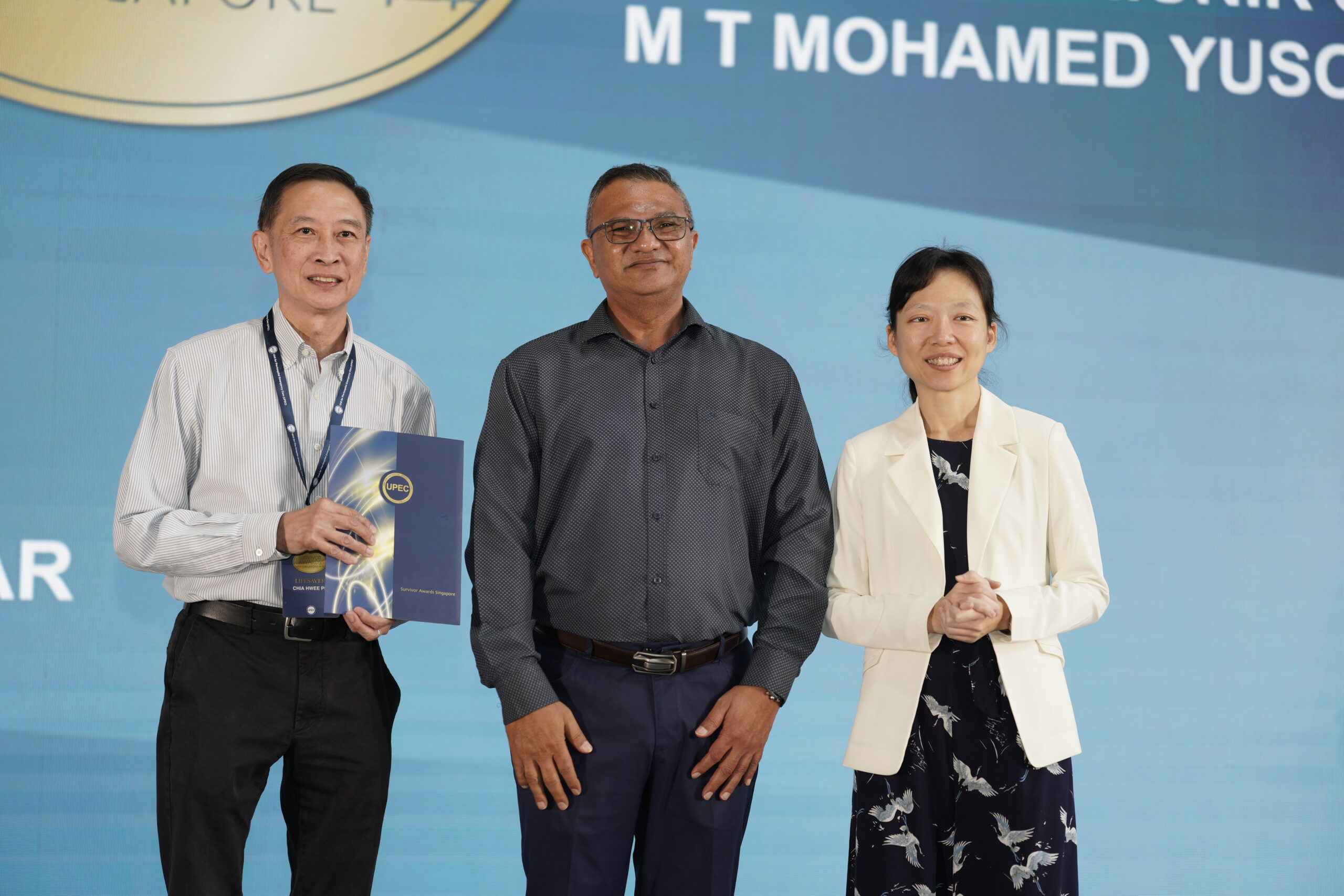
Edwin Wan, Managing Director of Bertschi Singapore, with the recipient of his marrow donation (in pink) and her family.
When the Bone Marrow Donor Programme (BMDP) surveyed 3,000 Singaporeans in 2024, 41% said workplace support would influence whether they registered as a potential marrow donor. The finding points to a question that sits outside the usual boundaries of HR policy: if an employee is matched with a patient, will their employer stand behind them?
For a decision that hinges on a phone call that may never come, the workplace turns out to be a significant variable. And for the organisations now treating it as one, the shift has been gradual.

“What was once viewed largely as a personal matter is increasingly recognised as something workplaces can actively support because it directly impacts employees, their families and the wider community,” Joon Tan, Vice-President of HR Strategy, Innovation, Communications and Sustainability at Schneider Electric, who also chairs BMDP’s HR sub-committee as a board member, tells HRM Asia.
She attributes the change to two things. Awareness of blood diseases and the impact of marrow transplantation have grown, making the cause more tangible. Leadership has also moved the needle: when senior figures champion it, employees take that as a signal that the organisation will support them.
What the process actually asks of an employee
Edwin Wan, Managing Director of Bertschi Singapore, is one of those figures. His route to the registry began with an email from a friend at his gun club who was battling leukaemia, asking members to sign up on the basis that if they could not help him, they might help someone else. Wan clicked the link. A swab kit arrived in the post a few days later; he swabbed the inside of his cheek and returned it in the envelope provided.
Two years passed. He had forgotten he had registered when BMDP called to say he was a match.
“The prospect of saving someone was too heavy to ignore, so right then and there, 60% of my mind was made up to go ahead with it,” he says. “The other 40% was my mind telling me to be cautious.”
What followed answers the question most employers would ask. A series of face-to-face appointments, counselling sessions, and walkthroughs followed, during which Wan learned the recipient was a 12-year-old girl. He also learned that the procedure was not what he had assumed. Peripheral blood stem cell (PBSC) donation – now the more common method – draws blood from one arm, filters out stem cells and returns the blood through the other, with no surgery involved.
In the days before the donation, Wan administered daily injections into his abdomen, comparable to insulin shots, to stimulate stem cell production. He had a medical practitioner do it for him, at BMDP’s cost; the organisation covers direct expenses, so he paid nothing out of pocket. He says those injections were the most uncomfortable part of the process.
The donation itself took roughly four hours in a single room at his hospital of choice. He was observed for about half an hour afterwards, then drove himself home and resumed his usual routine. Six years on, he reports no lasting effects.
“During the four-plus hours of my donation, all I felt was boredom,” he says.
For employers weighing the operational cost, Wan draws a direct comparison. “The loss of productivity can be only for a matter of a few days,” he says. “If you compare it with the lost productivity of an entire day with various departments doing various volunteer work, the numbers quickly add up.”
He is careful about where the employer’s role begins and ends. In his view, the decision belongs to the matched donor alone. What an organisation can do is address awareness and convenience – the two things that got him onto the registry in the first place – and provide time off if an employee is called.
Awareness, not willingness
That reading of the barrier is echoed on the HR side.
“The biggest barrier is usually awareness rather than willingness,” says Anna Lee, People and Culture Lead at Ingenico. “Many people have concerns about the donation process, recovery time, or potential risks. Once they understand the facts, they are often much more open to registering.”
Support at Ingenico includes flexible work under a hybrid model, medical leave support, and what Lee describes as a culture that encourages employees to contribute to causes they care about.
Asked where HR leaders should begin, she puts education ahead of policy. Dispelling myths and conveying the impact of donation comes first; leadership backing signals organisational commitment; policies and flexible arrangements then provide practical reassurance to anyone who is called upon.
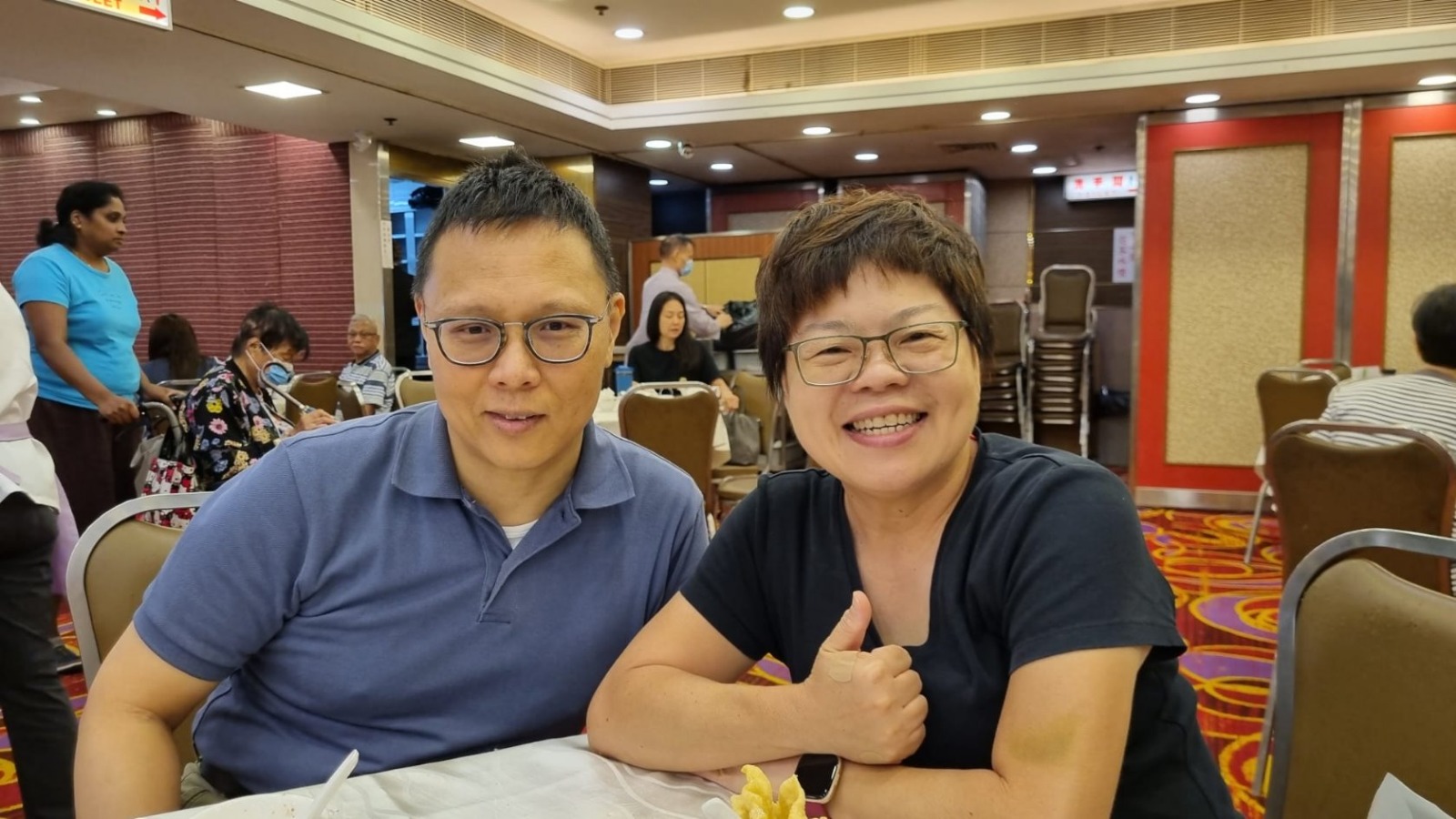
The misconceptions are persistent. Caryn See, a donor and volunteer at NETS who has spent years running workplace talks on the subject, says many colleagues still believe stem cells are extracted from the base of the spine. In her experience, many people she speaks to have not heard of PBSC donation or of extraction from the pelvic bone.
Medical conditions are the other common objection, and See uses her own case to counter it. She describes herself as a “three highs” person – a local shorthand for high blood pressure, high cholesterol and high blood sugar – and was still able to donate. Prospective donors are medically screened before proceeding, she notes, so the assessment is not one they need to make themselves.
“You just need the heart to do it,” she says.
Her advocacy has run through her organisation’s recreation team rather than HR: each year she pitches the chairman for a slot to speak to colleagues, and sometimes to employees at other organisations. For anyone in a similar position, she suggests approaching corporate communications or HR to find out what is possible.
The numbers problem
The case for employer involvement rests on scale. Only one in three patients in Singapore finds a suitable match locally, leaving the rest to overseas registries or to wait. Improving those odds, Tan says, means both growing the registry and ensuring registered donors stay committed if they are identified as a match – and workplaces bring together large, diverse groups of people at once.
Singapore is well placed to build on this, she adds, though she sees room to grow in normalising support for employees who register. Clear leave policies, flexible arrangements during the donation process and internal education to correct misconceptions all lower the barrier.
For HR leaders weighing which causes to take on, Tan frames the decision narrowly.
“The question isn’t whether organisations should take on every social cause,” she concluded. “It’s about identifying opportunities where the workplace can genuinely remove barriers for employees to make a meaningful difference.”