
Marriott CHROs answer seven questions every HR leader is asking
- HRM Asia Newsroom

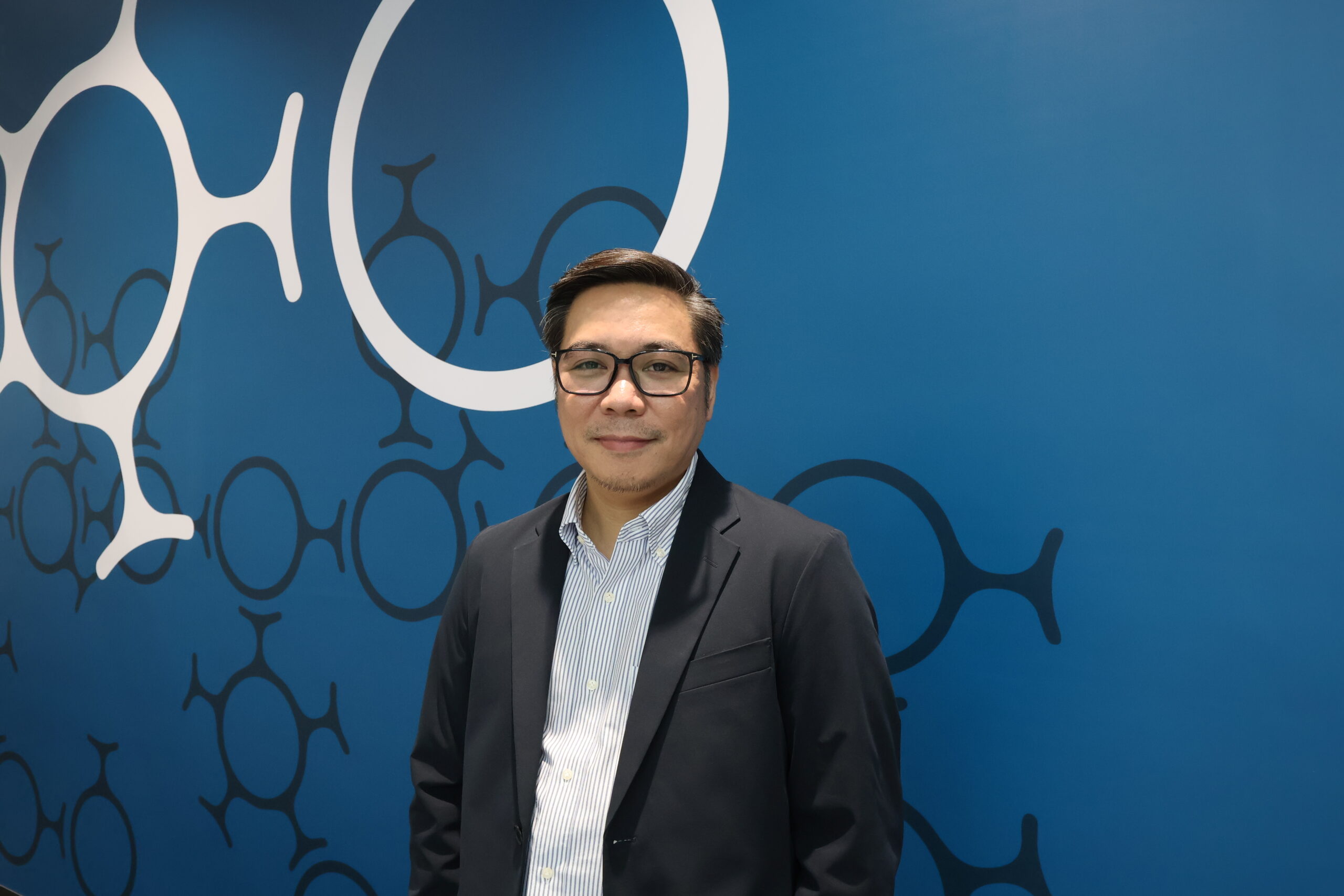
Francisca Martinez, Marriott International’s CHRO for Europe, Middle East and Africa, and Kris Dunn, the company’s CHRO of the US and Canada, talk at HR Tech Europe in Amsterdam. (Photo by Jill Barth)
At HR Tech Europe 2026, Marriott International’s Francisca Martinez, CHRO for Europe, Middle East and Africa; and Kris Dunn, CHRO of the US and Canada, organised their session around seven questions they said HR leaders are wrestling with right now.
Here is how they answered them with the clarity that comes from operating at scale to the tune of US$26 billion in revenue and 9,000 properties across 145 countries
1. HR tech suite or best-of-breed?
The honest answer, both said, is that the choice is no longer either/or. Hybrid is now the default.
Suite providers deliver the global scale and compliance infrastructure that large organisations need. But for high-priority functions such as talent acquisition and learning, a best-of-breed partner often moves faster and goes deeper.
Dunn advises that when adding a point solution, HR leaders should aim to find one that can do multiple things within its speciality. “What you don’t want to do is end up with 30 or 40 providers,” he said. Think of it as building a mini suite within your existing suite. Marriott’s use of Paradox (now Workday’s Olivia) for automated interview scheduling followed that logic. Marriott chose the vendor in part because it had a broader TA roadmap beyond scheduling alone.
2. Will 2027 be the year AI agents actually do things?
Dunn says, “It better be.” The current state, largely based on smart chatbots that answer questions but rarely take action, has not delivered on the promise most HR leaders were sold, according to Dunn.
Martinez, who also oversees IT and strategy and planning for EMEA, said three conditions have to be true before AI agents can meaningfully act on behalf of employees. These are well-governed, connected data; real-time system integration; and organisational readiness to adopt.
At Marriott, even with a core global HR system, dozens of standalone payroll and benefits platforms across EMEA do not talk to each other. The technology may arrive before the infrastructure does. The organisation has to be prepared to embrace and understand how tech rollouts are going to help with daily work and organisational objectives, Martinez said.
3. What HR work should AI eliminate?
The CHROs identified high-volume, transactional and administrative work as the kind that consumes HR teams without energising them. These include benefits changes, payroll questions and absence management. Martinez said she has not met an HR professional in 25 years who got into the field to “just do” transactional work.
But she cautioned against over-automating without a strategy. She pointed out that many of those processes are over-engineered legacy workflows that accumulated over the years. Before bringing in tech, Martinez said, HR leaders should re-evaluate processes rather than just automating what they do today, without thinking analytically about it.
4. Employees want advanced AI tools. Security says no. Now what?
This one drew knowing nods from the room. Martinez framed this as a tension that is not going away. She said many new tools are genuinely impressive, but providing broad enterprise access in regulated environments is complicated, and employee frustration is real.
Dunn suggested that HR leaders should think of employee groups as potential adoption tiers. Not every employee needs or wants the most advanced tools. For those who do, Dunn recommended carving out selective access with clear expectations. He described a junior software developer whose organisation gave him full access to an advanced AI tool for two months, with the condition that he return and teach leaders what he learned. That knowledge then informed the broader rollout strategy.
Martinez added that Marriott uses a similar approach in India, where a group of AI champions gets access to more tools than others, with the expectation that they’ll educate colleagues and surface new use cases.
5. Where’s the fastest ROI for my organisation and my career?
Martinez said that quick wins with AI-driven HR self-service can deliver impact in terms of the bottom line and HR’s reputation. High-volume transactions are the fastest path to measurable return. Associates get answers faster, in natural language. HR teams get time back. And accurate, associate-initiated transactions improve data quality downstream.
Success with adoption also positions you as the HR leader who finally made self-service work, Martinez said, which can be a legitimate career differentiator right now.
Dunn added that HR leaders should start small. Find one thing that’s relatively contained, prove the promise of the technology and build from there. Do not try to solve everything at once.
6. How to transform HR tech without breaking trust?
Change management, both agreed, is where most AI rollouts fail. Marriott rolled out automated interview scheduling in the US, and it took 18 months to reach 80% adoption. Their manager scheduling tool runs at about 70% adoption. The CHROs agreed that the tools were strong, but growing adoption was the hard part.
READ MORE: Europe ranks last in employee engagement. How can HR help?
Martinez said the answer to a global, diverse workforce is transparent, frequent communication about what is in it for employees. Not just “AI is coming,” but “here’s how this removes friction from your day.”
Dunn framed it as an opportunity for HR to become consultants on which workflows can really take advantage of AI.
7. What’s left for humans after the transactions are gone?
This is the question underneath all the others. Martinez said that empathy, human connection and the ability to read and shape culture will be retained as work for people. Technology can flag a cultural trend or surface a rising issue. What it cannot do, at least not yet according to the CHRO, is decide what to do about it or sit across from someone and make them feel genuinely seen.
At Marriott, where the organisation runs on guest interactions, that distinction has operational weight. Martinez said that the organisation is really about the guest experience, and that the best use of technology is to enable human connections by removing friction.
About the Author: Jill Barth is HR Tech Editor of HR Executive, where this article was first published.