Career switch into AI and data: What employers should look for
- Josephine Tan

For employers trying to build AI capability, the conventional technical pipeline has not kept pace. Universities turn out a finite number of graduates, competition for experienced practitioners is intense, and the skills in demand keep shifting. More organisations have started looking instead at career-switchers: people arriving from unrelated industries with a new qualification, a short training record and no technical employment history behind them.
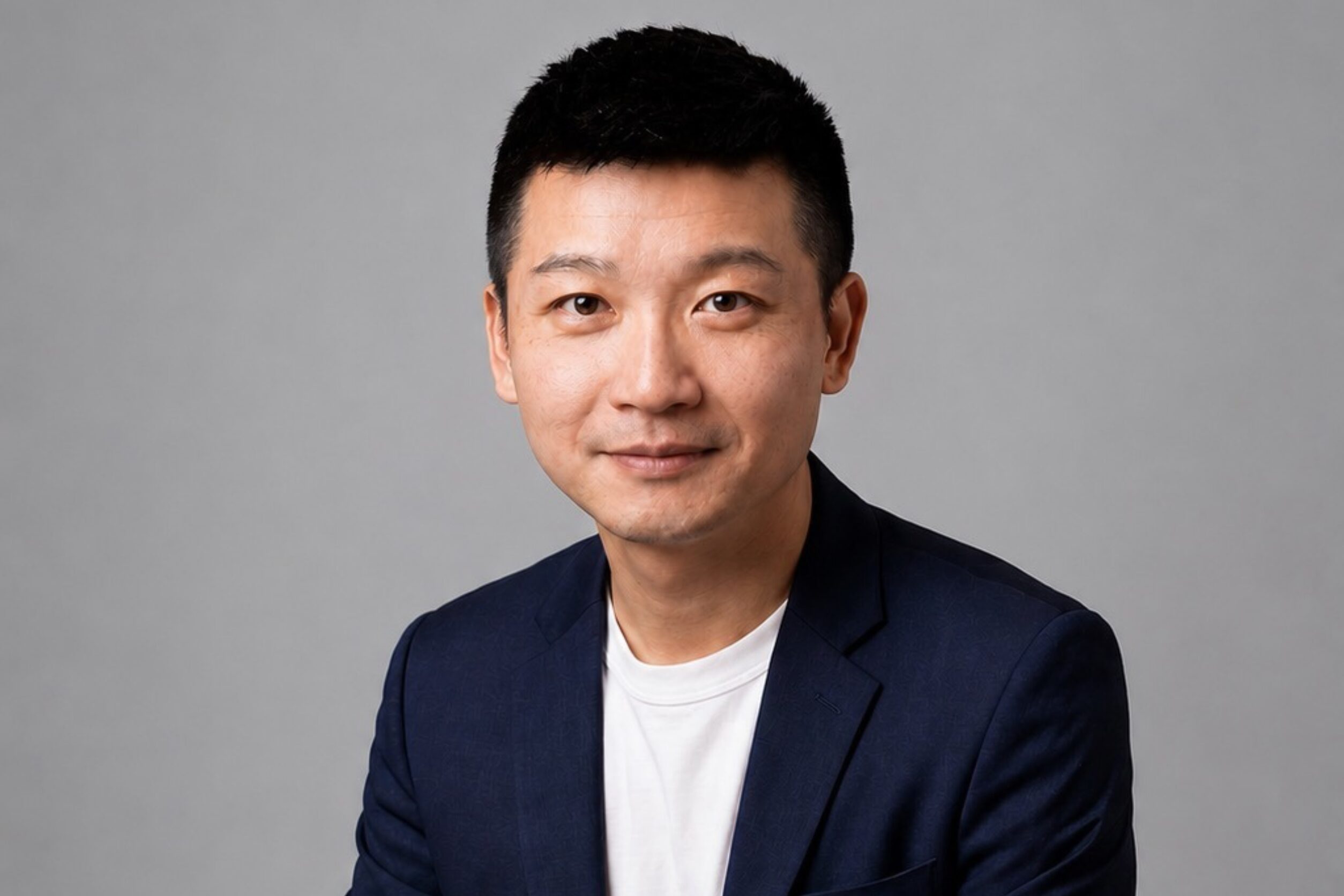
Joycelyn Woo is one of them. She spent about eight years in marketing and communications in commercial real estate, running campaigns, events and customer engagement activities for shopping malls. She is now a Senior Specialist in the Data, AI and Innovation team at Synapxe, the national HealthTech agency that runs the technology behind Singapore’s public healthcare system.
The pause that set it off was not of her choosing. “It was during COVID-19, when business and marketing activities slowed down due to social restrictions, that I had the opportunity to pause and reflect on where I wanted to take my career next,” she tells HRM Asia.
The interest was already there. Data analytics had pulled at her throughout her time in marketing, and she wanted to specialise in it. What she did not have was any certainty that she would take to it. “Coming from a non-technical background, I was not sure if it was something I would enjoy or would be comfortable pursuing, particularly as it required learning new technical skills and programming,” she says.
So she tested it cheaply first. Using her SkillsFuture credits, part of Singapore’s national scheme that gives working adults a subsidy to spend on approved courses, she enrolled in several short programmes covering Python, analytics and the foundations of AI. “These courses gave me a chance to test my interest and gain a clearer understanding of what a career in data analytics would be like,” she says.
Only once she found she enjoyed the work did the commitment scale up, to a one-year Master of Technology in Enterprise Business Analytics. Alongside it came the Healthcare Graduate Studies Award from MOH Holdings, the holding company for Singapore’s public healthcare institutions, which she describes as “an important milestone in helping me transition into a completely new sector with confidence”.
Its less obvious value was exposure. The award came with programmes, talks and seminars that introduced awardees to the public healthcare sector from the inside. “Before this, I had only experienced public healthcare as a member of the public,” Woo says. “Being exposed to the sector from an industry perspective helped me better understand how I could contribute to it and gave me a very different perspective on healthcare.”
Where the learning curve bit
None of that removed the difficulty of the first stretch in the job. “The biggest adjustment for me was learning to apply my technical knowledge and skills in a completely new domain,” she says. “While I was already comfortable using data to support decisions in marketing, transitioning into data science required a much deeper level of technical expertise. The learning curve was steep, especially at a time when AI was advancing rapidly, with new techniques and approaches emerging all the time.”
Asked what she believes made her a credible hire for a data and AI team, Woo points less to the qualifications than to the habit of mind she arrived with. “One of the key strengths I brought with me was the ability to think from the business perspective and how it impacts the end user,” she says. “In marketing, you are consistently thinking about who you are trying to reach, what their needs are, and whether what you are doing addresses the business objective. I believe this mindset is equally important when it comes to building tech solutions.”
That instinct, she argues, is a corrective in environments where the technology itself tends to set the agenda. “In technology-driven environments, it is natural to be excited by the possibilities of emerging tools and capabilities. However, I have found that the most impactful innovations come from taking a step back and asking a few fundamental questions: What are we trying to achieve? Who are we building this for? And does this solve the user’s problem or address the business need?”
READ MORE: The apprentice and the veteran: How expertise survives automation
What closed the remaining distance was the people around her. Her team ran regular knowledge-sharing sessions where members exchanged ideas, discussed live use cases and walked through the technologies being deployed on other projects. She was also encouraged to attend external workshops and industry sessions. “That was particularly useful as someone transitioning into a new field, as I did not have to learn everything on my own or rely solely on my immediate projects,” she says.
An internship at Synapxe before she joined full-time had already put her in front of real work, and one piece of it stayed with her. During the development of HealthHub AI, her team ran user testing sessions in the community, speaking with residents about their needs and frustrations. “What stood out most for me was the enthusiasm from elderly residents when they discovered features such as multilingual and voice-to-voice capabilities,” she says. “Seeing their excitement made the impact of our work feel more impactful and tangible.”
What career-switchers already bring
Where employers tend to go wrong, in her reading, is in what they choose to measure. “One common oversight organisations make is focusing too heavily on the lack of technical skills that career-switchers still need to develop, while overlooking the skills and experience they already bring with them,” Woo says.
The technical foundation has to be in place, she is clear about that. But candidates moving across industries often arrive with years of stakeholder management, communication, problem-solving and user research behind them. “I have been trained to start with the ‘why’ before the ‘how’, by understanding the objective we are trying to achieve and the people we are trying to serve. That mindset is particularly useful when developing AI solutions, as it encourages me to ask whether a solution is genuinely addressing a user need and creating meaningful value.”
Her conclusion is a short one, and it is aimed squarely at the people doing the hiring. “Organisations should recognise that career-switchers are not necessarily starting from zero. While they may be new to the technical domain, they bring existing strengths that can complement the technical skills of the wider team.”