From low cost to smart choice: How AI is reshaping global business services
- Josephine Tan
For more than three decades, global business services (GBS) organisations have created value in a familiar way. These centralised hubs, which run functions such as finance, HR and procurement on behalf of the wider enterprise, consolidated work, standardised it, moved it to lower-cost locations and automated it one activity at a time.
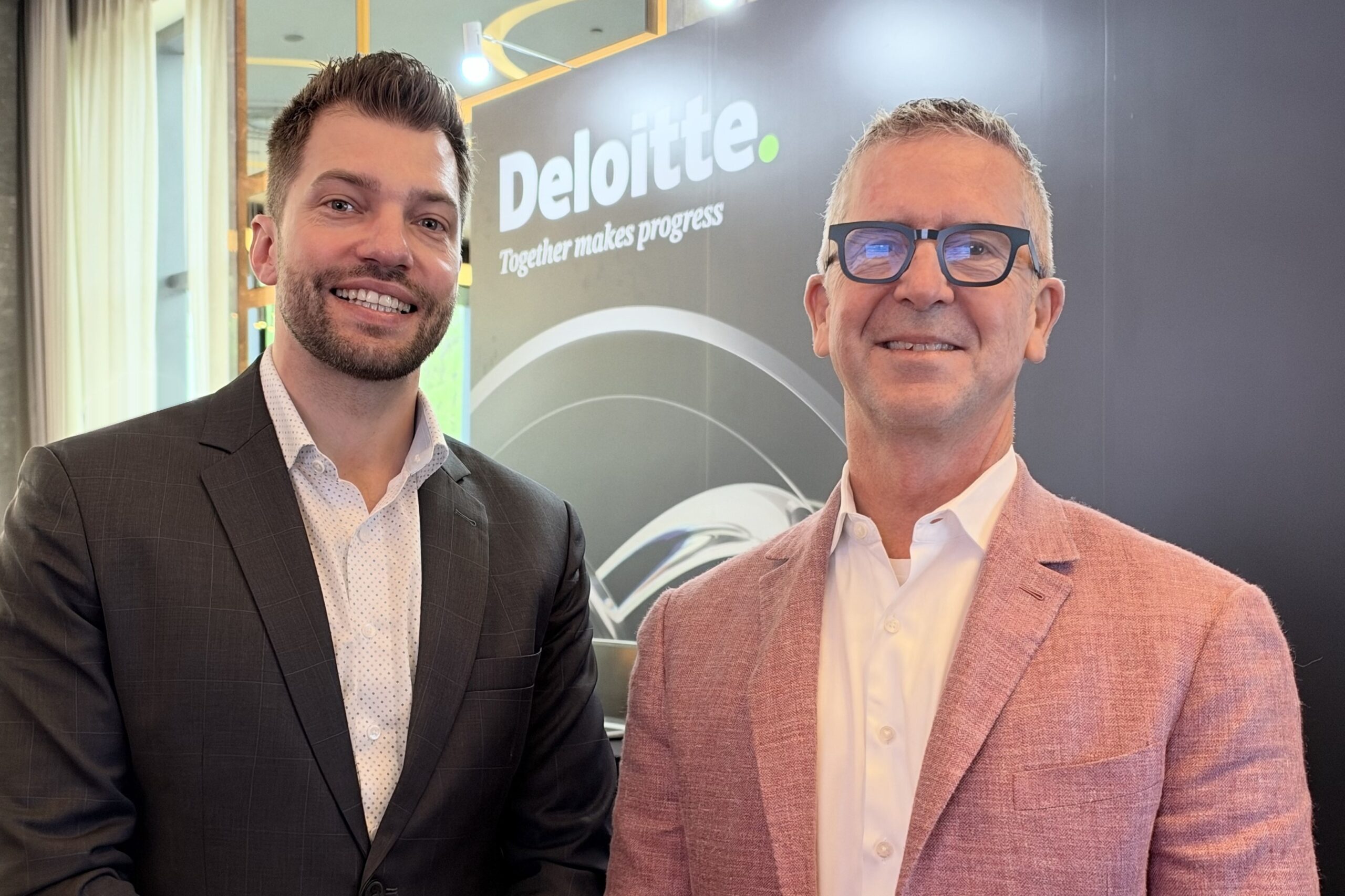
Those disciplines still matter, according to Kris Kabasinskas, Partner and Asia-Pacific Operate Centre of Excellence Lead at Deloitte. But he believes the next source of advantage lies less in where work gets done and more in how it gets done.
Speaking to HRM Asia alongside Dave Turk, Finance Operate Leader at Deloitte Global, Kabasinskas cautioned against reading that as a call to abandon what came before.
“The efficiency is still there and it is an absolutely crucial foundation,” he says. “It is an evolution, but you cannot just jump from A to Z without addressing all the building blocks in between.”
Skipping those basics and going straight to AI, he says, “is like trying to patch up a ship with multiple holes with a bandage and assuming that is just going to take you across the ocean. You have to make sure that the ship itself is built well.”
For Turk, it is the logic behind GBS that has shifted. The old model was largely a lift and shift: take the existing process and operating model and run it at lower cost somewhere else.
“Gone are the days when it is about finding the cheapest seat from a GBS standpoint,” he says. “It is really about finding what is the smartest option for us now.” That means reimagining business processes, decision rights and the operating model so organisations can use the capacity AI creates “to make better, smarter decisions.”
The weakest link
Getting there, both men stressed, depends far more on people than on technology.
Kabasinskas pointed to Deloitte research covering more than 3,000 respondents worldwide, which assessed how prepared organisations are for AI across areas including strategy, governance, technology and data. “It is the workforce. The talent preparedness is lacking. It is the biggest gap,” he says.
Most organisations are responding with AI fluency and upskilling programmes, which he described as “absolutely essential and important”. Far fewer are redesigning roles and career paths. As he put it in a recent presentation, “training people to use AI is not the same as redesigning work around AI.”
That redesign, he says, falls squarely to HR. He set out a sequence for it. First, redesign the end-to-end workflow. Second, clarify where people play an essential role, such as judgement-based capabilities, accountability and reviews. Third, create the new roles. Fourth, reshape career paths and upskilling and reskilling journeys around those roles.
He offered an example from finance operations. Once AI handles most routine matching, an invoice processor becomes an invoice exception manager, “whose job is no longer tied to processing invoices”. The role is judged instead on the value it protects, such as catching duplicate payments.
“We are freeing up people from more transactions, more tedious tasks into something that is high value-added, more engaging, more mentally stimulating,” he says. “And that career path and reskilling journey has to be reflected in that.”
Losing the base
Turk raised a concern that runs underneath the optimism. Many GBS workforces, particularly in Asia-Pacific, have been built on entry-level transactional roles, and he expects that layer to be largely digitised.
“We are losing the base, and that shape is going to move towards more of a diamond shape,” he says. “But traditionally, what have people learned through having that experience? They learn, over time, judgement. And if we are thinking about a future world where humans are still dependent upon to deliver the judgement, where does that come from now?”
He was candid that he had no answer yet. “I am very concerned about how organisations ensure that we have that oversight and that judgement capability within the organisation,” he says. “We need to pay very close attention to how we make sure that we are still building that muscle.”
Kabasinskas describes the change as a rising water level. As AI takes on transactional, rule-based work, he says, the value of what remains for people rises with it: “the judgement, the problem-solving, stakeholder management, innovation-related, value-creation topics”. Future roles will call for a combination that once sat across several people: functional expertise, technical, analytics and business acumen, along with growing fluency in areas such as data science and AI ethics.
However, Turk does not expect people to be designed out of the picture any time soon. “Trust matters in this equation,” he says, both within the organisation and in its relationship with clients and the market.
“In the short to medium term, that is why I do not feel we are going to see a strong move to fully autonomous operations of HR or finance,” he says. “If I am a shareholder in an organisation, that is what I want to know. The AI did not make that end decision. Somebody from a human standpoint said, that is good to go.”
The roles that survive will still look very different. Turk singled out the HR business partner. “It is an important role today. It plays an important role in the future. It is a very different role in the future, though,” he says.
He expects back-office functions to be staffed by “tech-savvy domain experts” working alongside “domain-savvy technology or digital agents”. Business partners will increasingly solve problems themselves through low-code and no-code tools, where they once took them to IT and waited months for a fix. “The pace at which we will identify those opportunities and embed those changes is going to massively accelerate,” he says.
The start line
That shift places new demands on the leadership team. Turk says collaboration between the CFO, CHRO and CIO “needs to be maybe tighter than it has ever been in the past”. Finance leaders are increasingly setting the pace on AI investment, he says, but every one of those decisions affects the workforce, and that impact belongs in the business case, alongside the return on investment.
On what makes transformation stick, his answer was blunt. “Getting to a go-live of deploying AI agents, going live with SAP or Oracle, whatever the ERP might be, is not the finish line. It is the start line.”
Engaging the workforce has to begin well before a project starts, with why the business needs to change at all. Organisations that lead with transparency fare better, he says. Without it, people “become potentially pockets of resistance to change”. When it is done well, people see where they fit, and some see that they do not, which gives them the chance to decide whether to reinvent themselves or move on.
“It sounds a little bit classic and old school because we have been having this conversation for years,” he says. “But all the evidence is still in the market that clients still are not spending enough time investing in this from day one.”
Kabasinskas agreed. “The mandate of an AI-powered business comes from the top, but the execution is done by the workforce, by the individuals,” he says. He cautioned against treating AI as a silver bullet that changes work overnight, describing it as a multi-year journey that needs the right incentives at every level.
He also wants that capability owned internally. “Change management capabilities are often very overlooked,” he says. Organisations often assume the consultants implementing a new system will handle change management. “I feel it is a capability that needs to be built internally, and it probably sits under the CHRO mandate.”
The stakes, in his view, are high. “The success of AI value for the enterprise will be resting really on the workforce impact, and hence the change impact that the CHRO will be driving.”
Looking ahead, Tuck expects AI to keep moving faster than operating models and governance can adapt, which leaves organisations with one option. “We do not know what is coming next, but if we have got the elasticity built into our operating model, we will be able to adjust to whatever is next,” he says.
He worries about organisations whose culture is to wait and see. They risk being overtaken in the market and losing talent. “Organisations that are leaning into it have a better chance of retaining the people that really matter to them,” he says, “and attracting the skills that they are going to need.”