
Deliberate, not delayed: Why Gen Zs and millennials in Singapore are rewriting the rules of career success
- Josephine Tan
The traditional corporate playbook has long equated ambition with speed. Climb the ladder quickly, collect promotions, chase bigger pay cheques, and eventually move into leadership. But Singapore’s younger workforce is increasingly rejecting this one-size-fits-all definition of success.
Instead, Gen Zs and millennials are making more deliberate, calculated decisions about their careers, prioritising stability, skills development, wellbeing, and purpose over rapid advancement. According to the latest Deloitte’s Global 2026 Gen Z and Millennial Survey, half of Gen Zs and millennials in Singapore have postponed major life decisions because of their financial circumstances, while only a minority see leadership as their primary career aspiration. Yet, this is far from a generation lacking drive or ambition. Rather, they are redefining what progress looks like.
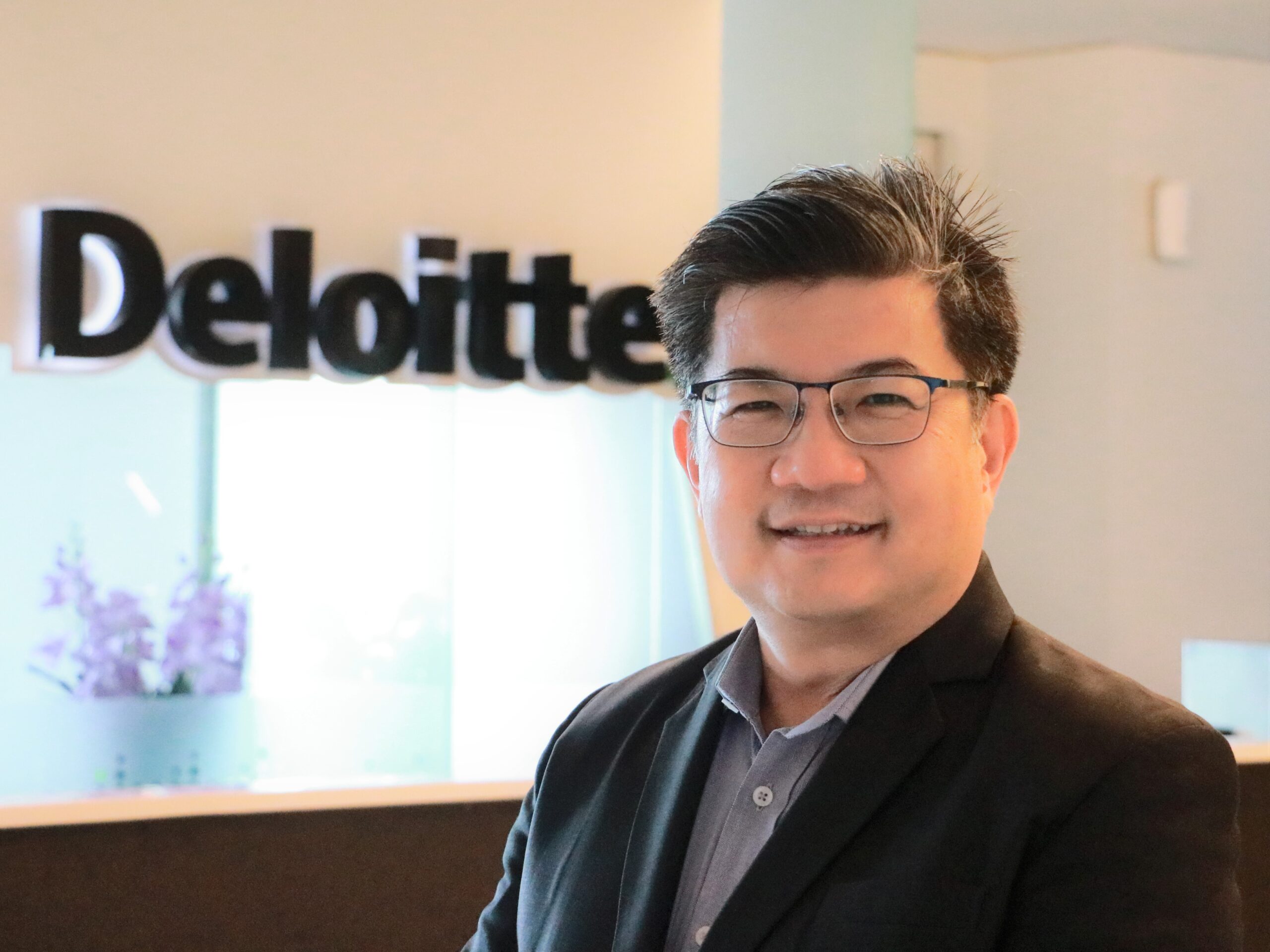
Mark Nicholas Teoh, Human Capital Leader, Deloitte South-East Asia, believes this shift represents a profound change in how younger employees evaluate their careers. “The biggest shift is in what counts as progress,” he tells HRM Asia. “15 years ago, success was measured by the speed of the climb: title, promotion, pay. Today’s Gen Zs and millennials measure success by whether the climb is sustainable.”
The survey found that only about one-quarter of Gen Zs and one-fifth of millennials in Singapore seek fast-paced career growth. Instead, most prefer steady progress, while around one in five are willing to move laterally or even accept more junior roles if it leads to a better long-term fit.
“Ambition has not fallen,” Teoh says. “The criteria for success have changed.”
The rise of discernment
This year’s report describes the attitudes of younger employees as “a coming-of-age story not of delay, but of discernment”. The distinction is significant for employers.
“Delay implies these generations will eventually revert to traditional timelines, allowing employers to wait them out,” says Teoh. “Discernment suggests they are making deliberate choices about when and under what conditions they commit, and they intend to hold those standards.”
Indeed, the survey paints a picture of a workforce grappling with significant economic pressures. Cost of living remains the top concern among both Gen Zs and millennials in Singapore, and housing affordability continues to influence career decisions for many respondents. More than half report delaying major milestones such as marriage, starting a family, or pursuing further education because of financial constraints.
Yet, despite these pressures, younger employees are not standing still.
“They are sequencing, not stalling,” Teoh explains. “The same respondents who have postponed major life decisions are investing hard in skills and adaptability.”
This has important implications for employers.
“In practice, employers in Singapore are encouraged to stop designing careers around a single linear track,” he says. “Reward breadth and lateral movement as indicators of high performance, rather than as drift. The employers who mistake selectiveness for a lack of drive risk losing exactly the talent they wish to retain.”
Employers are ahead in the AI race
If there is one area where Gen Zs and millennials in Singapore are moving faster than their employers, it is AI. The survey found that 88% of Gen Zs and 86% of millennials in Singapore use AI in their day-to-day work, significantly higher than global averages. Yet fewer than one-third believe the AI tools provided by their employers are sufficient.
To Teoh, this disconnect reveals an uncomfortable truth. “The inversion tells us individuals are adopting at consumer speed while organisations adopt at enterprise speed,” he says, noting that the divide is wider in Singapore than in most markets. The problem, in his view, is that most organisations remain in “use-case mode” – pilots and proofs of concepts that work in isolation but do not embed AI into how work actually gets done. He cites Deloitte research findings indicating that more than four in five organisations globally have not redesigned jobs to incorporate AI capabilities. “Despite the workforce adapting to AI, the nature of work remains stagnant,” he adds.
Closing that gap, he argues, means redesigning roles so that the division of labour between humans and AI is explicit, rebuilding workflows so that the technology sits within the process rather than alongside it, equipping managers to lead that redesign, and building governance into the tools themselves. The appetite among employees is there: 40% of Gen Zs and 47% of millennials in Singapore say they will continue to seek new AI training as the technology evolves, again ahead of global levels.
Leadership without burnout
The survey also challenges conventional assumptions about leadership ambition. While 81% of Gen Zs and 67% of millennials in Singapore say they are interested in leadership roles at some point in their careers, only 6% and 3%, respectively, identify leadership as their primary career goal.
Far from signalling a lack of ambition, Teoh believes these findings point to something deeper. “This generation is redefining ambition,” he says. “Leadership, as the role is currently constructed, has not proven its worth.”
Stress, burnout, excessive responsibility, and the perceived sacrifice of work-life balance are among the key reasons why younger employees hesitate to pursue leadership positions. “This is not a rejection of leadership, but a judgment on the way this role is often structured,” says Teoh.
He pointed to one finding he called particularly telling: those already in senior roles tend to report better mental health and work-life balance than their subordinates, and are less likely to cite long hours as a source of stress. The wariness, in other words, may be shaped by how management looks from the outside – “always-on and constantly receiving pressure” – rather than how it actually feels to do.
The risk of misreading this trend, he says, is twofold. “Employers who conclude ‘nobody wants to lead’ will under-invest in their pipeline, just as boomer retirements make succession planning more urgent,” Teoh says. And those who fail to reframe the perception of leadership may watch their most capable people pursue it elsewhere. “The fix to this issue is not motivational – it is structural,” he says, pointing to sustainable workloads, genuine flexibility and credible pathways to advancement.
A workforce in transition
Beneath these themes runs a longer-term concern. As boomers retire, millennials and Gen Zs step up, and Gen Alpha approaches, Singapore is entering what the report calls a once-in-a-generation workforce transition – and confidence in continuity is thin. Just 44% of Gen Zs and 61% of millennials believe their team could maintain performance if a key expert left tomorrow.
Teoh framed the challenge as one of “experience architecture”: how organisations help people build judgment when the traditional ways of developing it are eroding at both ends of the workforce, as experts retire and AI absorbs the entry-level tasks that once formed the first rungs of the ladder. The barriers respondents cite are largely structural – 44% of Gen Zs point to a lack of incentives or recognition for sharing knowledge and 35% to a lack of time, while millennials most often cite the absence of standard templates or tools (39%) and confidentiality concerns (32%). “The system does not provide an incentive to pass it on,” he says.
Ultimately, organisations that thrive in the years ahead will be those that embed learning, apprenticeship, and shared decision-making directly into work design.
“Harmony workshops and reverse-mentoring schemes can be valuable, but they do not move judgment at scale. Redesigned roles, shared decisions, and structured apprenticeship within the real work do,” Teoh concludes. “The organisations that get this right will quietly compound an advantage year after year, and the ones that do not may only recognise the cost when an expert leaves.”