
Building trust and innovation through psychological safety in the workplace
- Josephine Tan
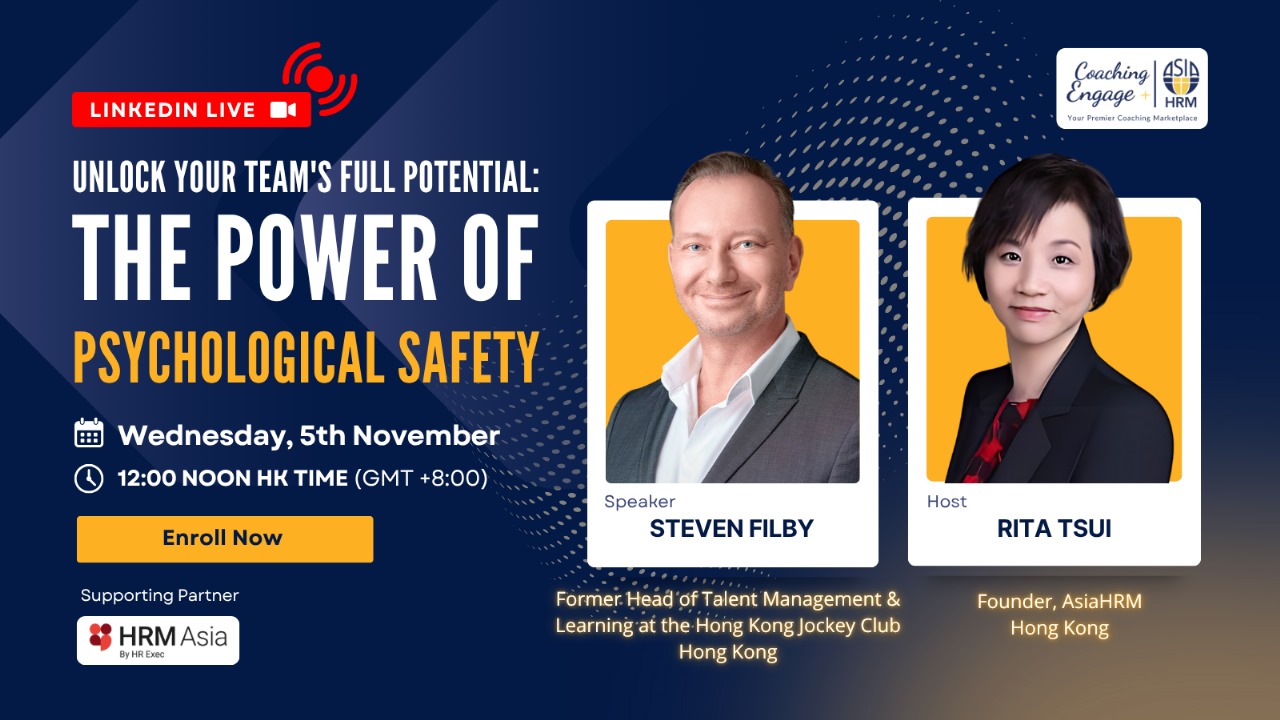
Fostering a culture where employees can express themselves freely, without fear of judgment, is a critical business strategy, not merely a gesture of goodwill. That was the central message from Steven Filby, former Head of Talent Management and Learning at the Hong Kong Jockey Club, during a LinkedIn Live session titled Unlock Your Team’s Full Potential: The Power of Psychological Safety.
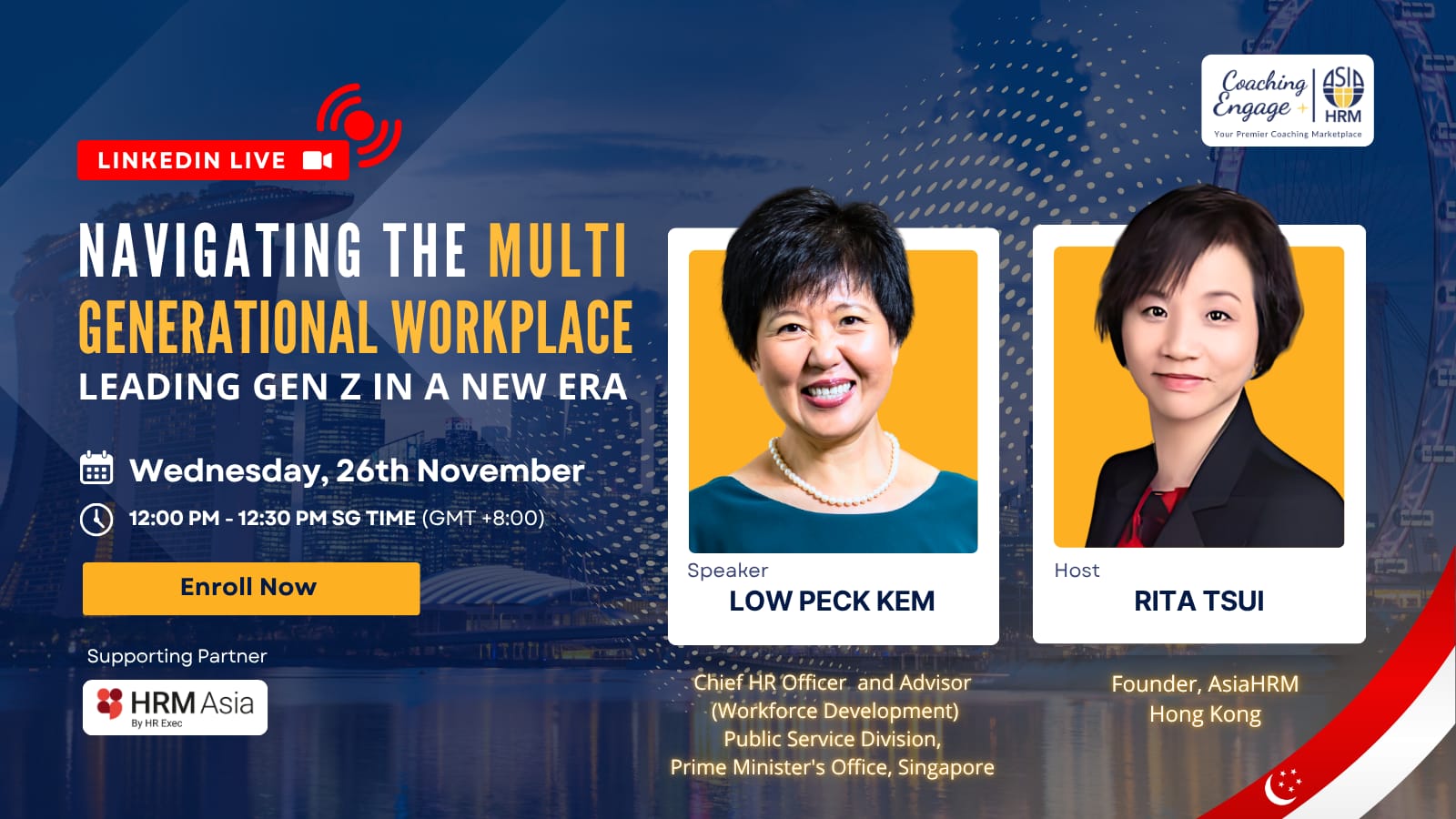
Hosted by Rita Tsui, Founder of AsiaHRM, the session was part of an ongoing LinkedIn Live series addressing the top challenges HR leaders in Hong Kong face. The initiative is based on a regional survey conducted by AsiaHRM and will soon expand to Singapore as part of the Asia HR Leaders Live Series, in partnership with HRM Asia, to explore common pain points across Asia.
“Without psychological safety, we’ll never be able to win the trust of our employees,” said Tsui, who announced that AsiaHRM will also host a Human Resources Leaders Forum in Hong Kong on 27 November 2025 to discuss solutions to these pressing challenges further.
Why psychological safety matters
Drawing on over 25 years of experience in HR and learning and development across organisations such as Expedia, PayPal, and the Hong Kong Jockey Club, Filby underscored how psychological safety—defined as a shared belief that the team is safe for interpersonal risk-taking—is fundamental to organisational success.
“When people feel safe, they’re motivated, engaged, and innovative,” he said. “They take risks, knowing mistakes are part of learning. Without psychological safety, fear takes over, and fear is the enemy of engagement.”
READ MORE: The new HR mindset: Doing what matters most with what you have
Filby highlighted real-world consequences of environments lacking psychological safety, from life-threatening errors in hospitals and cockpits to stalled innovation in corporate settings. Employees who are afraid to speak up, he warned, may withhold valuable insights, resulting in lost opportunities and decreased morale.
He cited Google’s Project Aristotle, which studied over 180 teams and concluded that psychological safety was the single most critical factor for team success. “Who was on the team mattered far less than how the team worked together,” Filby noted.
To help leaders create safer, more inclusive workplaces, Filby outlined nine actions:
- Model vulnerability – Leaders should admit mistakes and uncertainties, setting the tone for openness.
- Encourage open communication – Invite diverse perspectives by asking, “Does anyone see this differently?”
- Respond with empathy and respect – How leaders react to feedback matters more than what they say.
- Creating a learning—not blame—culture – Replace finger-pointing with questions like “What can we learn from this?”
- Normalise feedback – Encourage two-way and peer feedback to promote trust and growth.
- Ensure equal participation – Give introverts and quieter members structured opportunities to contribute.
- Establish team norms – Co-create behavioural principles such as listening without interrupting.
- Practice inclusive decision-making – Involve team members early in decisions that affect them.
- Conduct psychological safety check-ins – Use anonymous surveys to gauge progress and pinpoint areas for improvement.
Filby also emphasised the importance of leadership modelling, and said, “Culture often cascades from the top. If CEOs and executives don’t model vulnerabilities or empathy, it’s difficult for teams below to behave differently.”
From awareness to transformation
During the Q&A, Tsui asked how organisations entrenched in hierarchical or authoritarian cultures can begin this transformation. Filby recommended starting with data. “Surveys can open leaders’ eyes,” he said. “I’ve seen CEOs who didn’t think psychological safety was an issue until the data showed otherwise.”
He added that citing external research, such as Google’s findings, can further persuade sceptical leadership teams of the tangible link between psychological safety and performance.
Filby concluded with a clear message: “Psychological safety isn’t just a ‘nice to have.’ It’s the foundation for motivation, engagement, innovation, and performance. By creating an environment where people feel safe to speak up, make mistakes, and be themselves, you unlock their full potential.”
Following this insightful discussion on psychological safety, the next session will feature Tina Ko, Vice-President and Senior HR, Mattel Asia-Pacific, Hong Kong. Taking place on Wednesday, 12 November 2025, the session will explore HR’s pivotal role in the age of AI adoption—from leading transformation and driving digital readiness to building resilient, future-ready workforces. To register, click here.