

Labour union says Hong Kong’s minimum wage hike insufficient

The Minimum Wage Commission reached a consensus last Thursday to raise the minimum wage to HK$40, a 6.7% increase.
Value of hybrid work may overtake pay increase

Recent research has shown that employees would choose a hybrid work arrangement over any pay increase offered by their employer.
Singapore launches roadmap to bolster skills of tech workforce

5G, cloud computing, artificial intelligence and analytics were identified as tech trends that will create high job demand in the near future.
Employees in India value strong organisational leadership

The majority of the Indian workforce expects their employers to be leaders who inspire them to perform to the best of their ability.
South Korea registers 19th consecutive month of job growth

Employment in South Korea reached 28.38 in September, up 707,000 from last year, marking the largest year-on-year growth since 1999.
Staying competitive in the modern workplace

By investing in employee skills development, SkillsFuture Singapore is helping employers to create a productive workforce to grow and succeed.
Gig workers in Singapore to receive more protection

Recommendations to improve the working conditions, as well as physical and financial health of gig workers, are expected to be finalised soon.
Australia urged to address pensions gender gap

Retired Australian women typically have 23.1% less in their pension accounts than men, said the Association of Superannuation Funds of Australia.
Young workers in China prefer flexible work arrangements

Employees born after 2000 are more willing to work from home and to become “digital workers” with flexible working locations and schedules.
Leadership effectiveness tops HR’s priorities in 2023

Human-centric leadership will be crucial to drive organisations forward as the world of work continues to evolve.
Hybrid work pattern takes hold in Australia

A hybrid work pattern with some days in the office and others at home is becoming the norm, but with big discrepancies depending on occupation.
Malaysia to create 70,000 new jobs for select groups

Employers will be given cash incentives to hire disabled people, women who are looking to enter the workforce and former convicts.
Employees in Vietnam perceive themselves to be underpaid

80% of workers who are earning more than the average salary think they are paid less than or the same as market rates.
Indonesia focuses on female workers’ health and welfare

Companies in Indonesia have been urged to invest in female workers’ health to increase business productivity and employee loyalty.
Working mothers in Australia see earning power diminished

A “motherhood penalty” sees earnings fall by an average of 55% in the first five years of parenthood, according to new analysis by Australia’s Treasury.
Thailand aims for more smoke-free workplaces

The Health Promotion Foundation wants to add to the 2,000 workplaces around the country that are already non-smoking premises.
Malaysia focuses on upskilling workforce

Provisions to upskill talents in tech in the 2023 budget will help the country’s workforce be ready for jobs of the future.
Positive employee recognition improves business performance

Employees who are recognised are likely to be more engaged, productive, inclusive, and loyal to their organisations.
Accelerating the impact of people strategies to enrich the world of work

Billy Elliott, Regional Director APAC, Top Employers Institute, highlights what it takes for organisations to be an employer of choice.
How to make hybrid meetings more effective

To extract the maximum benefit out of virtual meetings, organisations need to prioritise what happens after them for better productivity.
Singapore’s jobless rate in August falls to six-year low
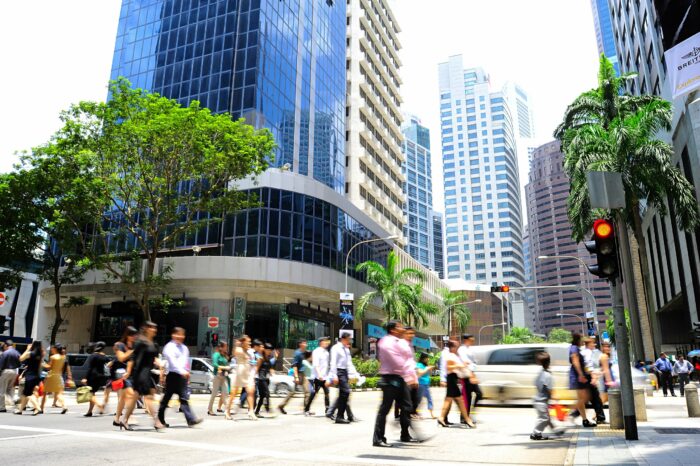
While the unemployment rate has fallen below pre-pandemic levels, the Ministry of Manpower (MOM) has cautioned against looming economic uncertainty.
Prefecture in Japan offers more leave to grandparents

As part of efforts to help child-rearing parents, the prefecture of Miyagi plans to grant government workers leave to take care of their grandchildren.
Organisations lacking in mental health management

A study revealed that when it comes to integrating mental health into formal management systems, most firms have much to improve on.
Digital skills enhance employability in Asia Pacific

About 75% of employers in four Asia-Pacific countries reported a rise in demand for new hires with digital skills over the last five years.
Indonesia advocates workplace safety and health

Organisations have been urged to implement and observe labour norms that address wages, social assistance, as well as work safety and health.
Singapore seeks more flexibility in hiring of elderly employees

There is concern that a law that protects senior employees from dismissal due to age may lead to unconscious bias.
Firms in the Philippines told to pay 13th month wages or face sanction

A senator has proposed that firms are penalised if they fail to pay employees their 13th month wages before December 24.
Tech support critical for employees working remotely

After working from home for two years, 35% of employees are still citing poor connectivity and network issues as ongoing hindrances.
Businesses in Asia expected to continue hybrid work

With virtual work expected to increase, companies believe productivity can be improved through flexible work arrangements.
Employees in Malaysia saw remuneration rise in 2021

Due to economic and social activities, the average salaries and wages received by employees increased by 3.5% last year.