
Every problem they solved had a precedent. That is the warning sign
- Josephine Tan
- Topics: Features, Home Page - Features, Leadership, Talent Management
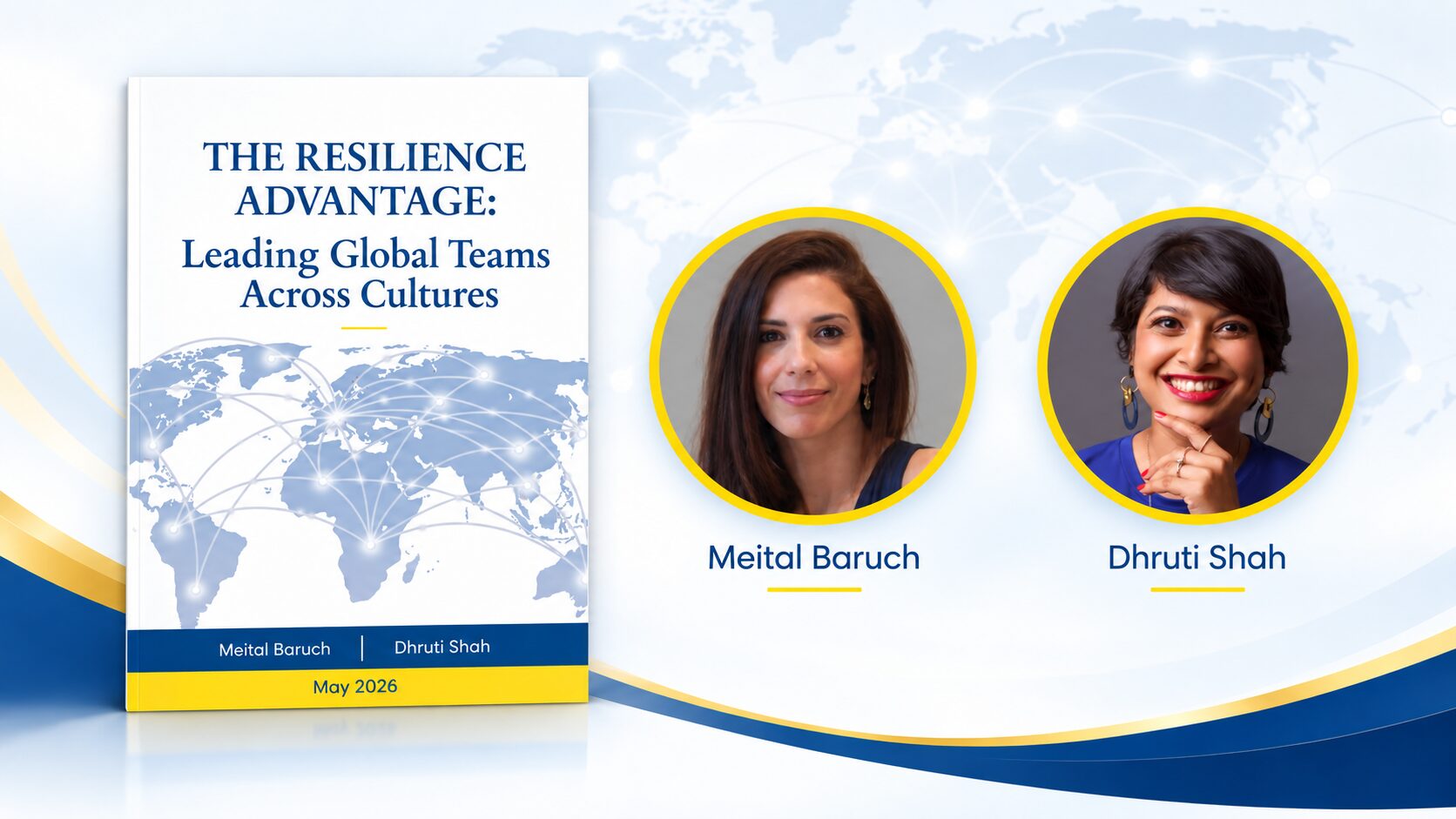
Among the forces shaping resilience long before anyone reaches the workplace, The Resilience Advantage: Leading Global Teams Across Cultures identifies one that cuts both ways. The white paper, by Meital Baruch, Founder of Global Mindsets, and Dhruti Shah, Director at C2C Organisational Development, draws on interviews with senior leaders across Asia-Pacific and beyond. Stable national systems make people calmer under uncertainty: one leader interviewed for the white paper described Swiss resilience as closely tied to structure and stability, with planning, clear systems and mutual responsibility doing the steadying. Yet a leader based in Singapore observed that where systems supply a clear formula for success, sudden change can be harder to absorb, with people waiting to be told what to do instead of working the problem themselves. Less predictable environments demand constant adaptation, and that, the authors note, builds its own resourcefulness.
The paradox is easy to state and awkward to act on. Strong systems absorb shocks collectively, while highly structured environments may quietly reduce the everyday opportunities people get to build resilience individually. “The more shocks a system absorbs for you, the fewer you have to absorb yourself,” the authors tell HRM Asia.
Lisa Teo, Global Learning and Development Lead at a multinational software company, put it in personal terms. Growing up in Singapore, she says, came with a clear formula for success. It worked, and it produced stability. But it could also leave people with fewer chances to sense change coming and find their own way through it.
The same preference shows up in how teams handle problems. Another Singapore-based leader interviewed for the paper described people leaning on processes, clear responsibilities and step-by-step solutions when something goes wrong – effective when the problem is recognisable, less so when it is not, and hardest of all in ambiguous situations such as interpersonal conflict where no procedure applies. Set against that is what the paper describes through India’s jugaad mindset: resourceful solutions, rapid action and informal coordination, often before all the information is in. Both are resilience. The authors’ point is that neither is universally right, and that the leadership skill is recognising which the moment calls for.
Inside organisations, the same dynamic appears as over-regulation. One leader warned that overprotection limits ownership and growth, though Baruch and Shah are careful not to turn this into an argument against controls. Where the consequences of failure are serious, strong controls stay. In lower-risk situations, people need room to experiment, decide, learn, and adjust.
This makes it an HR design problem rather than a training one. The authors describe the function as that of an experience designer, deliberately placing leaders in front of problems nobody has solved before, and they offer a diagnostic that is uncomfortably easy to apply. Take a leader repeatedly promoted for being the most reliable operator in the business, with every process running smoothly and every target met. That is precisely when HR should look harder. “Does this leader’s whole record sit inside the system? Has every problem they have solved had a precedent?” If the answer to both is yes, their suggestion is to shake things up before the next promotion, not after.
In practice, that might mean handing someone responsibility for operations in a market the company has just entered, where standard procedures do not fit, the regulations and infrastructure are unfamiliar, and there are no ready-made frameworks for how the local team works. The leader has to build the process rather than follow it.
Harder still is changing what gets noticed. When people are rewarded mainly for working in structured, tried-and-tested ways, HR risks what the authors call hard-coding system dependence into the organisation’s mindset. Recognising experimentation, proactive ownership and judgement calls alongside reliability changes the signal, telling leaders that stepping away from the safety net is part of the job.
Same standards, different support
The other half of the question concerns what individuals need from the person leading them, and here the paper documents a widespread need. In more relationship-oriented cultures, employees look to leaders as a source of stability, bringing every problem to them and expecting reassurance and personal care alongside solutions. In many Asian contexts, work and personal life were described as more closely integrated, with engagement expected beyond the professional role. Elsewhere, the boundary is firmer: one leader said that in the US they had never needed to provide emotional support to their team. At the same time, another found that in the UK the work was learning to have a beer with colleagues after hours, because that was how stress was processed.
Supporting someone’s resilience therefore looks different depending on who they are. For some, it means personal check-ins, an interest in family, and time spent working through a difficulty together. Others want professional guidance and the autonomy to handle the rest. One leader in the research made it clear that understanding what is happening in someone’s life does not make a manager their therapist or require permanent availability.
None of that means expecting less. Performance standards and accountability hold steady even when the route to trust differs, and another leader emphasised that understanding someone’s background should never excuse poor performance.
The authors flag a practical trap here. A leader who is hands-on with one person and gives another more space will be seen as playing favourites unless they make the reasoning explicit. “Fairness does not necessarily mean treating everyone in the same way,” they say. “In a global team, it means adapting the support while remaining consistent in the underlying values, expectations and standards that apply to everyone.”
READ MORE: Capability is harder to recognise when it arrives in an unfamiliar shape
That leaves the question of how a leader works out what any individual needs, and the paper’s final principle answers it by limiting how far cultural knowledge should be trusted. Culture shapes how people respond under pressure and is worth understanding. It is also an incomplete guide to the particular person in front of you. Baruch and Shah suggest treating it as a hypothesis: test it through questions and observation, then confirm, adjust or discard it. Rather than assuming someone from a relational culture wants closer involvement, ask what support is actually useful to them under pressure.
The spread within a culture can be as wide as the spread between cultures. One leader described two Americans on the same team whose resilience was night and day. Another described starting with cultural context and then getting to know each person’s hopes, fears and aspirations, treating them as individuals rather than representatives of any particular place. What mattered most under real pressure was knowing what each person cared about – which is rarely something a leader can deduce from where they are from.
Cultural knowledge, in this reading, starts the conversation. The individual decides where it goes.