

For decades, the corporate playbook for employee wellbeing was predictable: launch a campaign, host a workshop, perhaps distribute some wellness swag, and hope for a morale boost. But as burnout rises and hybrid work blurs boundaries, these surface-level interventions are losing their efficacy.
At StarHub, the homegrown Singaporean telco celebrating its 25th anniversary, the approach to wellbeing has undergone a radical transformation. It is no longer a side-dish of perks; it is the main course of their operational strategy.
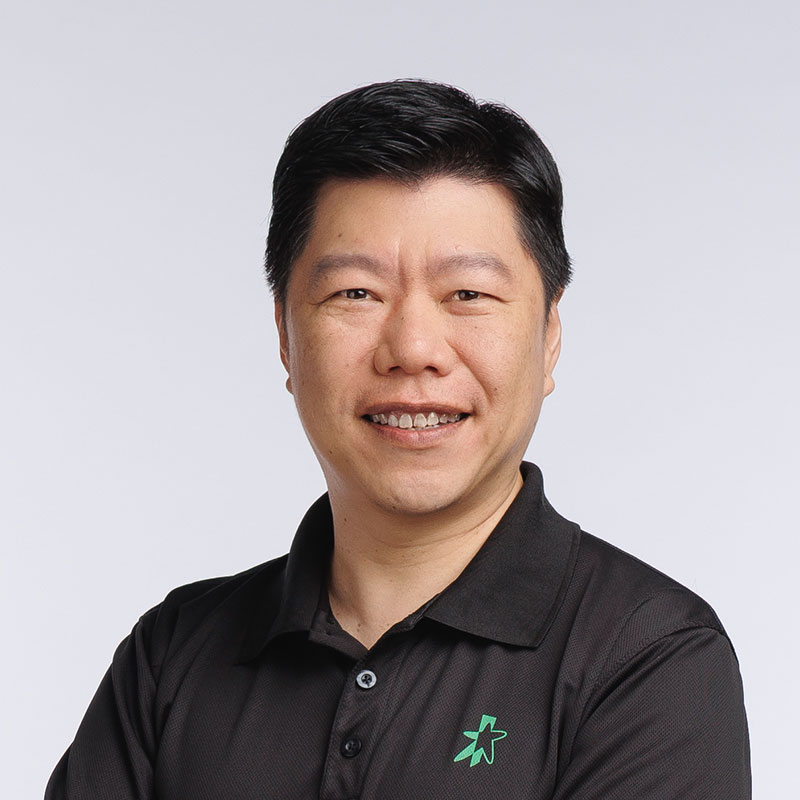
Tan Toi Chia, StarHub’s Chief of People, Organisation and Communications, is leading this shift. His philosophy is starkly simple yet challenging to execute: stop treating wellbeing as an initiative and start treating it as a design principle.
“For a long time, many organisations, including ours, viewed wellbeing as something to launch—a programme, a talk, a campaign,” Tan told HRM Asia. “But slogans and workshops alone do not build trust or psychological safety. You cannot mandate wellbeing; you must design for it.”
The core of StarHub’s strategy is moving away from wellbeing as a benefit employees sign up for, to an experience they live through daily interactions. This required a hard look at the systemic root causes of stress—ambiguity, friction, and poor processes.
Tan explained that the organisation reframed wellbeing through “The StarHub Way,” a cultural framework built on behaviours like listening, debating, and reflecting. Under this umbrella, they executed three strategic shifts:
- Back to Basics: Removing daily frustrations by increasing clarity.
- Better by Design: Rebuilding systems to serve human needs, not just productivity metrics.
- Bolder Through Care: Embedding vulnerability into leadership to foster safety.
The metrics for success have shifted accordingly. StarHub looks beyond participation rates in wellness events to deeper indicators: psychological safety scores, retention rates, and collaboration quality.
“Success for us shows up in quieter but more meaningful ways,” Tan noted. “Fewer silent frustrations…and more genuine conversations that start with ‘How are you?’ rather than ‘Where’s the deck?’”
Technology designed for humanity, not surveillance
As a tech-driven workplace, StarHub faced the unique challenge of ensuring their tools did not contribute to digital fatigue. Post-Covid, the telco realised that while many systems were efficient, they lacked humanity.
To counter this, StarHub applied design thinking to its internal work culture. This manifests in two distinct layers:
- Hardware Readiness: The physical office was redesigned for choice. With 95% of the space open and flexible, employees choose between quiet zones for focus and collaborative areas for brainstorming.
- Software Readiness: This focuses on mindset. Digital workflows were streamlined to reduce “toggling time,” allowing employees to focus on deep thinking rather than administrative friction.
Uniquely, the organisation also introduced the StarHub Digital BMI, a self-check tool encouraging employees to reflect on their digital habits, reinforcing that wellbeing extends into the digital realm.
“As a tech company, we are deliberate in ensuring that technology works for people, not the other way around,” Tan asserted. “At StarHub, technology is an enabler of connection, clarity and care—not a source of friction or fatigue.”
But in a hybrid environment where lines blur easily, and fatigue accumulates quickly, leaders play an outsized role in maintaining both performance and psychological safety.
“Sustained performance is a marathon, not a sprint. Recovery is part of the discipline,” Tan reflected. “True resilience is about knowing when to pause, reflect and recharge.”
READ MORE: StarHub drives growth and fosters future-ready workforce with AI
At StarHub, recovery is viewed as a strategic lever. The organisation has “operationalised rest” through structured pauses—quarterly half-days off and annual “Renew & Recharge” days. These benefits serve as a reminder that rest is a vital component of sustained performance, embedded into the system to promote employee wellbeing.
Crucially, this is modelled from the top. Leaders are encouraged to be vulnerable and to admit when they need to recalibrate.
“When a leader says, ‘I’m taking a breather to recalibrate,’ it gives permission for their team to do the same and return sharper,” said Tan. “We see psychological safety and performance not as opposites, but as partners.”
25 years in: A lesson for leaders to move beyond wellness theatre
As StarHub celebrates its 25th anniversary, Tan offered pragmatic advice for leaders striving to embed sustainable wellbeing into their organisations: start with humanity.
“You cannot ‘programme’ your way into wellbeing,” he said. “Start by stripping it back and asking simple questions: What are the daily frustrations that drain energy? Where is ambiguity eroding trust? How can we design care into the way decisions are made?”
Tan argued that wellbeing is built in micro-moments—how feedback is given, how goals are set, how care is expressed in uncertainty. “These moments compound over time into a culture,” he added.
His message to HR and business leaders is clear: “Design humanity with the same rigour you design for performance. Make clarity your baseline, care your language and courage your habit.”
StarHub’s experience underscores a growing realisation across progressive organisations: wellbeing is not soft; it is strategic. “When people feel safe and seen, they give their best,” Tan concluded. “And when organisations hardwire care into the way they work, performance takes care of itself.”
Tan Toi Chia will share more of his insights at HR Tech Asia 2026 in the roundtable The CHRO of 2030: Venture Builder, Activist and Strategist. He will discuss why CHROs are becoming founders of talent ventures, how to equip employees with strategic fluency to align actions with organisational vision, and ways to break down hierarchies and geographic boundaries to foster flexibility, autonomy, and collaboration. Catch his session at Suntec Convention and Exhibition Centre, 4-7 May 2026.