
The superworker emerges: Asia’s workforce transforms to partner with AI
- Josephine Tan
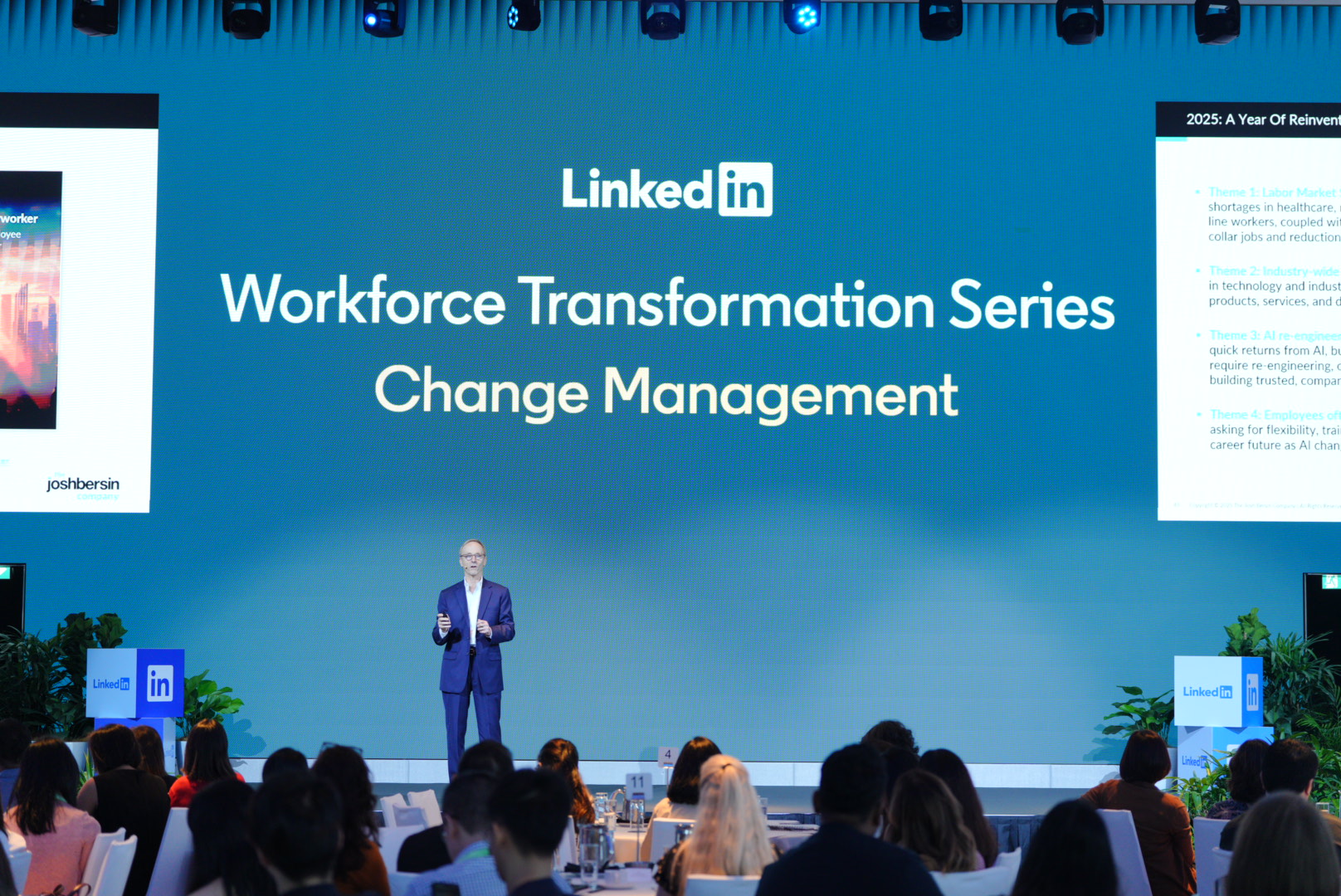
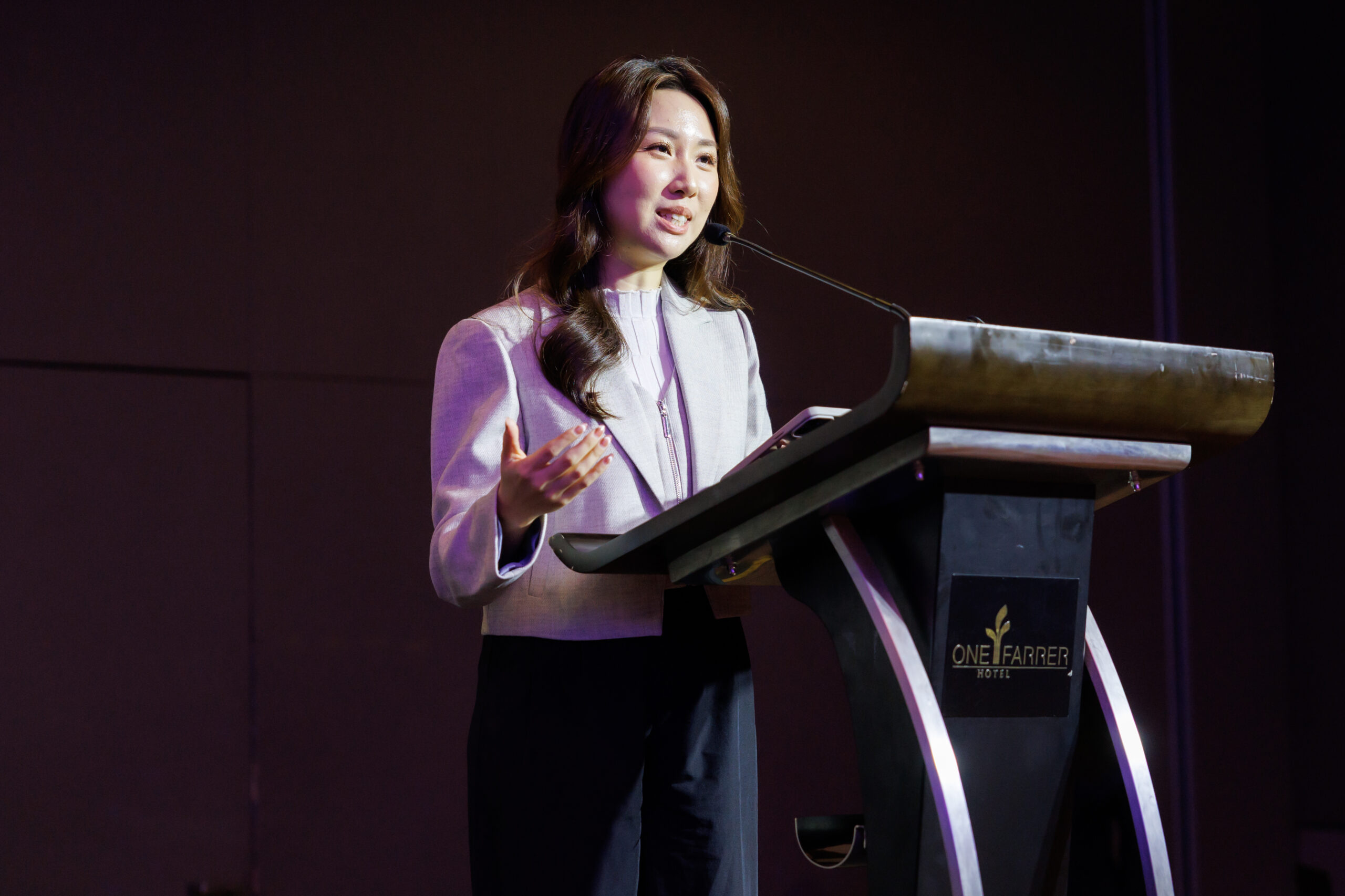
Josh Bersin, global industry analyst and founder of The Josh Bersin Company, speaking at LinkedIn’s management workshop on the rise of the “superworker” and the reinvention of HR in an AI-driven era.
As Asia’s economies continue to be driven by rapid digitalisation and a strong desire for transformation, a new and urgent priority has arisen for business leaders: the essential reinvention of the workforce. Amid a backdrop of advancing AI, traditional talent management models are proving inadequate. This significant shift was the focus of an exclusive management workshop hosted by LinkedIn today, where industry leaders gathered to discuss strategic planning and the implementation of organisational change in an AI-driven era.
The forum highlighted an essential realisation: navigating this new landscape requires more than just adopting new technology. It calls for the development of a new type of professional—the “superworker”—and a radical rethinking of the HR function itself, transforming it from a support centre into the strategic driver of organisational agility and resilience.
The genesis of the superworker
The term “superworker”, coined by global industry analyst and event speaker Josh Bersin, describes a professional who transcends their defined role to become an agent of transformation. This is not merely an employee proficient with new tools; it is an individual who fundamentally reimagines how work is achieved through a symbiotic partnership between human ingenuity and AI.
“The superworker is someone who understands how to leverage AI and technology in both their current role, and they also transform and implement how work can be reimagined,” Bersin told HRM Asia. “Superworkers embrace change; they are willing to experiment, they look beyond simple productivity gains, but instead focus on how the fundamental work itself can be changed. They are also willing to upskill and move into adjacent roles.”
This idea extends beyond task automation to a deeper integration of AI as a colleague. The essential new skill, according to Bersin, is the ability to manage this combined workforce. “The superworker understands that work can be a mix of human and digital labour,” he stated. “Just like any manager, they are comfortable overseeing and coaching people. In the world of agentic AI, superworkers are at ease coaching humans and fine-tuning agents. It is the new skill.” When an organisation successfully adopts this mindset, Bersin noted, “the organisation itself becomes a superworker company.”
The need to cultivate such talent is particularly acute in Asia’s hyper-competitive markets. Elsie Ng, Head of Talent Solutions for Singapore and Malaysia at LinkedIn, provided a compelling data-driven picture of Singapore, a microcosm of the region’s dynamism. “Over the past five years, LinkedIn’s talent pool has grown by 34%, and there’s been a 65% year-on-year increase in professionals identifying as ‘open to new opportunities,’” she revealed.
This signals a workforce that is both expanding and increasingly fluid. With applications per job rising by 5.79% year-on-year, the need for organisations to differentiate themselves by empowering their talent has never been greater. The “superworker” model, therefore, is not a theoretical ideal but a competitive necessity for attracting and retaining top performers in the region.
Navigating the talent landscape in Asia-Pacific
Ng emphasised that sustained business momentum in Asia hinges on a forward-thinking talent strategy. “Asia’s business momentum is powered by rapid digitalisation, regional expansion, and a strong appetite for transformation,” she stated. “To keep this momentum going, organisations need a forward-thinking talent strategy.”
Her analysis pointed to several key trends shaping this strategy:
- Broad-Based Hiring Growth: Contrary to some global trends, hiring in Singapore remains robust across key sectors. “Job postings in technology (15%), manufacturing (5%), and financial services (2%) are also growing steadily, underscoring broad-based demand,” Ng noted.
- The Critical AI Skills Gap: A significant challenge, particularly for small businesses, is the AI literacy divide. “LinkedIn’s research shows that many SMEs are lagging behind: Only 1-2% of employees in SMEs in Singapore have AI literacy skills, compared to five to six times that in larger firms,” she warned. “Building AI literacy and investing in reskilling is critical for every organisation—so everyone can thrive in an AI-driven economy.”
- The Primacy of Human Skills: While technical skills are in high demand, Ng stressed that sustainable growth requires a balanced approach. “Organisations that balance technology with human skills—like communication, leadership, and adaptability—are best placed to accelerate performance and sustain growth,” she advised.
Redefining the HR function in the age of AI
For this transformation to take hold, the HR function must evolve from a process administrator to a strategic enabler of change. Bersin identified four key domains where AI is already catalysing a quantum leap in HR’s impact and capabilities.
First is talent acquisition (TA), which is undergoing a complete revolution. Tools like LinkedIn’s Hiring Assistant are not just incremental improvements; they represent a new operating model. “What we are experiencing is not a step change in productivity but a quantum leap in the impact that a recruiter can have when they embrace AI,” Bersin remarked.
Ng provided evidence of this shift, noting that a skills-first approach, powered by AI, “increases candidate matches by 4x” in Singapore by widening the talent pool beyond traditional credentials.
Second, learning and development (L&D) is being rebuilt from the ground up. AI is enabling a shift from centralised, static content libraries to decentralised, dynamic learning ecosystems embedded within the business. “The sources that historically were dedicated to creating content can move from a central organisational model to where learning resources are embedded in the business to address the learning needs as they surface,” Bersin explained.
This is crucial in a market with “212% surge in members adding AI literacy skills to their profiles,” as highlighted by Ng. She added that “mentorship and inclusive development programmes are also key” to help employees apply these new skills with confidence.
To that end, Ng announced the launch of LinkedIn’s Career Hub on October 1, a personalised career development platform that helps employees discover new career paths, build in-demand skills, and connect with opportunities. “It’s designed to help organisations grow and retain critical talent by linking skill-building directly to career movement, so both individuals and businesses can stay ahead of the curve,” she added.
Third, the role of the HR business partner (HRBP) is being elevated. With AI-powered tools like Bersin’s Galileo, routine but time-consuming tasks can be automated, freeing HRBPs to focus on high-value strategic counsel. “You no longer need a human HRBP to research and build a job profile, develop career plans for employees, [or] build and implement a PIP for an under-performing employee,” said Bersin. “These can all now be done with a digital HRBP…It also allows every manager to have a digital HRBP by their side.”
Finally, conversational AI is revolutionising the employee experience by transforming HR service centres. By handling Level 1 inquiries instantly, AI provides immediate support to employees while freeing human employees to manage more complex, escalated issues that require empathy and nuanced judgment.
The new currency of talent: Skills velocity
The accelerating pace of change has given rise to a new talent currency. The traditional emphasis on deep, static expertise is being supplemented by the imperative for “skills velocity.” As Bersin defines it, “Skills velocity is the speed at which you acquire proficiency in new skills.”
This concept is particularly resonant in Singapore, where, as Ng pointed out, “by 2030, nearly 70% of the skills needed for any given job here will be different.” Organisations must therefore build a culture that prioritises and rewards rapid learning and adaptability.
Talent marketplaces are emerging as a critical tool in this effort. They serve a dual purpose: facilitating internal mobility and providing real-time data on emerging skill demands. Bersin shared an example: “One company I am familiar with asks that before anyone in the business goes to procurement for a contract employee, they post the opening for a couple of weeks on their internal talent marketplace. That allows the organisation to create agility, build new skills in their own organisation, and it also provides real-time signals on what skills the business needs.”
Implementing such profound change is fraught with challenges. However, Bersin offered a counterintuitive lesson learned from observing global transformations: speed and imperfection are allies. He compared the current AI disruption to the onset of the Covid-19 pandemic.
“Think back to the beginning of Covid when the world shut down and we had hours to move from in-person to remote work,” he recalled. “The amount of change we went through in a short amount of time was amazing. We did it because everyone was aligned with the need. Employees had permission to experiment and fail fast.”
The lesson for leaders is to “go fast, focus less on perfection and more on progress, and provide the psychological safety that employees will be OK if they make a mistake.” He argued that “in many ways, AI is causing a Covid-like moment just to start working on the change.” In this environment, HR leaders must take the lead. “I would argue that HR needs to model the change and approach for the rest of the organisation,” Bersin asserted.