
AI is transforming business. How do future careers begin?
- HRM Asia Newsroom
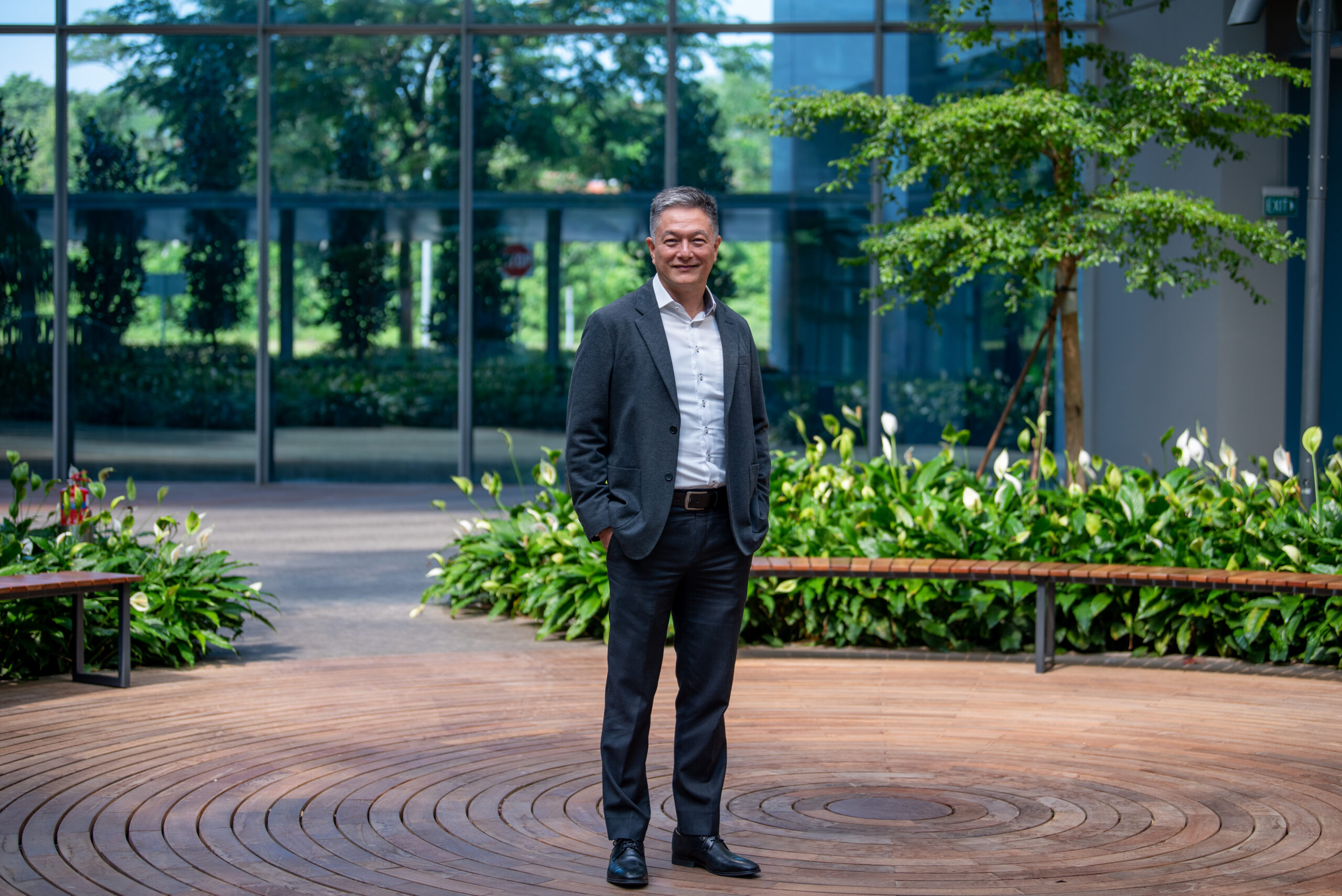
“Future talent must train within the systems they will eventually operate, not learn about them from a distance.” – Alfred Fox, Chief Executive, Integrated Solutions, and Chief People and Culture Officer, SJ
Automation, AI, and real-time digital systems are rapidly advancing from pilot projects to daily operations across Asia. In airports, hospitals, logistics hubs, data centres, and corporate campuses, what was once experimental technology has become standard infrastructure. Security robots patrol with increasing accuracy. Digital-twin platforms monitor building operations, energy efficiency, and asset health. AI manages work orders and detects anomalies before they become problems. Cloud-based orchestration tools coordinate tasks once handled by junior employees.
These advances are fundamental shifts transforming how organisations function and develop talent. They are not merely technology upgrades. Many industries are still adapting to their implications.
For business leaders, the economic drivers are clear. Increasing cost pressures, talent shortages, sustainability mandates, and service-level expectations are all rising concurrently. Agentic AI, data intelligence, and sustainability technology are crucial to compete, comply, and perform. In the built environment sector, construction costs in Singapore are expected to increase by 5-10% this year. Maintenance costs are forecast to rise by 15-20% by 2028, driven by labour, M&E, and utilities costs.
Yet as organisations accelerate digital-first business transformations and operations, an unintended challenge is emerging: the gradual erosion of entry-level pathways.
The disappearing first rung
Historically, early-career roles, whether in facility operations, logistics coordination, customer service, finance processing or technical support, provided essential on-the-job learning. They helped develop judgment, situational awareness, and the professional foundations for future supervisors, specialists, and managers. Today, many of those tasks are carried out by automated systems or AI-enabled tools. Efficiency gains are genuine and necessary. However, when technology takes over the “learning work” that once built capability, organisations risk weakening the talent engine needed for long-term competitiveness.
This challenge is seldom discussed because the effects are not immediate. Productivity benefits appear quickly; capability gaps emerge later. But without deliberate intervention, organisations may find themselves asking: in three to five years, “Where is our next generation of operational and digital leaders?”
The priority for boardrooms and executive teams is not simply to deploy automation, but to ensure the workforce can operate, interpret and innovate with it. That requires balancing efficiency with sustained capability development.
Automation does not replace the need for human capability but redefines it. The new workforce must confidently work with AI and digital platforms, interpret real-time operational and sustainability data, understand system-level interactions rather than isolated tasks, apply judgment in complex, live environments, and support organisational transitions towards net-zero and resilient operations.
These competencies are not developed through theory alone. They are acquired through structured exposure and practical experience.
To address this emerging gap, organisations and educational institutions are rethinking how early-career talent learns. SJ and Temasek Polytechnic recently signed an agreement to facilitate real-life sustainability tech applications. Under a newly formalised collaboration, students will interact directly with real-time digital platforms, sustainability technology, and AI-enabled campus systems. This includes digital twins, carbon-accounting dashboards, smart automation tools, and integrated command environments.
READ MORE: Why career reinvention can’t be left to chance
Future talent must train within the systems they will eventually operate, not learn about them from a distance. The goal is to build confidence, data literacy, operational understanding, and sustainability skills before entering the workforce, rather than afterwards. Although this example is from the built environment and campus operations sector, the principle applies across various fields. Financial institutions, logistics providers, healthcare systems, and manufacturers will all require similar models to ensure talent remains prepared for digital and climate-conscious operations.
Business leaders face a strategic choice. Automation and AI can streamline current operations, but capability cannot be automated. Developing future-ready talent requires intentional design and investment, particularly at the entry level. This does not mean reinstating legacy roles or slowing innovation. It means redesigning the first job for a new era. Entry roles must be rooted in digital systems, not manual tasks. Students need early exposure to real-time operational data and decision-making, and structured learning must be embedded into transformation programmes.
Collaborations between industry and educational institutions are critical to ensure that the future workforce is built by organisations that align automation strategies with talent strategies, so that early-career professionals are not displaced from learning but repositioned to learn differently. Organisations that do this well will secure a long-term advantage: a pipeline of adaptable, digitally fluent, sustainability-aware leaders ready to drive transformation rather than react to it.
Automation will continue to advance. AI will become even more central to business performance. Sustainability requirements will intensify. In that environment, the organisations that thrive will not only deploy technology effectively; they will also cultivate talent deliberately.
About the Author: Alfred Fox is Chief Executive, Integrated Solutions, and Chief People and Culture Officer, SJ.