

Indonesia wants more businesses to be digitalised

The country targets 30 million MSMEs to join the digital ecosystem by 2024, saying this will help boost employment.
Singapore encourages hiring of people with disabilities

Companies play an important role in the hiring of people with disabilities, while the government will continue to play a key role by offering support.
AI expected to play a larger role in recruitment for Indian firms

Artificial intelligence (AI) in recruitment is expected to eliminate bias and be a regular part of the hiring process in the future.
Managing your workforce with organisational resilience and agility

Organised by HRM Asia, the in-person HR Leadership Series: Live will take a deep dive into what will shape work in 2023 and beyond.
Malaysia reviews policies to attract skilled talents

Malaysia is facing challenges in creating highly-skilled jobs and competition from countries which offer higher wages to attract skilled talents.
MSMEs key to creating jobs in the Philippines

Growing micro, small and medium enterprises (MSMEs) will help create job opportunities in the country, said non-profit organisation Go Negosyo.
Singapore announces initiatives to attract top foreign talent

The government intends to attract a world-class talent pool, which it believes will also help the retention of local talent.
Indian employees look for job fulfilment

Around 34% of Indian employees, compared to 19% globally, say they are extremely or very likely to switch to a new employer.
Japanese firms raising wages to attract workers

Despite increasing wages, digitalisation is seen as the most popular strategy among Japanese firms to address the labour crunch.
Australia to boost migrant intake as labour shortages affect businesses

Australia is set to lift its intake of migrants to a record 200,000 arrivals a year as it attempts to combat a drastic shortage of workers.
Six-day workweek unattractive to talents in India

Executive talents prefer a five-day workweek for office roles, instead of a long five-and-a-half or six-day workweek.
New Zealand records increase in weekly earnings

There were also more full-time workers and fewer part-time workers, with the latter stemming from a decrease of women workers in part-time jobs.
Singapore aims to hire more working-age persons with disabilities

The republic is targeting to have 40% of working-age persons with disabilities (PWDs) employed by 2030, up from about 30% between 2020 and 2021.
Why a modern HR mindset is key to future-proofing businesses

Accenture’s Gaston Carrion explains why leaders must begin to embrace a modern HR mindset and identifies the five pillars of modern HR.
Why a successful organisation needs satisfied employees

Gerald Pang, Director, Solution Consulting, Employee Experience, APJ, ServiceNow, shares how to create more meaningful employee experiences.
More young South Koreans take up flexible jobs

They like the flexibility to choose their working hours and enjoy the freedom from corporate culture and relationships.
Chinese city facilitates return to work for moms

The Zhongshan city government in Guangdong province has introduced a series of incentives to support “working moms” reentering the workforce.
Employment in Malaysia rises in 2Q2022
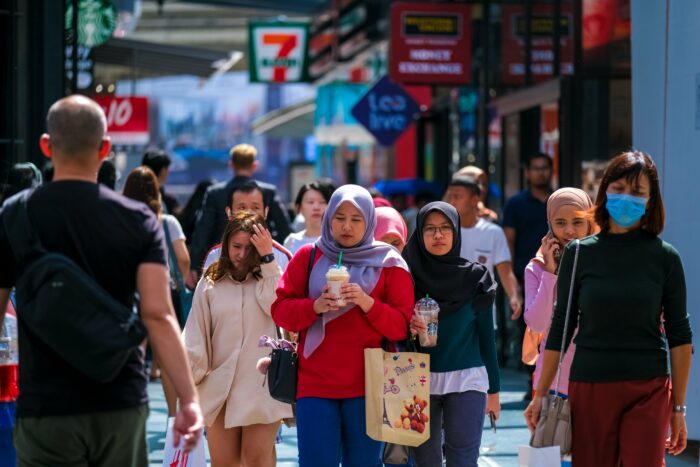
The highest number of jobs was created in the services industry, recording 52.5% or 15,400 jobs, followed by manufacturing and construction.
Increase in the number of elderly workers in the Philippines

Workers aged 65 and above increased to 38.2% in June, up from 34.9% in May, according to the Philippine Statistics Authority (PSA).
Let’s not mistake corporate social responsibility for corporate decency

Amanda Gervay, Senior VP, People & Capability, Asia Pacific, Mastercard, explains why organisations should foster a culture of corporate decency.
Malaysia channels RM21 billion to wage subsidy programme

The government has also helped place workers in jobs and reserved a quota of 1% of job placements for young people with disabilities.
Number of startups continue to grow in India

With more than 80 startups recognised every day, India is estimated to be home to some 75,000 startups, with the number expected to grow.
Malaysia addresses skills mismatch to boost employment

Skills mismatch is a critical problem, especially among first-generation graduates, said HR Minister Datuk Seri M Saravanan.
Employment for non-regular workers in Japan rises

Japan’s unemployment rate June remained unchanged at 2.6%, down 0.3% year-on-year, with employment for non-regular workers rising by 0.9%.
WFH a hiring standard in India’s tech sector

Three in four employees in the IT sector refuse to be in the office for even one day a week, citing reasons such as long commutes.
Jobs creation and skills development prioritised in the Philippines

Employers that are signatories to the 1 Million Jobs (1MJ) manifesto will flesh out their plans and strategies to create quality employment.
Australia needs 650,000 more workers to reach 1.2 million tech jobs goal

To achieve that, the government aims to fix gaps in education and training products and pathways and improve the diversity of the tech workforce.
More female graduates in Malaysia find employment

The unemployment rate gap with men has been narrowed for a third straight year but differences remain for jobs requiring higher level degrees.
Employment in Singapore rises in 2Q2022

This was attributed to the hiring of foreign workers in the construction and manufacturing sectors, as well as more residents finding employment.
Informal workers in Indonesia hit all-time high

In the early days of the pandemic, the percentage of informal workers was 56.64%, but this continued to increase till almost 60% as of this February.