

Redefining employee engagement with BI WORLDWIDE

Omar Hadoui, Managing Director, APAC, BI WORLDWIDE, discusses the modern rules of employee engagement to support talent retention.
Flexible work arrangements a priority to jobseekers in Singapore

Employees are also looking for jobs that align with their aspirations and lifestyle to create a more meaningful work purpose.
Majority of Australian firms do not mandate office presence

Over half of HR professionals surveyed expected that remote working arrangements would remain unchanged over the next two years.
Employers should have option of retaining retirees in the Philippines

The hiring and retaining of workers past retirement age should not be mandated and instead be left to the discretion of employers.
Why a successful organisation needs satisfied employees

Gerald Pang, Director, Solution Consulting, Employee Experience, APJ, ServiceNow, shares how to create more meaningful employee experiences.
More young South Koreans take up flexible jobs

They like the flexibility to choose their working hours and enjoy the freedom from corporate culture and relationships.
Succession planning: The secret ingredient to retain top talent

Rob Squires, Vice President and Head of Sales for Asia and Japan, Ceridian, highlights how organisations can leverage technology to prioritise succession planning.
Chinese city facilitates return to work for moms
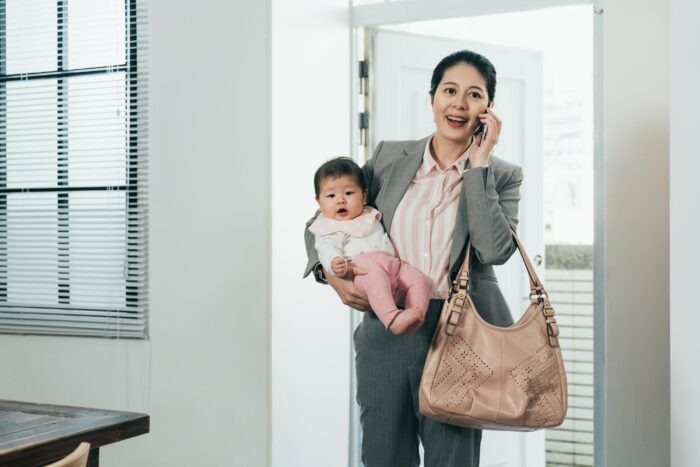
The Zhongshan city government in Guangdong province has introduced a series of incentives to support “working moms” reentering the workforce.
How organisations can succeed in a multi-channel work environment

Tim Sackett, President, HRU Technical Resources, shares how organisations can build a cohesive digital culture in a multi-channel work environment.
India plans to ease WFH rules for special economic zones

This is to sort out differences in opinions of remote work between developers and IT companies in special economic zones (SEZs).
Increase in the number of elderly workers in the Philippines

Workers aged 65 and above increased to 38.2% in June, up from 34.9% in May, according to the Philippine Statistics Authority (PSA).
South Korea mandates some workplaces to provide rest facilities

The labour ministry is now making it compulsory for all workplaces employing a certain number of regular employees to provide rest facilities for their staff.
Firms in Singapore risk losing talent over mental health and fatigue

Only about 66% of employers in the city-state are actively taking steps to address mental health challenges.
Malaysia to introduce shorter working hours

Working hours in the country will be reduced to 45 hours from the current 48, according to amendments to the Employment Act.
Establishing workplace wellbeing plans in New Zealand

Companies are encouraged to gather opinions from their employees and use the information as a basis for the programme.
Employees in Japan allowed to take on secondary employment

A survey among 100 leading corporations found that 81 of them have no issue with staff taking up a second job to boost income.
Let’s not mistake corporate social responsibility for corporate decency

Amanda Gervay, Senior VP, People & Capability, Asia Pacific, Mastercard, explains why organisations should foster a culture of corporate decency.
Workplace portal for mothers created in Australia

Supporting young families in mind, the online portal for workplaces provides resources and information about pregnancy and mothers returning to work.
Employers in India support hybrid work arrangements

Nearly 53% of employers prefer hybrid work arrangements for their employees, though the degree of adoption varies from company to company.
Employees in the Philippines can choose to extend working life

A new bill has been filed to repeal the compulsory retirement age of 65 years to allow employees to continue working if they want and are able to.
Japan pushes for higher take-up of paternity leave

While a record number of men took paternity leave in Japan last year, the figure still falls short of the government’s goal of reaching 30% by 2025.
New Zealand’s on-the-job training programme reaches 5,000 people

Launched in 2018, the programme is designed to provide skills training and employment opportunities for workers in the country.
More work flexibility called for in South Korean workplace

The Federation of Korean Industries has urged employers to provide more work flexibility to employees.
‘Quiet quitting’ gains traction in Australia

The concept sees employees continuing to perform their job duties but quit the habit of going above and beyond in the workplace.
Workplaces in Singapore told to increase lactation facilities

Workplaces should have more lactation rooms so that working mothers can have paid nursing breaks, said MP Louis Ng.
South Korean firms explore shift to virtual offices

Employees can work in the same virtual office with their colleagues and mingle with other workers from other firms in the shared lounge.
Redefining employee experience to change work for good

In a constantly changing world of work, employee experience is key to building an interconnected and future-ready workforce.
WFH a hiring standard in India’s tech sector

Three in four employees in the IT sector refuse to be in the office for even one day a week, citing reasons such as long commutes.
Will a four-day workweek take off in Singapore?

With many employees in Singapore indicating that they want a four-day workweek, some firms have already adopted the practice.
Employers in Malaysia urged to prioritise employee mental health

The Alliance for Safe Community (ASC) has called on employers to implement workplace health promotion (WHP) to better manage workers’ mental health.