
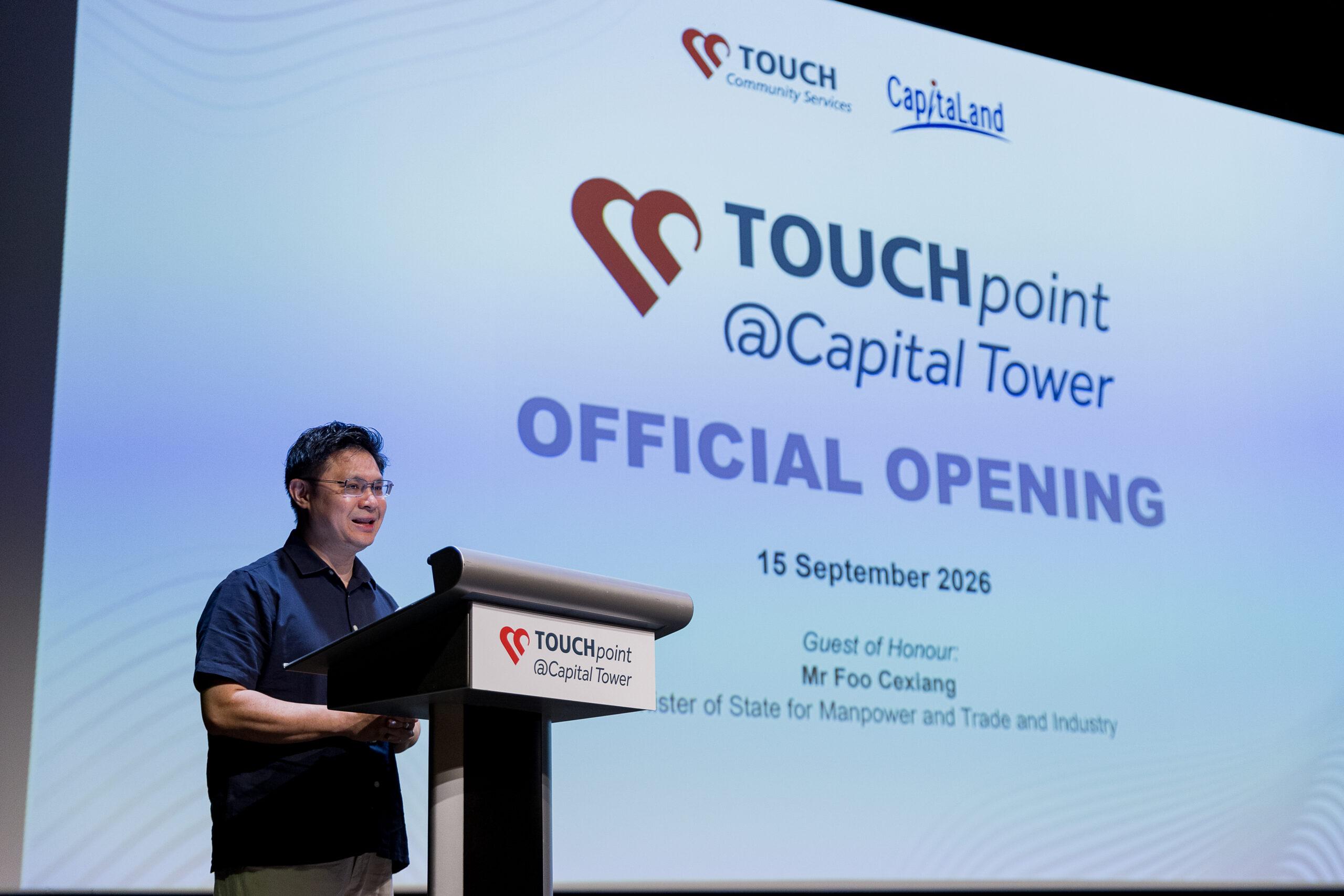
Foo Cexiang, Minister of State for Manpower and Trade and Industry, officiated the opening of TOUCHpoint@Capital Tower. The centre is billed as Singapore’s first integrated workplace wellness centre in the central business district.
When a manager learns an employee is managing a mental health condition, they may respond by easing the load. Fewer demanding projects, a quieter quarter, the stretch assignment handed to someone else. The intent is protective. The outcome, in Andrea Chan’s account, is often not.
“Even well-intentioned managers may sometimes become overly cautious out of concern for an employee’s wellbeing, but this can inadvertently limit opportunities or reinforce the perception that someone is less capable because of their mental health condition,” Chan, who is Group Head of TOUCH Counselling and Psychological Services and a representative of Beyond the Label (BTL), the anti-stigma movement run by Singapore social service agency TOUCH Community Services, tells HRM Asia.
The effect accumulates in the ordinary allocation of work: whether employees “continue to be entrusted with meaningful responsibilities, considered for stretch assignments, included in development opportunities or assessed fairly for progression.” Trust, Chan says, “is built gradually, and over time, and extends beyond the initial disclosure.” Some employees settle quickly. Others keep looking for evidence that asking for help “has not changed how they are valued, trusted or considered for future opportunities.”
Her remedy is procedural. Decisions about development and advancement should rest on “abilities, performance and aspirations”, she says, “with any adjustments discussed openly with the individual rather than assumed on their behalf.”
Why the disclosure comes hard
Employees weighing whether to speak up are weighing precisely this.

“For people living with mental health conditions, deciding whether to disclose their condition at work or during a job interview can add to an already existing mental load,” Chan says. “Many worry about stigma, being perceived differently by employers, or facing assumptions about their ability to perform and cope with workplace demands.”
The question surfaces before employment even begins, and returns afterwards. Policy on its own does not settle it. “Even when an organisation has formal support systems in place, employees may still fear being stereotyped, misunderstood or feel uncertain about how those policies will be applied in practice,” she says.
Time in the role helps, but only to a point. The burden “may ease lightly, particularly if they feel comfortable in their working environment”, Chan says, though the concern tends to stay in the background, “with the fear that eventually disclosing a mental health condition could still affect how they are perceived or even their future in the workplace.”
What the benefits handbook does not reach
None of this is due to a lack of provision. Wellness days, counselling benefits, mental health leave and workshops have become standard, and Chan is glad of it.
“It is heartening to witness the significant progress workplaces have made in mental wellness support for employees over the years,” she says. “Mental health leave and employee wellness programmes open up more avenues for employees to take time off when they need it, and are wonderful initiatives that I hope all businesses prioritise.”
What follows is the qualification. “These provisions should not be treated as a one-size-fits-all approach to supporting mental wellness,” Chan says. “Each individual differs when it comes to mental wellbeing, and thus the specific assistance they require differs, too.”
For employees managing a diagnosed condition, whose needs sit at some distance from the general stress and burnout most programming is built around, she put confidentiality first: employers “need to assure employees that their information will be kept confidential, and that seeking help will not affect their standing”. After that come the practical adjustments. “Tailored accommodations can make a meaningful difference,” she says, citing flexibility around working arrangements, changes to workload and schedules, and clear routes to professional resources.
Person first
The theme the World Federation for Mental Health has set for this year’s World Mental Health Day, Lived Experiences Heard: Real Voices, Real Change, emphasises what people with those experiences report themselves. When asked what employers most want them to grasp, Chan did not hesitate.
“One of the most important things we hear from people with lived experience is that they want to be seen as a person first, rather than through the lens of their mental health condition.”
They want to keep growing and contributing, she says, while hoping their leaders show understanding when they need to step back. “Recovery is rarely a straight path, and what many people value is the understanding that there may be periods when they are struggling, without being judged for it.”
What goes unnoticed is the effort of asking. “What can sometimes be missed is the emotional weight of deciding when, how and whether to ask for help,” Chan says. “Often, what they need most at work is not for someone to have all the answers, but simply to know that there is a support system they can turn to without fear.”
Lowering the cost of asking
Reducing that friction is part of what TOUCH set out to do on 15 September, when it opened TOUCHpoint@Capital Tower with property group CapitaLand. Billed as Singapore’s first integrated workplace wellness centre in the country’s central business district, it brings mental, physical, and digital wellbeing services together in one location for working adults and their families.
Counselling and drop-in mindfulness clinics are delivered through a service called MIND Concierge, alongside art therapy programmes that include parent-child sessions scheduled for the lunch hour. A musculoskeletal clinic, Kinesse, provides physiotherapy. CapitaLand Hope Foundation, the group’s philanthropic arm, funds accompanying programmes covering digital, emotional, social, intellectual and financial wellbeing.
“Too often, working adults put their wellbeing on hold because they do not have the time or know where to turn to for support,” says James Tan, CEO of TOUCH Community Services, describing the aim as making professional support “accessible during the workday”.
READ MORE: Own data, not benchmarks: What holds up in a board conversation on wellbeing
The underlying need is not marginal. A 2025 Quality of Life study by Singapore’s National Council of Social Services found that 26% of adults in the country experience mild depressive or anxiety symptoms, while a 2024 TELUS Health survey of 1,000 employees in Singapore found that 67% reported at least one of three indicators of burnout.
Where organisations have started listening, Chan sees the emphasis moving away from documentation. “The conversation today is less about implementing a mental health policy and more focused on how people, including peers at work, can care for one another in our everyday interactions.” Teams become more attentive to differing needs, and employees have more room to speak.
That belief gives this year’s BTL Fest, running from 23 to 25 October, its theme: Mental Wellness Begins With All of Us. As Chan put it: “Meaningful change happens when each of us plays a part, whether by checking in on a colleague, listening with care or helping someone feel safe enough to seek support.”