
Your job is changing – even if you never change jobs
- Josephine Tan
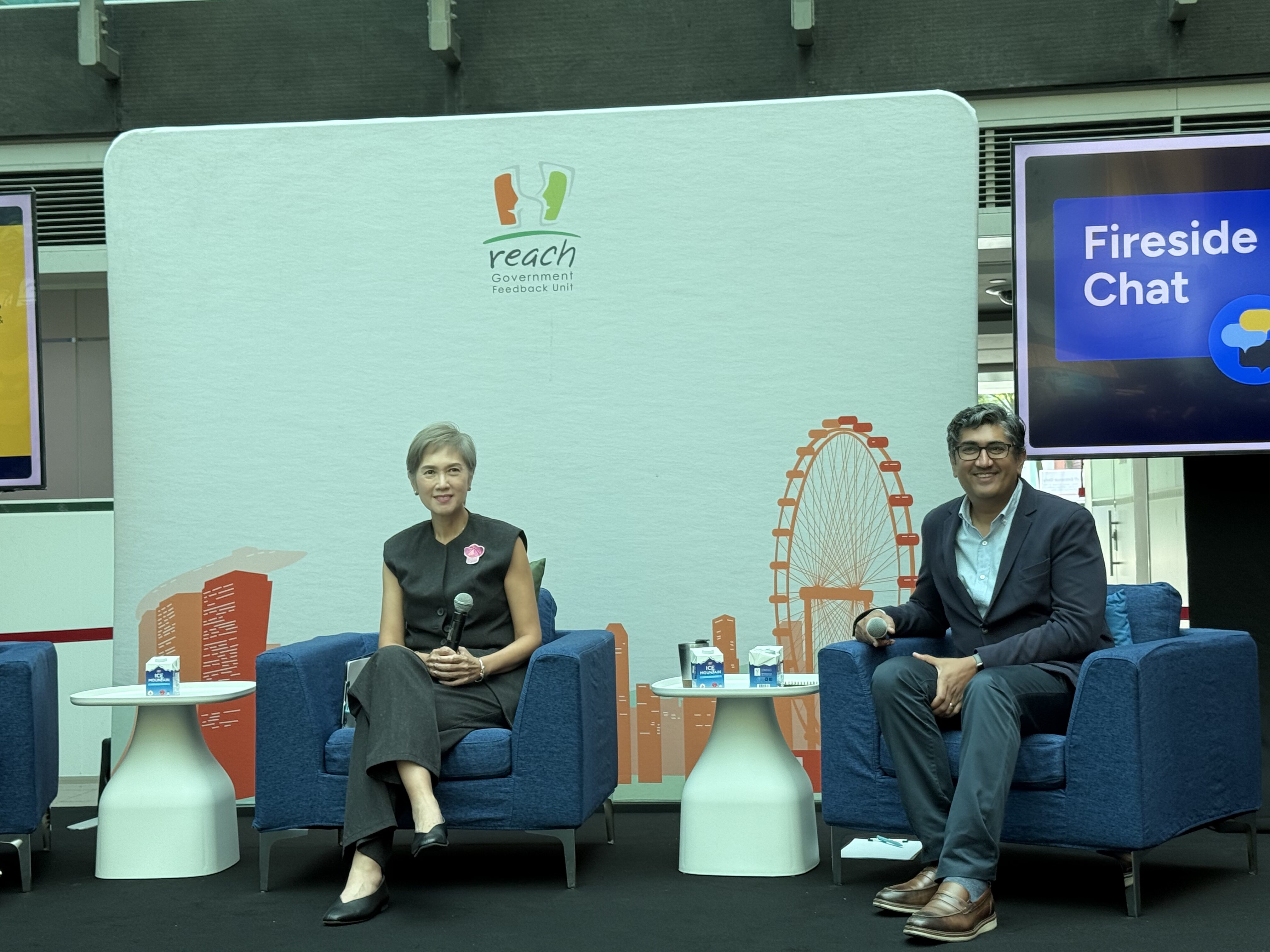
AI is rewriting the traditional first job – and, increasingly, every role above it. For HR leaders, the implication is direct: as the skills inside almost every job shift, so does what it takes to hire, develop and retain talent. That tension framed a youth employability event co-hosted by LinkedIn and the Singapore government’s feedback unit, REACH, at the Ministry of Digital Development and Information (MDDI), where the conversation shifted from what young people should do to what employers must do in response.
The market has tightened. LinkedIn data shows hiring in Singapore down 5% year on year even as applications per job posting rose 6% – the signature of longer, more selective hiring cycles. The Ministry of Manpower’s Q1 2026 Labour Market Report points the same way: employment is still growing, but retrenchments rose in the quarter – and rose most sharply among degree holders and older employees as knowledge-intensive sectors restructure.
The headline session was a fireside between Josephine Teo, Minister for Digital Development and Information of Singapore, and Aneesh Raman, Chief Economic Opportunity Officer at LinkedIn. Teo framed adaptability as the core skill of the moment. “The job market rewards those who stay adaptable,” she said, noting that employees more often grow into the right opportunity than find a perfect one waiting. She urged people to become “AI bilingual” – pairing domain expertise with enough AI fluency to work differently – with SkillsFuture and tie-ups with industry and unions as the support structure.
AI, she added, is something to lean into rather than fear. The worry about being left behind is valid, she acknowledged, but “the people thriving are not the ones avoiding it. They are the ones learning to work with it.” The real differentiator, in her view, is judgment: how employees apply and interpret AI outputs is “where you create real value.” Her wider aim is a workforce that is “resilient, future-ready, and leaves no one behind.”
Raman, sharing the stage, pointed to the five human capabilities in his book, Open to Work – curiosity, courage, creativity, compassion and communication – as the qualities that will matter most as AI absorbs routine work.
‘No job is safe in this moment’
In an interview with HRM Asia, Raman extended that argument to every level of the organisation. The anxiety about graduates, he said, can obscure a wider truth. “No job is safe in this moment. Our jobs are changing no matter what stage of career we’re at, no matter what job title we have.” He cited LinkedIn data suggesting 70% of the skills in the average job will have changed by 2030, meaning a role can transform even for someone who never moves. Singapore’s labour data point in the same direction: higher-skilled employees are no longer insulated from displacement, with business transformation reallocating work even within once-resilient PMET roles.
His advice did not vary by seniority: engage with the tools and think in terms of tasks rather than titles. “Figure out what tasks you’re going to give these tools,” he said – then use the freed-up time for the creative, critical and collaborative work that builds a distinctive contribution.
On entry-level roles – where LinkedIn data shows up to 85% already include tasks that can be automated, even when the title has not changed – Raman was firm that the first job is changing, not disappearing. Graduates, he said, are “not on a ladder, they’re on a wall,” and employers that invest in them gain strengths older cohorts cannot match: AI fluency and an entrepreneurial mindset. He pointed to organisations acting on that bet – IBM tripling entry-level hiring, Salesforce running builder programmes, and LinkedIn’s own programme where applicants submit what they have built rather than a resume. The openings bear this out: 1.3 million new AI-related roles globally, AI literacy demand in Singapore up more than 70% year on year, and entry-level hiring at small and mid-sized organisations up 152% and 100% between 2023 and 2025 – making smaller organisations a launchpad rather than a fallback.
READ MORE: In the “messy middle”, HR must redefine value beyond tenure
The shift, Raman suggested, also addresses a long-running gap in skills-based hiring, where managers still default to degree and pedigree. The bridge is work product. “Show me something you’ve done, and then tell me the story of how you did it,” he said – including where the person failed, recovered and collaborated. He expects work product to shape not just who gets hired but who rises, pointing to the emergence of “super ICs” – senior individual contributors who advance on output rather than headcount.
He closed with a structural warning for employers: “The organisational chart is going to hold you back.” He likened it to electrification, in which organisations that simply swapped a steam engine for an electric motor saw no productivity gains, while those that redesigned their workflows surged ahead. The same applies to AI – and the bigger prize, he argued, lies in building new work around human capability, not only new workflows around the technology.
The qualities that outlast the tools
A separate #AskMeAnything segment with Feon Ang, Managing Director of Asia-Pacific at LinkedIn; Lim Hin Chuan, Country Head of DBS Singapore; and Willson Cuaca, Co-Founder and Managing Partner at East Ventures, highlighted the traits employers will increasingly screen for and develop. Organisations are not looking for hires who know everything, Ang said – an impossible bar when technology moves this fast – but for the ability to learn and a growth mindset. Lim distilled what he values into three anchors: trust, ownership and purpose. Cuaca argued that standing out means being good across two or more domains rather than being the best at one.
On AI, the panel framed the technology as a tool with humans at the centre. Cuaca urged employees to become “power users” who understand why a tool works, and to keep “humans in the loop” for the judgment and empathy AI cannot replicate. Careers, the panel agreed, no longer move in a straight line, with direct bearing on how employers design progression and develop talent.
For workforce planning, the data offers a concrete steer. LinkedIn’s fastest-growing skills in Singapore blend the technical and the human – AI, machine learning and data engineering; software engineering and cloud; strategic business and transformation; financial management; and leadership and communication – with AI literacy now a baseline expectation across all functions.
The throughline was consistent: as AI reshapes work, the signals worth weighing in hiring and in progression are shifting from credentials toward what people can demonstrate, build and judge for themselves.