
CHRO Singapore 2026: Time saved, skills at risk, trust on the line
- Josephine Tan

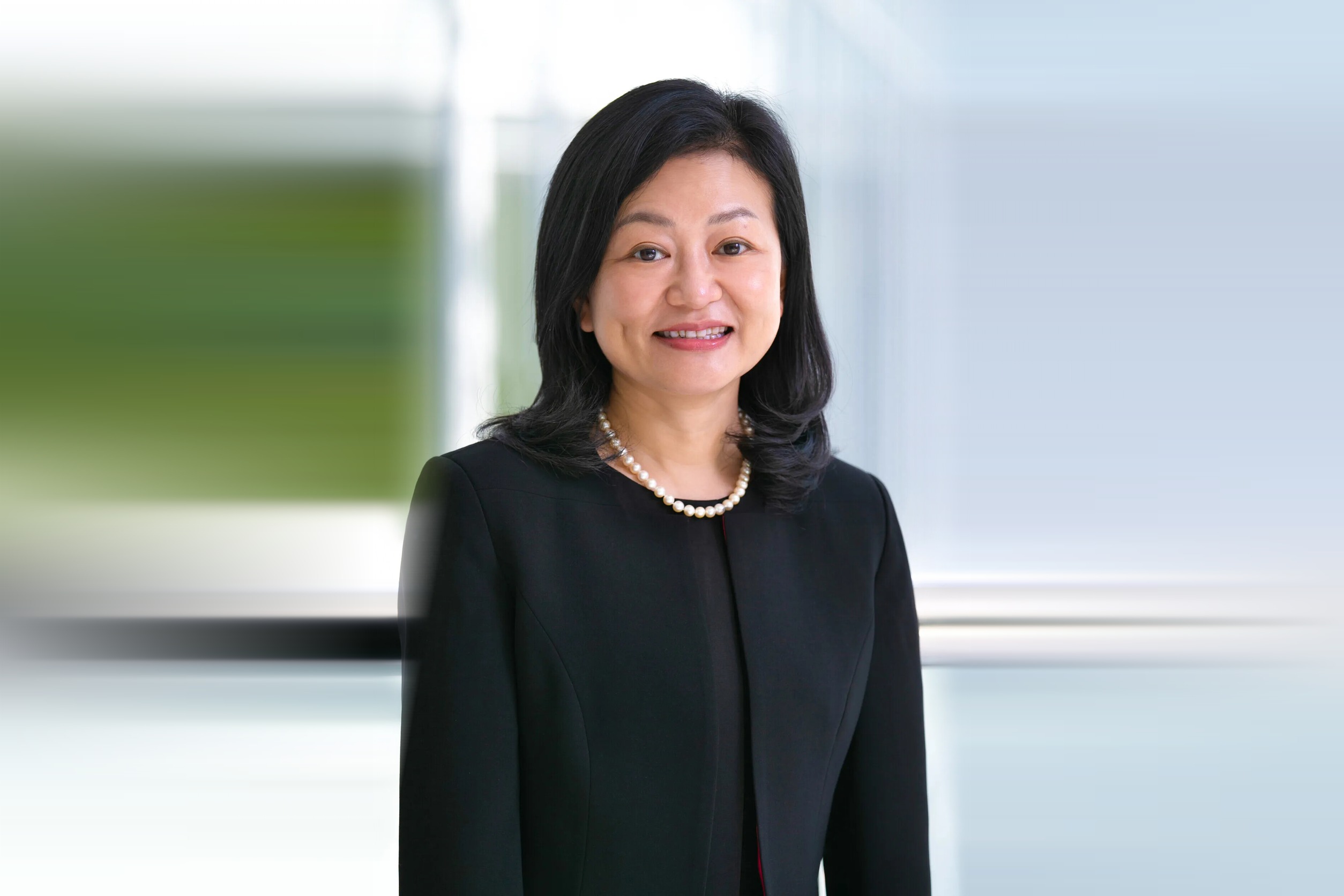
Soon Eng Sing, Vice-President, Group Talent, Singtel, delivers the opening keynote at CHRO Series Singapore 2026.
An employee asks AI to turn three points into a polished email: the budget is approved, the launch has moved to May, and a sign-off is needed. The recipient asks AI to summarise it and gets the same three points back. In between sit some 1,500 carefully polished words.
Soon Eng Sing, Vice-President, Group Talent, Singtel, used the example in the opening keynote of CHRO Series Singapore 2026 to pose a question that surfaced repeatedly over the day: what, exactly, has AI made more productive?
Who captures the dividend
The research he cited points in two ways. One study of more than 7,000 employees found regular AI users spent around two fewer hours a week on email. Another, reported in Harvard Business Review in February, found that AI had intensified work at a technology firm, with a faster pace and longer days.
“If AI saves you hours and makes you more productive, who actually captures that?” Soon asked. “Your customers? Your bosses? Your company? Or do you get more time to think, to relax, to rejuvenate, to recover?”
If every gain simply becomes a higher workload, he argued, organisations may maximise short-term output while underinvesting in learning, innovation and judgement. They will not have augmented their people. They will have sped up the treadmill.
Shweta Anil Mishra, Vice-President, People, Asia-Pacific, Match Group, drew a similar line on the panel that followed. Time freed up by AI, she said, often “just gets absorbed by organisational slack or invisible work, which is not delivering value”. The questions she wanted leaders to ask were different. “Are we going back to customers we were not serving? Are we looking at new revenue sources? Are we looking at innovation differently?”
The missing rungs
Soon also flagged a risk that is easier to miss. The biggest risk, he suggested, may not be replacement but atrophy.
That concern reaches furthest for people who have not yet built their expertise. Work that is low-value for an expert, such as drafting, screening candidates or reviewing contracts, can be high-value development for a novice. Soon cited research by Erik Brynjolfsson and colleagues showing that a generative AI (GenAI) assistant lifted the productivity of novice customer support agents by 34%, alongside a Stanford Digital Economy Lab study that found a 13% relative decline in employment among 22- to 25-year-olds in the most AI-exposed occupations since late 2022. He was careful to describe the link as correlation, not causation.
“Expertise comes from experience. Expertise also comes from repetition, doing things over and over again,” he said. “But if you were to remove all this from today’s context, how does one become an expert?”
Dr Bryan Lim, Managing Director, Head of Group Talent and Development, UOB, took up the point. “In the short run and in the medium term, you can ignore recruiting new entrants. But at some point, your top of the house will retire, will disappear. How do you sustain?”
UOB buys talent externally as a short-term fix and builds it internally for the long term, aiming to fill around 70 to 80% of its needs from within. Lance Foo, Senior Director, Talent Acquisition, NCS Group, who moderated the panel, added that many early-career candidates now string together several internships in place of a first permanent role.
Where leaders and employees diverge
A show of hands suggested that about two-thirds of the room had an active AI initiative underway. The question on employees’ minds, Dr Lim said, was a simple one: “After this wonderful AI initiative is completed or launched, do I still have a job?”
UOB runs a one-year programme that moves employees into new roles, with coaching for both the individual and the receiving manager. Over the past five years, it has taken in roughly 300 people, with a success rate of about 80%. Two factors made the biggest difference: the individual’s motivation and the receiving manager’s willingness to help them succeed.
Whether employees see such efforts the way leaders intend was the subject of research presented by David Chia, Content Learning Consultant, Cornerstone OnDemand. Cornerstone’s Culture and Capability Index surveyed HR leaders and employees separately, across areas from skills visibility to culture and trust. In Singapore, HR leaders scored their organisations at 71.8. Employees put the figure at 56.5.
HR, Chia argued, needs to put such factors into the language the C-suite uses. “Your CEO loves numbers and data,” he said. “Your CFO only knows numbers and data.”
Heena Bose, CEO of Pacific Prime Singapore, gave an example from the benefits side during a fireside chat with Eddie Lin, Head of Corporate Sales, Regional Accounts, Pacific Prime. The head of HR at a beverage company had spent thousands on a hospitalisation plan and given employees a few hundred dollars in a benefits wallet. When the engagement survey came back, nobody mentioned the hospitalisation plan. Everyone talked about the Spotify subscription. Leaders, Bose said, tend to focus on the cost of what they have invested in, while employees respond to what they use every day.
HR at the table, earlier
Match Group’s Mishra argued that AI has also changed when HR needs to join the conversation. Traditionally, the CEO set direction, the CFO tested affordability, and the CHRO came in afterwards. “What has changed as a result of AI and the pace of transformation is that it is too late for the CHROs to come into the discussion,” she said.
Jaslyn Ee, Director, Enterprise Business Development, Vistra, made a similar case about international expansion. She gave an example of a company entering Vietnam that needs 50 people within six months. The plan holds until someone asks whether the talent, the salary levels and a country manager can be found in that time. “A viable market does not automatically create a viable workforce,” she said.
Vistra’s Friction Index 2026, developed with Euromonitor International, ranks Vietnam third for market attractiveness but second-highest for operational friction among the markets it covers. That, Ee said, should shape how a business enters, not whether it does. Her shorthand for operating across borders: “Standardise where you can, localise where you must.”
Equal value, different forms
On employee experience, the debate turned on how far personalisation should go. Priya Tiruviti, Director, Compensation and Benefits, Asia-Pacific, Meta, said fairness has long meant offering everyone the same benefits. “Now we are starting to think about the value, equal value as opposed to the same benefits,” she said. An office gym only serves people who come into the office, so an allowance may deliver equal value to a distributed workforce. Her test: “Any differentiation that you create should be explainable.”
A long menu of options, she cautioned, simply shifts the cognitive load to employees. Here, two speakers read similar numbers in different ways. Pacific Prime’s Bose described a financial services client whose insurance options ran to 250 permutations, leaving employees confused. When enrolment closed, 90% had chosen the default plan, which she took as a sign that the choice had become too complicated. Tiruviti, recalling a leader worried that only 10% of employees were changing their benefits, saw it differently. “If actually 80% of the people are using the default, that means your default is designed well,” she said.
Several speakers questioned the practice of designing around generations. Pacific Prime’s Lin said that benefits needs are shaped more by life stage than by age. Elena Chipalova, Head, Human Resources Asia, Aggreko, said that a young technician who has just become a father may have more in common with a 45-year-old office colleague than with a peer of his own age.
Nayan Parekh, Global Workplace Sector Leader, Principal, Gensler, shared findings from Gensler’s workplace surveys. During the pandemic, many leaders assumed younger, tech-savvy employees would adapt best to working from home. They turned out to struggle most, with loneliness and a loss of mentoring. Across today’s generations, she said, workplace expectations are quite similar.
She also noted that some AI companies on the US West Coast are asking Gensler for collaboration spaces with no Wi-Fi, where technology cannot follow employees in. As more work is shared between humans and AI, physical space is where people still connect face to face. “That is the space that is going to be the glue,” she said.
Kingley Lim, Asia-Pacific Head of People Experience and Culture at Henkel, said the company’s use of employee data rests on transparency, choice and value. AI can strengthen a manager’s capabilities, he added, but common interest and care, which build trust, remain with people.
More than prompt engineers
The closing panel on learning and development returned to the question of atrophy. Its moderator, Dr Tanvi Gautam, Founder of Leadershift Inc., asked whether the spread of AI assistants “is really creating better capability in our employees, or are we just creating better prompt engineers who are not necessarily deepening their expertise and understanding of work?”
Cheryl Koh, Group Head of Learning and Development at Jadestone Energy, recalled an employee who requested data analysis training but could not explain the purpose of her weekly report. Koh said that understanding the purpose of the work has to come before the tool. She also described employees submitting reports entirely generated by AI, a case of “garbage in, garbage out.”
For Yvonne Chan, Head of People and Culture, Jardine Engineering, the case for L&D rests on what AI does not know: where the business strategy is shifting and where employees are struggling. “AI is going to give you technical recommendations, but [it is] never going to tell you the sentiments of the company,” she said.
Even so, Chan’s starting point is cultural. “First, get rid of the shame,” she said. Enthusiasm for AI, she added, does not follow age: some colleagues in their 60s are making AI films, while some in their 20s will not pay for a subscription.
Who makes the tough call
In the end, the discussion kept returning to accountability. Soon’s model for Singtel multiplies human intelligence, artificial intelligence and culture intelligence. Keeping humans in the lead, it holds, does not mean putting a human in every loop, but it does mean humans remain accountable for the system of decisions they create.
Meta’s Tiruviti put it in more personal terms. AI may one day indicate that an employee should be let go, but only a person can have that conversation. “When it is a tough call, I think humans still need to take that tough call, so the accountability still stays,” she said.